If you have any questions, you are always welcome to contact us. We'll get back to you as soon as possible, withing 24 hours on weekdays.
Customer service
All questions about your order, return and delivery must be sent to our customer service team by e-mail at yourstore@yourdomain.com
Sale & Press
If you are interested in selling our products, need more information about our brand or wish to make a collaboration, please contact us at press@yourdomain.com
Help
If you have any questions, you are always welcome to contact us. We'll get back to you as soon as possible, withing 24 hours on weekdays.
Customer service
All questions about your order, return and delivery must be sent to our customer service team by e-mail at yourstore@yourdomain.com
Sale & Press
If you are interested in selling our products, need more information about our brand or wish to make a collaboration, please contact us at press@yourdomain.com
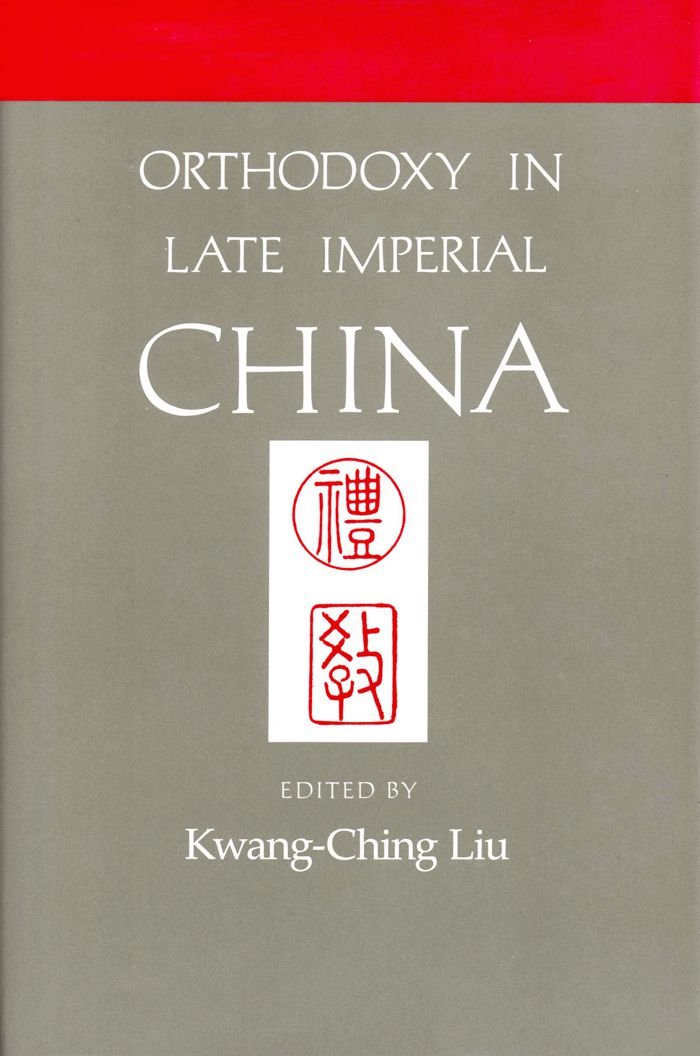
For many people, orthodoxy in late imperial China means Confucianism, or more precisely, NeoConfucianism. Unlike most studies of Chinese values, which approach the subject as a philosophical and religious system, this book focuses on the interaction between NeoConfucianism that stood for far more than more benevolent government, individual morality, and scholarly cultivation. In the essays presented here, Confucian idealism and transcendence become part of a system of sacred obligations and loyalties operating in the context of the imperial state and the family. These careful case studies examine many facets of the late imperial society to create a complex picture of Chinese life. Among other things, they provide a look at the official worship system, mid Ch'ing scholarly academies, the special status of tenant/servants, and the lineage feuds that were rampant on the southeast coast. The authors bring out the cultural significance of state and family rituals. They depict worried patriarchs composing instructions for the guidance of their children and country magistrates prescribing punishments according to the ritual of the culprit. A debate between two viewpoints was orthodoxy a "mode of statecraft," or was it one of the ultimate concerns of not only the Confucian schools but mainstream Taoism and Buddhism as well? The authors argue argue that ?Chinese civilization was characterized by religious and philosophical pluralism and moral orthodoxy. The implications they see for a socioethical doctrine supported by and in support of political authority will be of interest to students of comparative history and civilization.
⚠️ WARNING (California Proposition 65):
This product may contain chemicals known to the State of California to cause cancer,
birth defects, or other reproductive harm.
For MAP (Minimum Advertised Price) violations and Intellectual Property (IP) or Trademark concerns, please contact:
support@ergodebooks.com
⚠️ California Proposition 65 Warning: Some products sold on this website may expose you to chemicals known to the State of California to cause cancer, birth defects, or other reproductive harm. For more information, visit www.P65Warnings.ca.gov.