
Title
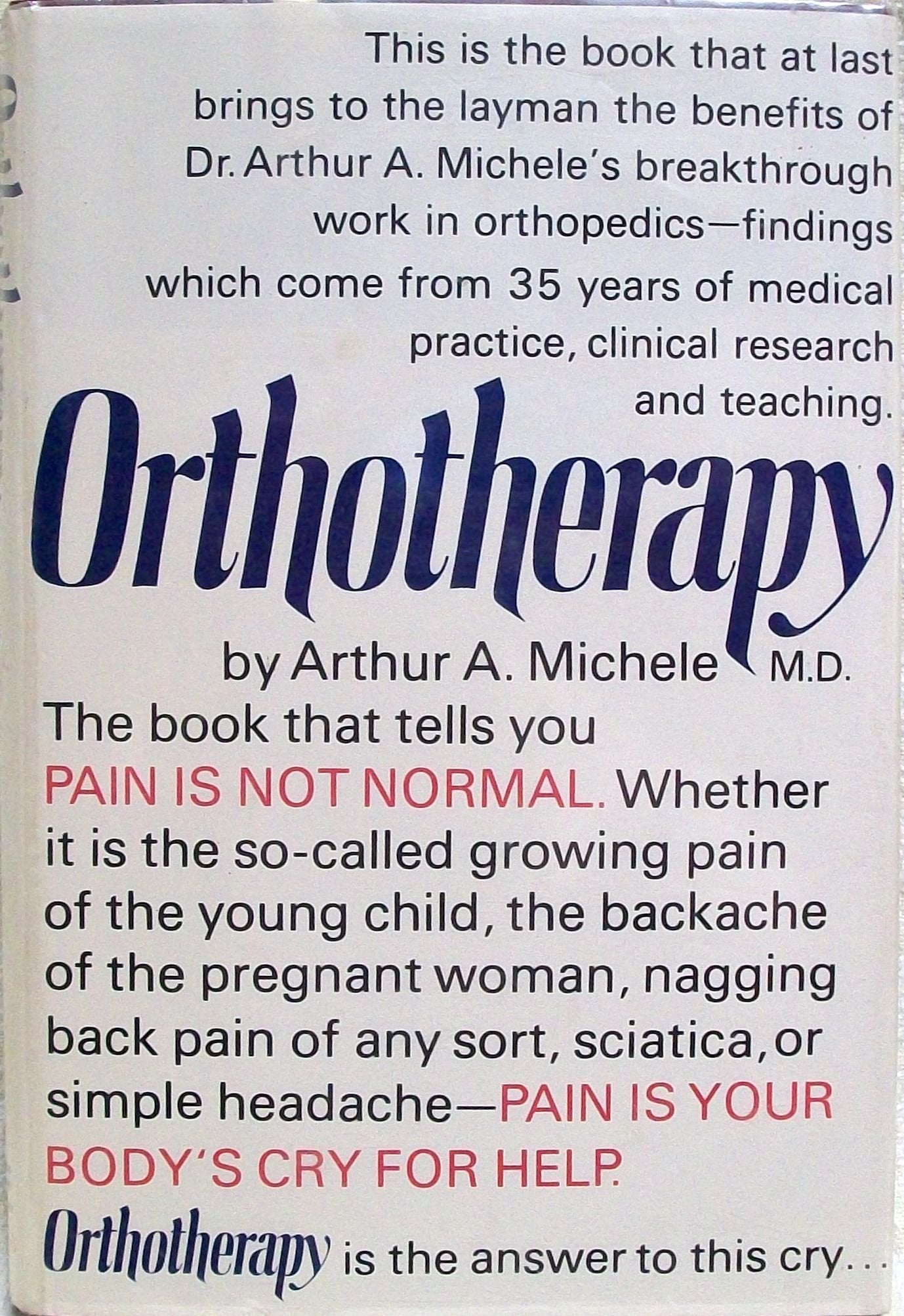
Orthotherapy-used
Sold by Ergodebooks, an authorized reseller.
Returns accepted within 30 days | support@ergodebooks.com
Shipping Information
- Free Standard Shipping — United States only
- Processing Time: 3–5 business days
- Estimated Delivery: 6–10 business days after dispatch
- Double-boxed, fully insured & discreetly packaged
- Tracking number sent via email once dispatched
Returns & Refund
Returns accepted within 30 days of delivery.
Damaged or Defective Item
Free return shipping + replacement or full refund
Wrong Item Received
Free return shipping + replacement or full refund
Change of Mind
Return shipping at customer's expense · 25% restocking fee applies
Payment Option

Argues That Muscle Imbalance Is Responsible For Many Backaches, Headaches, Cramps, Dislocations, And Aching Feet, Suggests That Correct Posture And Stretching Exercises Can Help Correct The Problem, And Shows How To Determine If One Has Muscle Imbalance
⚠️ WARNING (California Proposition 65):
This product may contain chemicals known to the State of California to cause cancer, birth defects, or other reproductive harm.
For more information, please visit www.P65Warnings.ca.gov.
- Q: How many pages does the book 'Orthotherapy' have? A: The book 'Orthotherapy' has two hundred twenty-three pages. This provides ample content for readers to explore muscle imbalances and their impact on health.
- Q: What type of binding does 'Orthotherapy' have? A: The book is bound in hardcover. This durable binding ensures longevity and protection for the pages inside.
- Q: Who is the author of 'Orthotherapy'? A: The author of 'Orthotherapy' is Arthur Albert Michele. He discusses muscle imbalances and their effects on the body throughout the book.
- Q: How can I use the information in 'Orthotherapy'? A: You can use the information by applying the suggested posture and stretching exercises. These practices aim to correct muscle imbalances and alleviate discomfort.
- Q: Is 'Orthotherapy' suitable for beginners? A: Yes, 'Orthotherapy' is suitable for beginners. It explains concepts in an accessible way, making it easy for anyone to understand muscle imbalances.
- Q: What are the main themes of 'Orthotherapy'? A: The main themes include muscle imbalance, posture correction, and stretching exercises. These themes address common physical ailments like backaches and headaches.
- Q: How should I care for my copy of 'Orthotherapy'? A: To care for your copy, keep it in a dry, cool place and avoid direct sunlight. This will help preserve the book's condition over time.
- Q: Are there any safety considerations for reading 'Orthotherapy'? A: No, there are no specific safety considerations for reading this book. It is a standard text discussing health concepts.
- Q: What should I do if my copy of 'Orthotherapy' arrives damaged? A: If your copy arrives damaged, you should contact the seller for a return or exchange. Most sellers have a customer service policy for such issues.
- Q: Is 'Orthotherapy' appropriate for all ages? A: Yes, 'Orthotherapy' is appropriate for all ages. The content is educational and can benefit anyone interested in understanding muscle health.
- Q: How does 'Orthotherapy' compare to other health books? A: 'Orthotherapy' specifically focuses on muscle imbalances, setting it apart from general health books that may cover a broader range of topics.
- Q: What exercises are suggested in 'Orthotherapy'? A: The book suggests posture correction exercises and stretching routines. These are designed to help individuals identify and correct muscle imbalances.
- Q: Can I find information about muscle imbalance in other resources? A: Yes, you can find related information in various health and fitness resources, but 'Orthotherapy' provides a focused discussion on muscle imbalance.
- Q: What is the publisher of 'Orthotherapy'? A: The publisher of 'Orthotherapy' is listed as UNKNO. Details about the specific publisher may vary.
- Q: Does 'Orthotherapy' include illustrations or diagrams? A: The book does not explicitly mention illustrations or diagrams. However, it focuses on descriptive text to explain concepts.