
Title
Ottoman Brothers: Muslims, Christians, and Jews in Early TwentiethCentury Palestine,Used
Sold by Ergodebooks, an authorized reseller.
Returns accepted within 30 days | support@ergodebooks.com
Shipping Information
- Free Standard Shipping — United States only
- Processing Time: 3–5 business days
- Estimated Delivery: 6–10 business days after dispatch
- Double-boxed, fully insured & discreetly packaged
- Tracking number sent via email once dispatched
Returns & Refund
Returns accepted within 30 days of delivery.
Damaged or Defective Item
Free return shipping + replacement or full refund
Wrong Item Received
Free return shipping + replacement or full refund
Change of Mind
Return shipping at customer's expense · 25% restocking fee applies
Payment Option

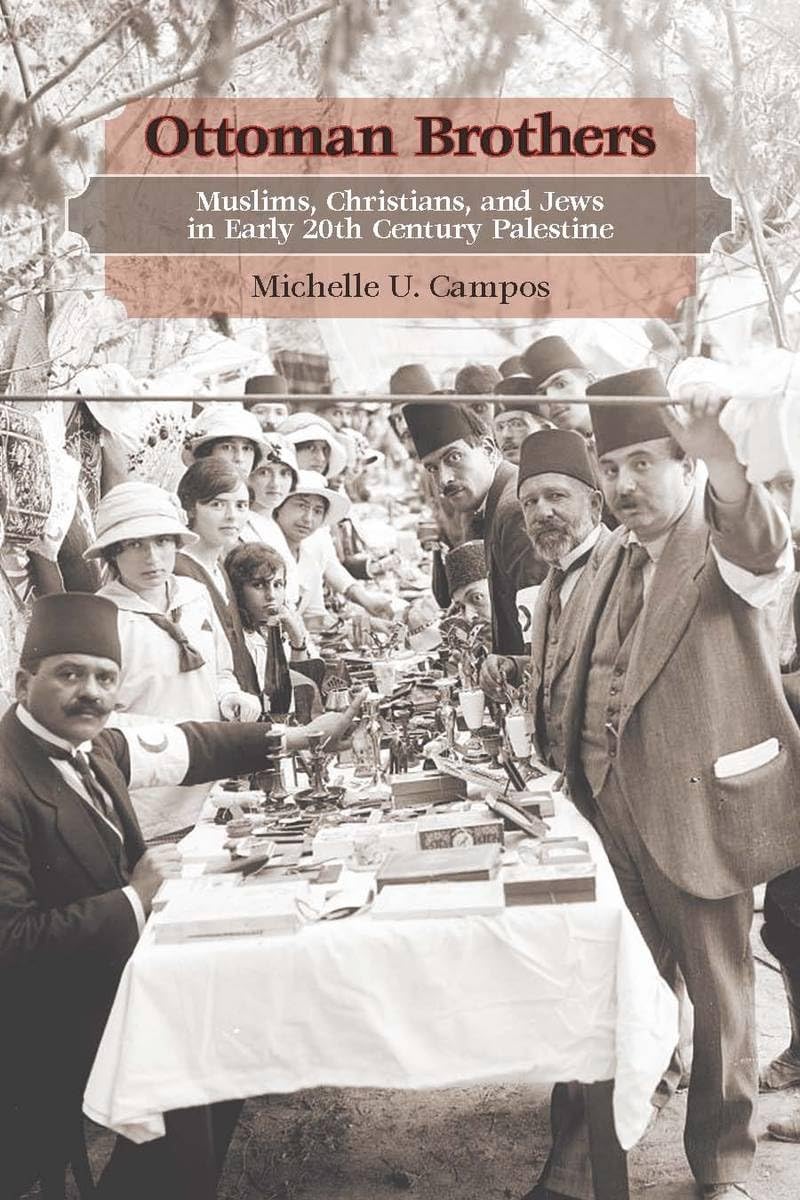
In its last decade, the Ottoman Empire underwent a period of dynamic reform, and the 1908 revolution transformed the empire's 20 million subjects into citizens overnight. Questions quickly emerged about what it meant to be Ottoman, what bound the empire together, what role religion and ethnicity would play in politics, and what liberty, reform, and enfranchisement would look like. Ottoman Brothers explores the development of Ottoman collective identity, tracing how Muslims, Christians, and Jews became imperial citizens together. In Palestine, even against the backdrop of the emergence of the Zionist movement and Arab nationalism, Jews and Arabs cooperated in local development and local institutions as they embraced imperial citizenship. As Michelle Campos reveals, the ArabJewish conflict in Palestine was not immanent, but rather it erupted in tension with the promises and shortcomings of 'civic Ottomanism.'
⚠️ WARNING (California Proposition 65):
This product may contain chemicals known to the State of California to cause cancer, birth defects, or other reproductive harm.
For more information, please visit www.P65Warnings.ca.gov.
- Q: What is the main theme of 'Ottoman Brothers' by Michelle Campos? A: 'Ottoman Brothers' explores the development of Ottoman collective identity among Muslims, Christians, and Jews in early twentieth-century Palestine, particularly during the transformative period of the Ottoman Empire's reform and the 1908 revolution.
- Q: What historical context does the book cover? A: The book covers the last decade of the Ottoman Empire, focusing on how the 1908 revolution impacted the empire's subjects, leading to questions about identity, citizenship, and the dynamics of religion and ethnicity in politics.
- Q: Is 'Ottoman Brothers' a scholarly work? A: Yes, 'Ottoman Brothers' is a scholarly work that provides an in-depth analysis of the political and social dynamics in early twentieth-century Palestine, supported by historical research and academic insights.
- Q: What type of binding does this book have? A: 'Ottoman Brothers' is available in paperback binding, making it lightweight and easy to handle.
- Q: Who is the author of 'Ottoman Brothers'? A: The author of 'Ottoman Brothers' is Michelle Campos, who is known for her expertise in Ottoman history and her analysis of the complex relationships among different religious communities in the empire.
- Q: When was 'Ottoman Brothers' published? A: 'Ottoman Brothers' was published on November 4, 2010.
- Q: How many pages does 'Ottoman Brothers' have? A: The book contains a total of 358 pages.
- Q: What is the condition of the book? A: 'Ottoman Brothers' is listed as a new book, ensuring that you receive a copy in excellent condition.
- Q: Does the book discuss the Arab-Jewish conflict in Palestine? A: Yes, the book addresses the Arab-Jewish conflict, arguing that tensions were not inherent but arose from the promises and challenges of 'civic Ottomanism' during that period.
- Q: What can readers expect to learn from 'Ottoman Brothers'? A: Readers can expect to gain insights into the formation of collective identities in a multicultural society, the impact of imperial citizenship, and the historical interactions between Jewish and Arab communities in Palestine.