
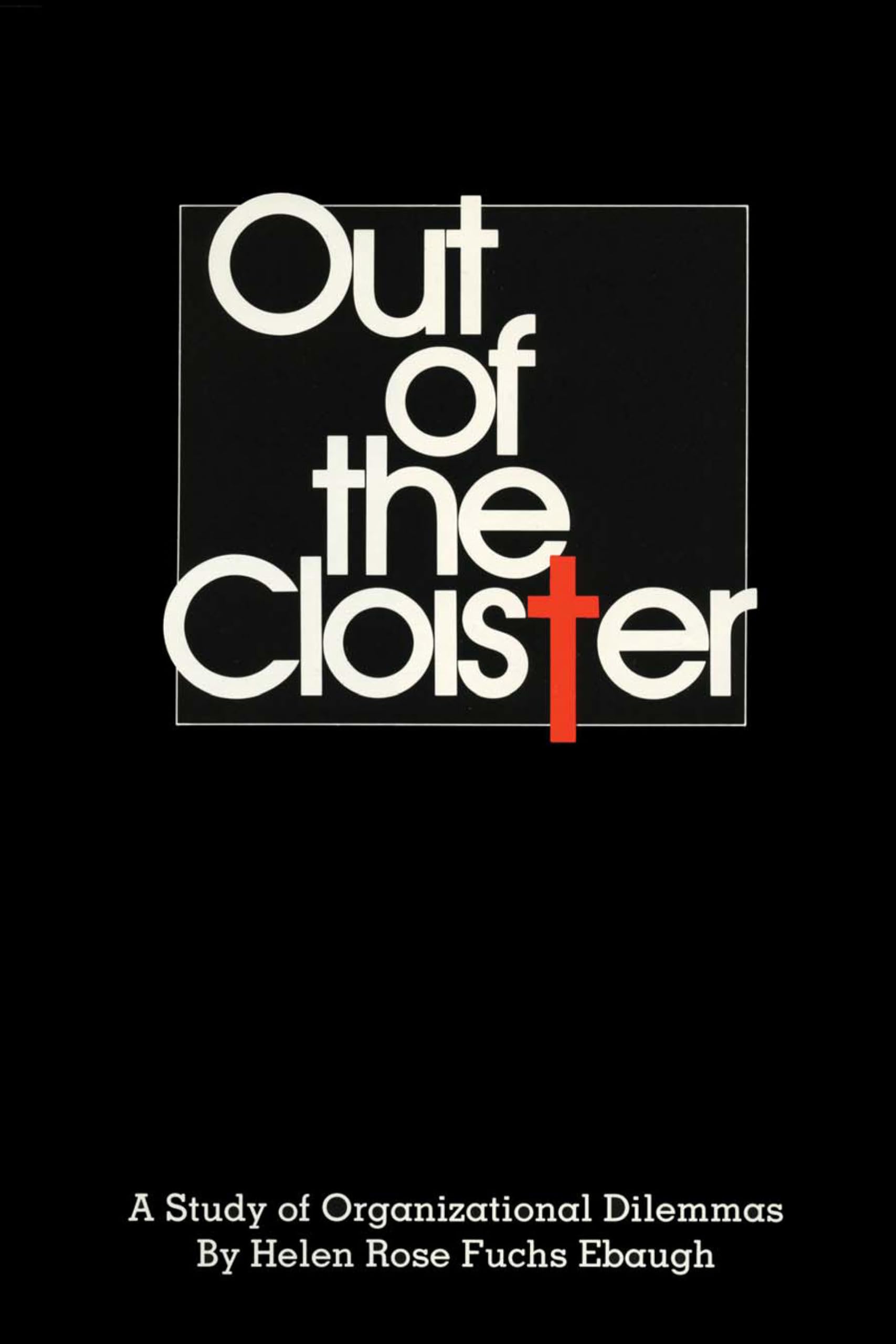
Title
Out of the Cloister: A Study of Organizational Dilemmas,Used
Sold by Ergodebooks, an authorized reseller.
Returns accepted within 30 days | support@ergodebooks.com
Shipping Information
- Free Standard Shipping — United States only
- Processing Time: 3–5 business days
- Estimated Delivery: 6–10 business days after dispatch
- Double-boxed, fully insured & discreetly packaged
- Tracking number sent via email once dispatched
Returns & Refund
Returns accepted within 30 days of delivery.
Damaged or Defective Item
Free return shipping + replacement or full refund
Wrong Item Received
Free return shipping + replacement or full refund
Change of Mind
Return shipping at customer's expense · 25% restocking fee applies
Payment Option

Since Vatican Council II, convent walls have crumbled. and the structures that once separated nuns from the world are gone. Out of the Cloister is an organizational analysis of the structural and ideological changes that took place in Catholic religious orders of women in the United States. Many nuns today dress in street clothes, choose their own jobs, have a degree of financial independence from the larger order, and may not be recognized by their coworkers as nuns. What might once have been defined as a "total institution" has become, within the span of a few years, a type of voluntary organization where members join together loosely to achieve a common purpose.Helen Rose Fuchs Ebaugh approaches religious orders as utopian communities and examines how contact with the larger society has affected the distinctiveness and solidarity that hold such groups together. She analyzes the patterns occurring within orders with particular focus on the relationship between organizational change and membership loss. Since changes have been introduced into religious orders at different rates, and since orders vary in such characteristics as size and educational level of members, it is possible to analyze relationships between exit rates and other organizational variables. The complex interplay of education and membership loss is one of the organizational dilemmas the author examines.Although she is no longer a part of organized religious life, Ebaugh spent ten years as a nun and during that time collected much of the data presented in this book. As a nun she also helped conduct a number of selfstudies and evaluations involved with the postVatican II reform and renewal efforts. She is therefore in the unique position of a researcher who collected data as an insider and analyzed it as an outsider.This book is one of the first systematic, empirical studies of religious orders in the United States and one of the few sociological investigations of convents and the changes occurring within them.
⚠️ WARNING (California Proposition 65):
This product may contain chemicals known to the State of California to cause cancer, birth defects, or other reproductive harm.
For more information, please visit www.P65Warnings.ca.gov.