
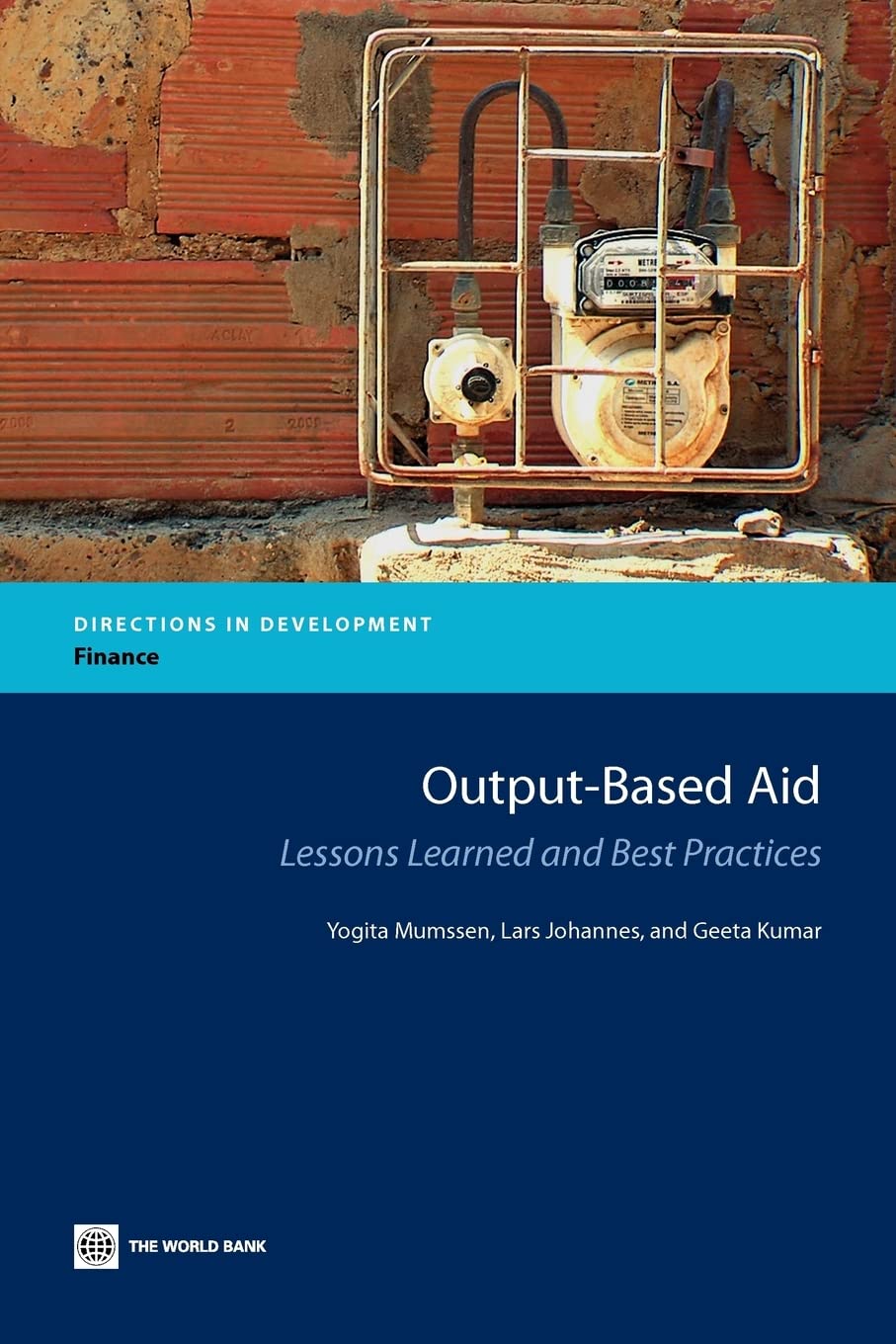
Title
Outputbased Aid: Lessons Learned And Best Practices (Directions In Development),New
Sold by Ergodebooks, an authorized reseller.
Returns accepted within 30 days | support@ergodebooks.com
Shipping Information
- Free Standard Shipping — United States only
- Processing Time: 3–5 business days
- Estimated Delivery: 6–10 business days after dispatch
- Double-boxed, fully insured & discreetly packaged
- Tracking number sent via email once dispatched
Returns & Refund
Returns accepted within 30 days of delivery.
Damaged or Defective Item
Free return shipping + replacement or full refund
Wrong Item Received
Free return shipping + replacement or full refund
Change of Mind
Return shipping at customer's expense · 25% restocking fee applies
Payment Option

Developing country governments and the development aid community are acutely aware of the need to find more effective ways to improve basic living conditions for the poor, as traditional approaches of delivering public support have not always led to the results intended. 'Resultsbased financing' (RBF) instruments, which tie the disbursement of public funding to the achievement of preagreed results, are now recognized as one important piece of the aid delivery puzzle. The aim of these instruments is to enhance the effectiveness of public funding. It provides a practical understanding of the experience with outputbased aid (OBA), a resultsbased instrument that is being used to deliver basic infrastructure and social services to the poor, including through publicprivate partnerships. OBA has been used in the World Bank Group since 2002, including more recently through the Global Partnership on OutputBased Aid which has a mandate to design and test OBA approaches. The authors analyze nearly 200 OBA projects in water and sanitation, energy, health, roads, telecommunications, and education. The piloting phase of OBA has in general been a success and OBA has demonstrated clear advantages over traditional approaches in terms of efficiently targeting subsidies and mobilizing the private sector to serve poor households that would otherwise go without an improved service. OBA has also demonstrated that monitoring for results is possible if appropriate systems are put in place. As the first comprehensive review of OBA in eight years, it will be an essential reference for infrastructure and social services sector experts and OBA practitioners around the world.
⚠️ WARNING (California Proposition 65):
This product may contain chemicals known to the State of California to cause cancer, birth defects, or other reproductive harm.
For more information, please visit www.P65Warnings.ca.gov.