
Title
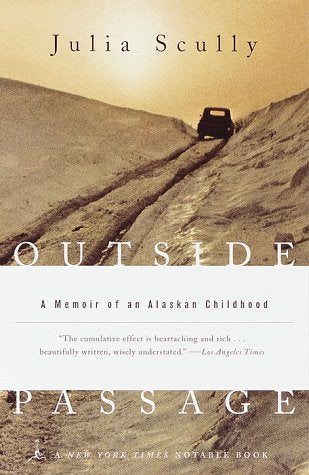
Outside Passage: A Memoir Of An Alaskan Childhood (Modern Library Paperbacks)-used
Sold by Ergodebooks, an authorized reseller.
Returns accepted within 30 days | support@ergodebooks.com
Shipping Information
- Free Standard Shipping — United States only
- Processing Time: 3–5 business days
- Estimated Delivery: 6–10 business days after dispatch
- Double-boxed, fully insured & discreetly packaged
- Tracking number sent via email once dispatched
Returns & Refund
Returns accepted within 30 days of delivery.
Damaged or Defective Item
Free return shipping + replacement or full refund
Wrong Item Received
Free return shipping + replacement or full refund
Change of Mind
Return shipping at customer's expense · 25% restocking fee applies
Payment Option

1. The First Chapter Of Outside Passage Is A Flash Forward, Yet Chronologically, The Story Really Begins With Chapter 2. Why Do You Think The Author Chose This Narrative Device? Is It Effective? 2. In Recounting Her Childhood, How Does The Narrator Suggest The Importance Of Her Memories Of Her Father, As Few And Hazy As They Might Have Been? 3. During Her Two Year Stay In The San Francisco Orphanage, The Young Billie Finds Ways Of Extracting Emotional Sustenance From This Difficult Situation. What Are Some Of These Ways? How Does This Same Ability To Find The Positive Within Hard Circumstances Impact On Her Adjustment To Life After The Orphanage? 4. In Some Ways The Orphanage Provides The Two Young Girls In Outside Passage With Cultural Advantages, Associations And Learning Opportunities Not Previously Available To Them. Today The Very Word Orphanage Causes A Shudder; Yet We Hear Of The Many Failings Of The Foster Care System Which Replaced Them. How Might The Author And Her Sister Have Fared Better Or Worse If They Had Existed In Todays System? 5. In Desperation, Rose Chose To Leave Her Two Daughters In San Francisco And Return Alone To Alaska. Why Do You Think She Decided To Leave Her Children In An Orphanage Rather Than Taking Them With Her? Was This The Best Decision For Herself? For Her Children? 6. Reunited With Her Girls, Rose Seems Like A Permissive Parent, Imposing No Rules, As Billie Observes. How Would You Explain This Behavior: Is It Evidence Of A Lack Of Caring; A Guilty Response To Having Abandoned Them In The Orphanage; Does It Represent A Hope That This Freedom Might Provide A Healing Process For The Girls? 7. Billie Expresses Positive Feelings About The Men Who Frequent Her Mothers Roadhouse. What Is The Basis For Her Feelings And Do You Think They Reflect The Real Nature Of These Men Or A Childs Idealization? 8. Roses Secrecy About Her Emotional And Sexual Life Impacts On The Life Of The Narrator Increasingly As She Reaches Puberty. How Does Roses Behavior And Attitudes Reflect The Mores Of That Period In American Life? In What Ways Might Her Story And That Of Her Daughters Been Different Had They Lived In A Contemporary Setting? 9. Many Reviewers Have Described The Writing Style In Outside Passage As Understated. Does This Style Work To Good Effect In Telling The Story? How So? 10. Two Incidents In The Book Might Be Seen As Turning Points In The Narrators Life. One Is The Scene In Which She Witnesses The Malamute Shot By The Chief Of Police, The Other Occurs Some Years Later When She Is Struck By The Beauty Of The Sun Rising Over The Frozen Sea. In What Ways Are These Moments Particularly Meaningful In Her Emotional Development? 11. The New York Times Reviewer Observed That ...Scullys Imagination, The Tool With Which She Probes Her Mothers Life, Is A Moral Imagination, Whose Root Is Forgiveness... Do You Agree? In What Way Is This Forgiveness Evident? 12. In Another Review ( The Cleveland Plain Dealer ) The Statement Appears That In Outside Passage , The Setting And Voice ... Perfectly Mesh. What Do You Understand This To Mean? 13. The Author Was Formerly Editor Of Modern Photography Magazine And Has Written Extensively About The Art Of Photography. Some Readers And Reviewers Have Commented On The Photographic, I.E. Strongly Visual, Nature Of Her Writing. Do You See Evidences Of This Quality And What Is The Ultimate Result In The Effectiveness Of The Story Being Told? 14. While Outside Passage Is, In Effect, A Comingofage Story, It Is Set Against The Background Of Two Major Events In The 20Th Century History Of This Country: The Great Depression And The Second World War. What Sense Of These Events Does The Reader Glean As Observed Through The Eyes Of A Young Girl? 15. In Time Magazine , A Writer Described Outside Passage As A Simple Reminder Of The Immense Power Of A Childs Love, Which Can Last Through Terrible Neglect, While, As Mentioned Above, The New York Times Reviewer Found I
⚠️ WARNING (California Proposition 65):
This product may contain chemicals known to the State of California to cause cancer, birth defects, or other reproductive harm.
For more information, please visit www.P65Warnings.ca.gov.
- Q: How many pages does 'Outside Passage' have? A: This book has two hundred thirty-six pages. It provides a rich narrative of the author's Alaskan childhood.
- Q: What is the binding type of 'Outside Passage'? A: The binding type is paperback. This makes it lightweight and easy to carry.
- Q: What are the dimensions of 'Outside Passage'? A: The book measures five point five one inches in length, zero point five one inches in width, and eight point five inches in height.
- Q: What age group is 'Outside Passage' suitable for? A: This memoir is suitable for young adult readers and above. It addresses complex themes that resonate with mature audiences.
- Q: How should I read 'Outside Passage' for the best experience? A: For the best experience, read it in a quiet environment. Reflecting on the themes will enhance your understanding of the author's journey.
- Q: Is 'Outside Passage' appropriate for children? A: No, it is not specifically aimed at children. The themes and emotional depth are more suited for older readers.
- Q: How do I care for my copy of 'Outside Passage'? A: To care for your book, keep it in a dry place away from direct sunlight. Avoid bending the spine to maintain its condition.
- Q: What should I do if my copy of 'Outside Passage' arrives damaged? A: If your book arrives damaged, contact the seller for a return or exchange. Most retailers have a customer service policy for such issues.
- Q: Can 'Outside Passage' be used as a teaching tool? A: Yes, it can be used as a teaching tool. The memoir explores significant historical events and personal growth, making it suitable for discussions.
- Q: Is there a warranty for 'Outside Passage'? A: No, books typically do not come with a warranty. However, check with the retailer regarding their return policy.
- Q: How does 'Outside Passage' compare to other memoirs? A: Unlike many memoirs, 'Outside Passage' offers a unique Alaskan perspective. It combines personal narrative with historical context.
- Q: Who is the author of 'Outside Passage'? A: The author is Julia Scully. She shares her childhood experiences in Alaska through this memoir.
- Q: What themes are explored in 'Outside Passage'? A: Major themes include childhood, memory, and resilience in the face of adversity. The narrative reflects on personal and historical challenges.
- Q: Is there an audiobook version of 'Outside Passage'? A: Yes, there is an audiobook version available. It allows for a different experience of the narrative.
- Q: What makes 'Outside Passage' a unique reading experience? A: Its vivid storytelling and emotional depth provide a unique reading experience, allowing readers to connect with the author's journey.