
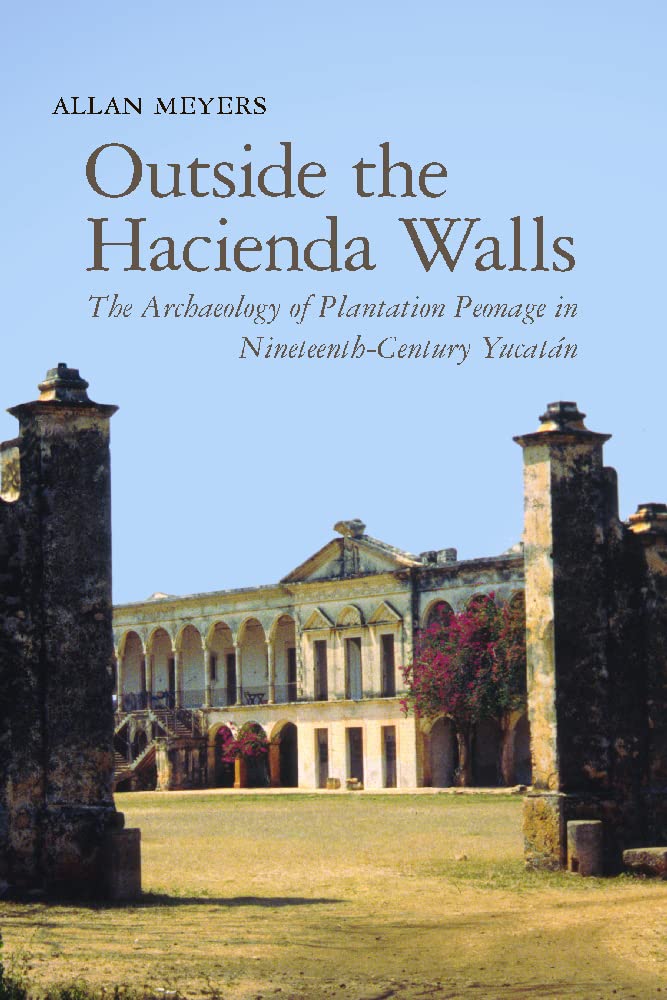
Title
Outside The Hacienda Walls: The Archaeology Of Plantation Peonage In Nineteenthcentury Yucatn (Archaeology Of Indigenouscolo,Used
Sold by Ergodebooks, an authorized reseller.
Returns accepted within 30 days | support@ergodebooks.com
Shipping Information
- Free Standard Shipping — United States only
- Processing Time: 3–5 business days
- Estimated Delivery: 6–10 business days after dispatch
- Double-boxed, fully insured & discreetly packaged
- Tracking number sent via email once dispatched
Returns & Refund
Returns accepted within 30 days of delivery.
Damaged or Defective Item
Free return shipping + replacement or full refund
Wrong Item Received
Free return shipping + replacement or full refund
Change of Mind
Return shipping at customer's expense · 25% restocking fee applies
Payment Option

The Mexican Revolution was a tumultuous struggle for social and political reform that ousted an autocrat and paved the way for a new national constitution. The conflict, however, came late to Yucatn, where a network of elite families with largely European roots held the reins of government. This privileged group reaped spectacular wealth from haciendas, cashcrop plantations tended by debtridden servants of Maya descent. When a revolutionary army from central Mexico finally gained a foothold in Yucatn in 1915, the local custom of agrarian servitude met its demise.Drawing on a dozen years of archaeological and historical investigation, Allan Meyers breaks new ground in the study of Yucatn haciendas. He explores a plantation village called San Juan Bautista Tabi, which once stood at the heart of a vast sugar estate. Occupied for only a few generations, the village was abandoned during the revolutionary upheaval. Its ruins now lie within a stateowned ecological reserve.Through oral histories, archival records, and physical remains, Meyers examines various facets of the plantation landscape. He presents original data and fresh interpretations on settlement organization, social stratification, and spatial relationships. His systematic approach to 'things underfoot,' small everyday objects that are now buried in the tropical forest, offers views of the hacienda experience that are often missing in official written sources. In this way, he raises the voices of rural, mostly illiterate Maya speakers who toiled as laborers. What emerges is a portrait of hacienda social life that transcends depictions gleaned from historical methods alone.Students, researchers, and travelers to Mexico will all find something of interest in Meyers's lively presentation. Readers will see the old haciendasonce forsaken but now experiencing a rebirth as tourist destinationsin a new light. These heritage sites not only testify to social conditions that prevailed before the Mexican Revolution, but also remind us that the human geography of modern Yucatn is as much a product of plantation times as it is of more ancient periods.
⚠️ WARNING (California Proposition 65):
This product may contain chemicals known to the State of California to cause cancer, birth defects, or other reproductive harm.
For more information, please visit www.P65Warnings.ca.gov.