
Title
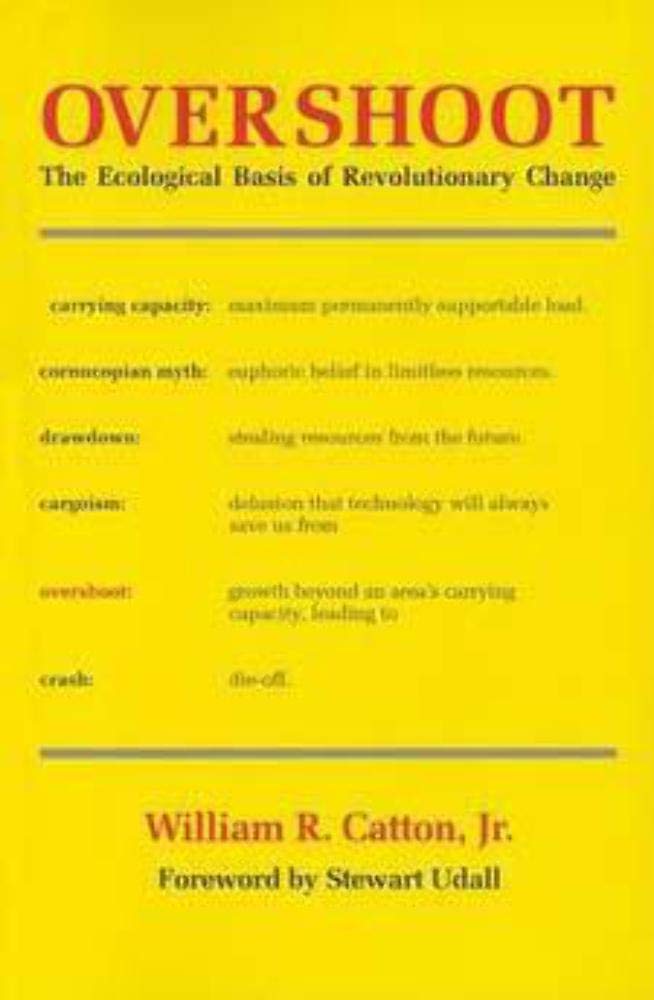
Overshoot: The Ecological Basis Of Revolutionary Change
Sold by Ergodebooks, an authorized reseller.
Returns accepted within 30 days | support@ergodebooks.com
Shipping Information
- Free Standard Shipping — United States only
- Processing Time: 3–5 business days
- Estimated Delivery: 6–10 business days after dispatch
- Double-boxed, fully insured & discreetly packaged
- Tracking number sent via email once dispatched
Returns & Refund
Returns accepted within 30 days of delivery.
Damaged or Defective Item
Free return shipping + replacement or full refund
Wrong Item Received
Free return shipping + replacement or full refund
Change of Mind
Return shipping at customer's expense · 25% restocking fee applies
Payment Option

Our Daytoday Experiences Over The Past Decade Have Taught Us That There Must Be Limits To Our Tremendous Appetite For Energy, Natural Resources, And Consumer Goods. Even Utility And Oil Companies Now Promote Conservation In The Face Of Demands For Dwindling Energy Reserves. And For Years Some Biologists Have Warned Us Of The Direct Correlation Between Scarcity And Population Growth. These Scientists See An Appalling Future Riding The Tidal Wave Of A Worldwide Growth Of Population And Technology.A Calm But Unflinching Realist, Catton Suggests That We Cannot Stop This Wave For We Have Already Overshot The Earth'S Capacity To Support So Huge A Load. He Contradicts Those Scientists, Engineers, And Technocrats Who Continue To Write Optimistically About Energy Alternatives. Catton Asserts That The Technological Panaceas Proposed By Those Who Would Harvest From The Seas, Harness The Winds, And Farm The Deserts Are Ignoring The Fundamental Premise That The Principals Of Ecology Apply To All Living Things. These Principles Tell Us That, Within A Finite System, Economic Expansion Is Not Irreversible And Population Growth Cannot Continue Indefinitely. If We Disregard These Facts, Our Sagging American Dream Will Soon Shatter Completely.
⚠️ WARNING (California Proposition 65):
This product may contain chemicals known to the State of California to cause cancer, birth defects, or other reproductive harm.
For more information, please visit www.P65Warnings.ca.gov.
- Q: What is the page count of the book? A: The book has three hundred twenty pages. This length provides a comprehensive exploration of ecological themes and revolutionary change.
- Q: What are the dimensions of this book? A: The dimensions are nine point zero two inches in length, five point nine nine inches in width, and zero point seven one inches in height. These measurements make it an easily portable paperback.
- Q: Who is the author of this book? A: The author is William R. Catton. He provides insightful analysis on ecology and societal issues within this work.
- Q: What is the binding type of this book? A: The book is paperback bound. This format is typically lighter and more flexible than hardcover options.
- Q: What genre does this book belong to? A: This book belongs to the Ecology genre. It focuses on ecological principles and their implications for society.
- Q: Is this book suitable for beginners in ecology? A: Yes, this book is suitable for beginners. Catton presents complex ideas in an accessible manner, making it a good starting point.
- Q: What themes are covered in 'Overshoot'? A: The book covers themes of ecological limits, population growth, and the consequences of unsustainable consumption. These themes are critical for understanding environmental challenges.
- Q: Is there a specific audience for this book? A: Yes, this book targets readers interested in ecology, sustainability, and social issues. It's beneficial for students and general readers alike.
- Q: Can I read this book if I have no background in ecology? A: Yes, you can read this book without a background in ecology. The author effectively breaks down complex concepts for easier understanding.
- Q: How should I store this book to keep it in good condition? A: Store the book in a cool, dry place away from direct sunlight. This helps preserve the quality of the pages and binding.
- Q: How do I clean the book if it gets dirty? A: To clean the book, gently wipe the cover with a soft, dry cloth. Avoid using water or cleaning solutions that might damage the material.
- Q: What if the book arrives damaged? A: If the book arrives damaged, contact customer service for a return or replacement. Most retailers offer policies for damaged items.
- Q: Is this book appropriate for educational settings? A: Yes, this book is appropriate for educational settings. It provides valuable insights into ecological issues that are relevant for discussions in classrooms.
- Q: What type of conservation themes does this book discuss? A: This book discusses conservation themes related to energy use, natural resources, and sustainable practices. It emphasizes the importance of ecological awareness.
- Q: Can I use this book for a research paper? A: Yes, you can use this book for a research paper. It contains well-researched content and references important ecological arguments.