If you have any questions, you are always welcome to contact us. We'll get back to you as soon as possible, withing 24 hours on weekdays.
Customer service
All questions about your order, return and delivery must be sent to our customer service team by e-mail at yourstore@yourdomain.com
Sale & Press
If you are interested in selling our products, need more information about our brand or wish to make a collaboration, please contact us at press@yourdomain.com
Help
If you have any questions, you are always welcome to contact us. We'll get back to you as soon as possible, withing 24 hours on weekdays.
Customer service
All questions about your order, return and delivery must be sent to our customer service team by e-mail at yourstore@yourdomain.com
Sale & Press
If you are interested in selling our products, need more information about our brand or wish to make a collaboration, please contact us at press@yourdomain.com
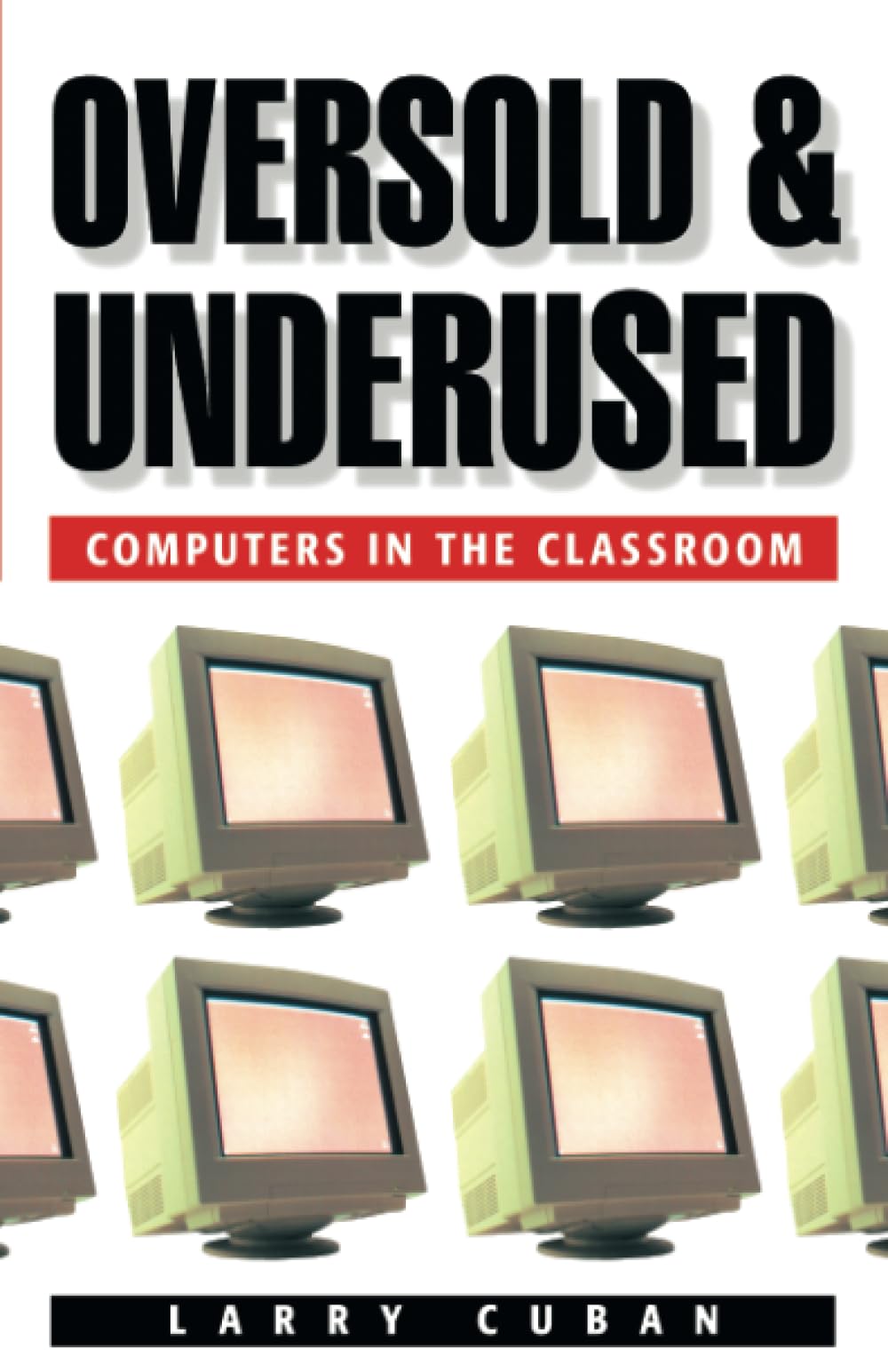
Impelled by a demand for increasing American strength in the new global economy, many educators, public officials, business leaders, and parents argue that school computers and Internet access will improve academic learning and prepare students for an informationbased workplace.But just how valid is this argument? In Oversold and Underused, one of the most respected voices in American education argues that when teachers are not given a say in how the technology might reshape schools, computers are merely soupedup typewriters and classrooms continue to run much as they did a generation ago. In his studies of early childhood, high school, and university classrooms in Silicon Valley, Larry Cuban found that students and teachers use the new technologies far less in the classroom than they do at home, and that teachers who use computers for instruction do so infrequently and unimaginatively.Cuban points out that historical and organizational economic contexts influence how teachers use technical innovations. Computers can be useful when teachers sufficiently understand the technology themselves, believe it will enhance learning, and have the power to shape their own curricula. But these conditions can't be met without a broader and deeper commitment to public education beyond preparing workers. More attention, Cuban says, needs to be paid to the civic and social goals of schooling, goals that make the question of how many computers are in classrooms trivial.
⚠️ WARNING (California Proposition 65):
This product may contain chemicals known to the State of California to cause cancer,
birth defects, or other reproductive harm.
For MAP (Minimum Advertised Price) violations and Intellectual Property (IP) or Trademark concerns, please contact:
support@ergodebooks.com
⚠️ California Proposition 65 Warning: Some products sold on this website may expose you to chemicals known to the State of California to cause cancer, birth defects, or other reproductive harm. For more information, visit www.P65Warnings.ca.gov.