
Title
Owning William Shakespeare: The King's Men and Their Intellectual Property (Material Texts),Used
Sold by Ergodebooks, an authorized reseller.
Returns accepted within 30 days | support@ergodebooks.com
Shipping Information
- Free Standard Shipping — United States only
- Processing Time: 3–5 business days
- Estimated Delivery: 6–10 business days after dispatch
- Double-boxed, fully insured & discreetly packaged
- Tracking number sent via email once dispatched
Returns & Refund
Returns accepted within 30 days of delivery.
Damaged or Defective Item
Free return shipping + replacement or full refund
Wrong Item Received
Free return shipping + replacement or full refund
Change of Mind
Return shipping at customer's expense · 25% restocking fee applies
Payment Option

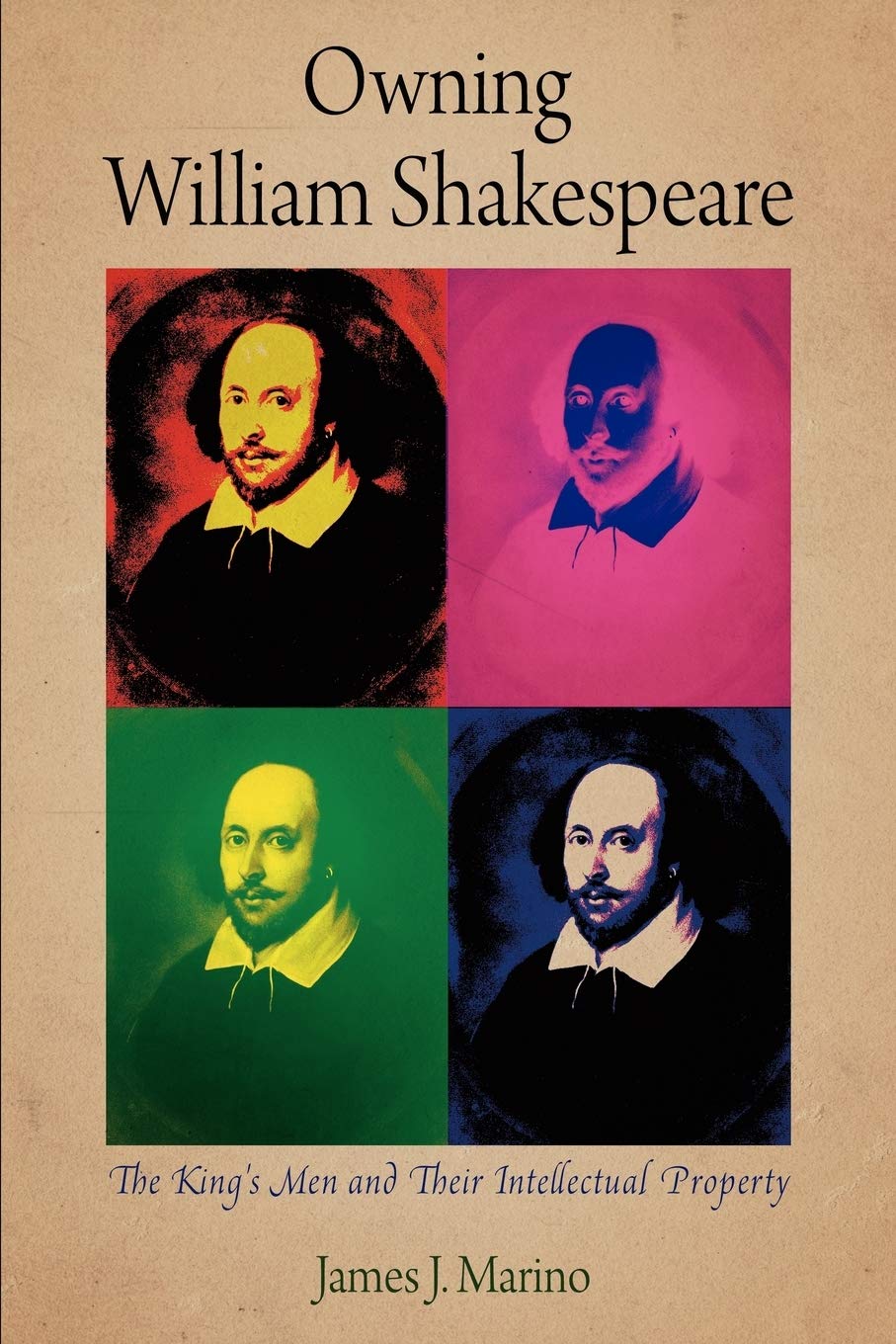
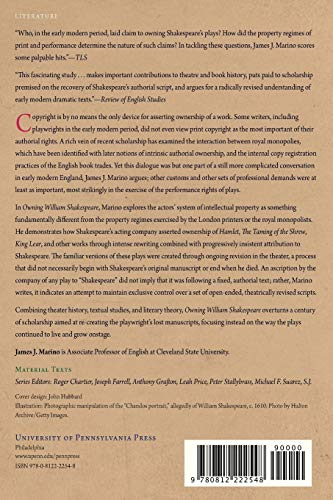
Copyright is by no means the only device for asserting ownership of a work. Some writers, including playwrights in the early modern period, did not even view print copyright as the most important of their authorial rights. A rich vein of recent scholarship has examined the interaction between royal monopolies, which have been identified with later notions of intrinsic authorial ownership, and the internal copy registration practices of the English book trades. Yet this dialogue was but one part of a still more complicated conversation in early modern England, James J. Marino argues; other customs and other sets of professional demands were at least as important, most strikingly in the exercise of the performance rights of plays.In Owning William Shakespeare James Marino explores the actors' system of intellectual property as something fundamentally different from the property regimes exercised by the London printers or the royal monopolists. Focusing on Hamlet, The Taming of the Shrew, King Lear, and other works, he demonstrates how Shakespeare's acting company asserted ownership of its plays through intense rewriting combined with progressively insistent attribution to Shakespeare. The familiar versions of these plays were created through ongoing revision in the theater, a process that did not necessarily begin with Shakespeare's original manuscript or end when he died. An ascription by the company of any play to "Shakespeare" did not imply that it was following a fixed, authorial text; rather, Marino writes, it indicates an attempt to maintain exclusive control over a set of openended, theatrically revised scripts.Combining theater history, textual studies, and literary theory, Owning William Shakespeare rethinks both the way Shakespeare's plays were created and the way they came to be known as his. It overturns a century of scholarship aimed at recreating the playwright's lost manuscripts, focusing instead on the way the plays continued to live and grow onstage.
⚠️ WARNING (California Proposition 65):
This product may contain chemicals known to the State of California to cause cancer, birth defects, or other reproductive harm.
For more information, please visit www.P65Warnings.ca.gov.