
Title
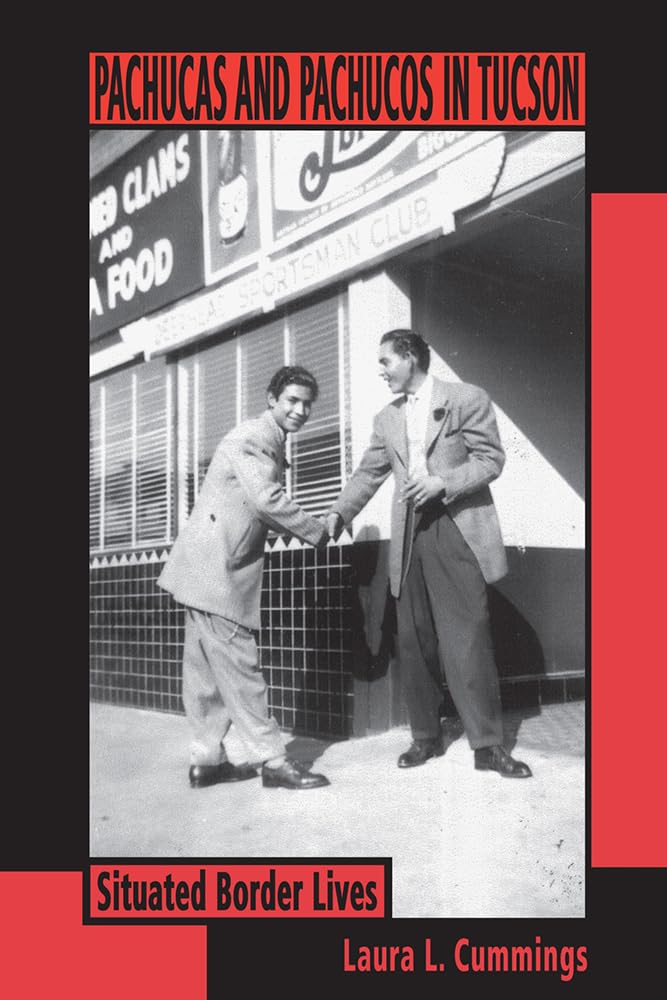
Pachucas And Pachucos In Tucson: Situated Border Lives (Southwest Center Series),Used
Sold by Ergodebooks, an authorized reseller.
Returns accepted within 30 days | support@ergodebooks.com
Shipping Information
- Free Standard Shipping — United States only
- Processing Time: 3–5 business days
- Estimated Delivery: 6–10 business days after dispatch
- Double-boxed, fully insured & discreetly packaged
- Tracking number sent via email once dispatched
Returns & Refund
Returns accepted within 30 days of delivery.
Damaged or Defective Item
Free return shipping + replacement or full refund
Wrong Item Received
Free return shipping + replacement or full refund
Change of Mind
Return shipping at customer's expense · 25% restocking fee applies
Payment Option

This innovative study examines the pachuco phenomenon from an anthropological perspective. Exploring its growth in Tucson, Arizona, the book combines ethnography, history and sociolinguistics to contextualize the early years of the phenomenon, its diverse cultural roots, and its language development. Pachucas and Pachucos in Tucson (they were sometimes called 'zootsuiters'), is based on oral history and linguistic interviews with nineteen older women and men of Mexican, Seri, Apache, Mayo, Yaqui and Spanish ancestry, along with sources in the literature, and original research. Tucson interviewees speak of the very early years of the phenomenon and the great depression. This misunderstood and even maligned culture was widespread, having existed up and down the west coast and in the Southwest and Midwest. The study explores the ethos and driving forces of the culture.The book relates 19th C. historical antecedents of the group and examines Indian influences both from Mexico and the United States. Generally, pachuco has been described as a Mexican American subculture. However, Indian influences run deep. Indeed, some Indian terms have been retained as the culture's key symbols. Their semantics are explored, with revealing and sometimes humorous results.While much of the literature on pachuco culture and language has claimed it is a male culture, and that females did not speak the language, the Tucson interviewees speak of the pachucas. Older female interviewees recount memories and perspectives, and comment on dynamics of use of the 'taboo' language for females. The book examines ways in which pachucas were especially stigmatized and marginalized. Cross cultural analysis is used to examine why many of the young women's behaviors were seen as 'unfeminine' and even scandalous.While most people conversant with the culture and language do not subscribe to the dynamics of contemporary hardcore gangs, the language and cultural sensibilities live on today in Mexican American communities across the Southwest and throughout the United States.
⚠️ WARNING (California Proposition 65):
This product may contain chemicals known to the State of California to cause cancer, birth defects, or other reproductive harm.
For more information, please visit www.P65Warnings.ca.gov.