If you have any questions, you are always welcome to contact us. We'll get back to you as soon as possible, withing 24 hours on weekdays.
Customer service
All questions about your order, return and delivery must be sent to our customer service team by e-mail at yourstore@yourdomain.com
Sale & Press
If you are interested in selling our products, need more information about our brand or wish to make a collaboration, please contact us at press@yourdomain.com
Help
If you have any questions, you are always welcome to contact us. We'll get back to you as soon as possible, withing 24 hours on weekdays.
Customer service
All questions about your order, return and delivery must be sent to our customer service team by e-mail at yourstore@yourdomain.com
Sale & Press
If you are interested in selling our products, need more information about our brand or wish to make a collaboration, please contact us at press@yourdomain.com
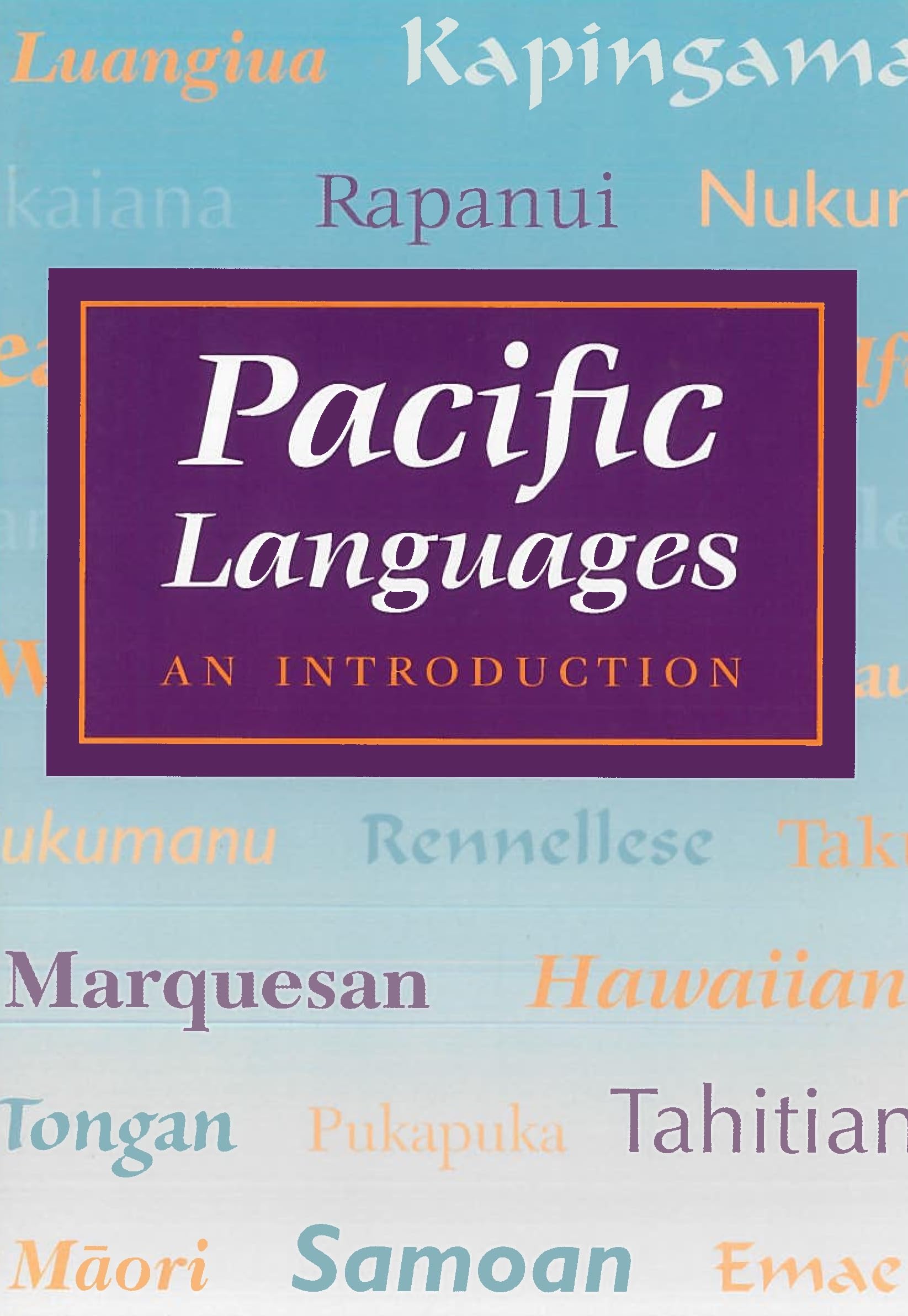
Almost onequarter of the world's languages are (or were) spoken in the Pacific, making it linguistically the most complex region in the world. Although numerous technical books on groups of Pacific or Australian languages have been published, and descriptions of individual languages are available, until now there has been no single book that attempts a wide regional coverage for a general audience. Pacific Languages introduces readers to the grammatical features of Oceanic, Papuan, and Australian languages as well as to the semantic structures of these languages. For readers without a formal linguistic background, a brief introduction to descriptive linguistics is provided.In addition to describing the structure of Pacific languages, this volume places them in their historical and geographical context, discusses the linguistic evidence for the settlement of the Pacific, and speculates on the reason for the region's many languages. It devotes considerable attention to the effects of contact between speakers of different languages and to the development of pidgin and creole languages in the Pacific. Throughout, technical language is kept to a minimum without oversimplifying the concepts or the issues involved. A glossary of technical terms, maps, and diagrams help identify a language geographically or genetically; reading lists and a language index guide the researcher interested in a particular language or group to other sources of information.Here at last is a clear and straightforward overview of Pacific languages for linguists and anyone interested in the history of sociology of the Pacific.
⚠️ WARNING (California Proposition 65):
This product may contain chemicals known to the State of California to cause cancer,
birth defects, or other reproductive harm.
For MAP (Minimum Advertised Price) violations and Intellectual Property (IP) or Trademark concerns, please contact:
support@ergodebooks.com
⚠️ California Proposition 65 Warning: Some products sold on this website may expose you to chemicals known to the State of California to cause cancer, birth defects, or other reproductive harm. For more information, visit www.P65Warnings.ca.gov.