
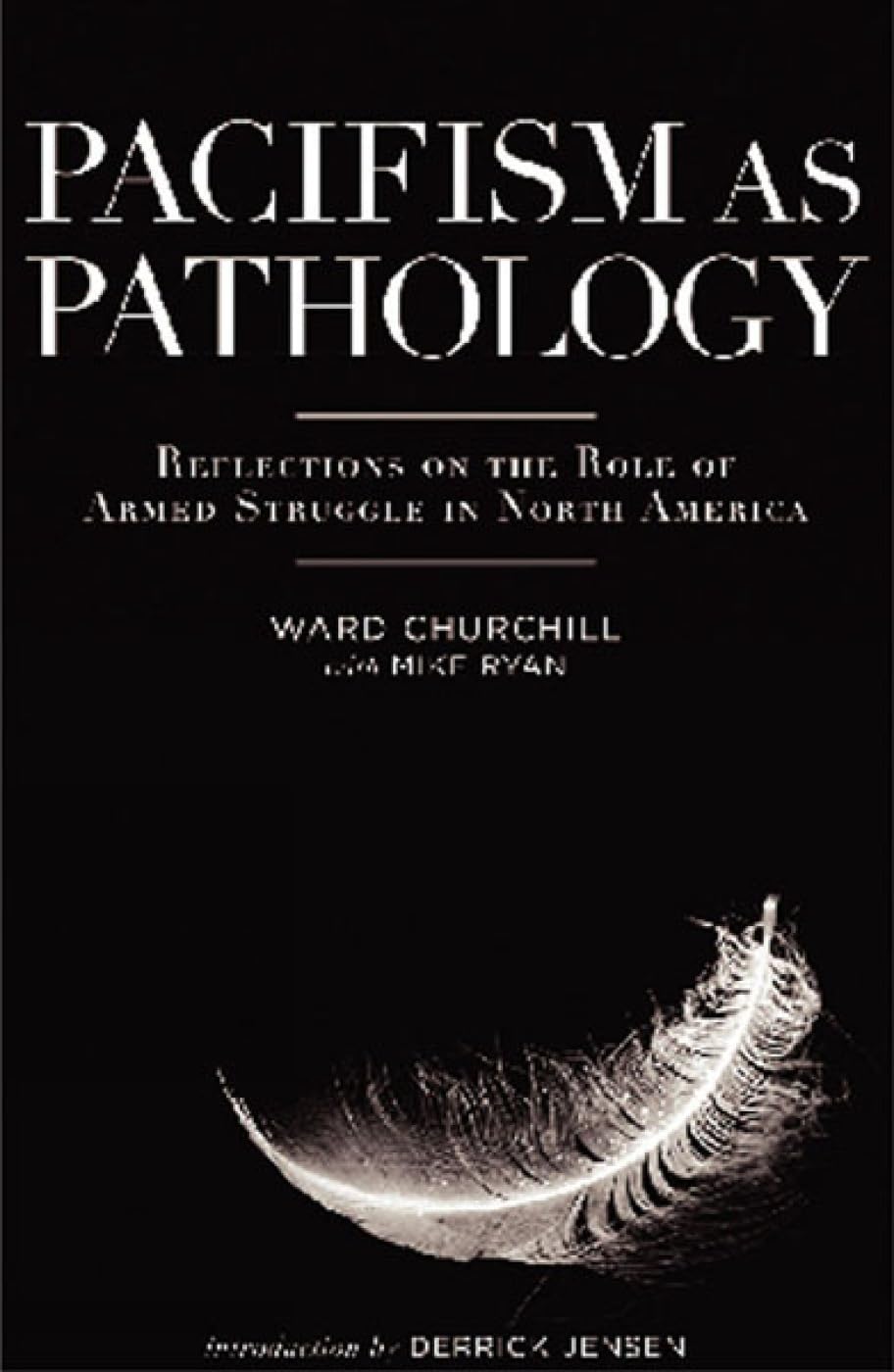
Title
Pacifism As Pathology: Reflections On The Role Of Armed Struggle In North America
Sold by Ergodebooks, an authorized reseller.
Returns accepted within 30 days | support@ergodebooks.com
Shipping Information
- Free Standard Shipping — United States only
- Processing Time: 3–5 business days
- Estimated Delivery: 6–10 business days after dispatch
- Double-boxed, fully insured & discreetly packaged
- Tracking number sent via email once dispatched
Returns & Refund
Returns accepted within 30 days of delivery.
Damaged or Defective Item
Free return shipping + replacement or full refund
Wrong Item Received
Free return shipping + replacement or full refund
Change of Mind
Return shipping at customer's expense · 25% restocking fee applies
Payment Option

This Extraordinarily Important Book Cuts To The Heart Of One Of The Central Reasons Movements To Bring About Social And Environmental Justice Always Fail. The Fundamental Question Here Is: Is Violence Ever An Acceptable Tool To Help Bring About Social Change? This Is Probably The Most Important Question Of Our Time, Yet So Often Discussions Around It Fall Into Clichs And Magical Thinking: That Somehow If We Are Merely Good And Nice Enough People, The State Will Stop Using Its Violence To Exploit Us All. Would That This Were True.Derrick Jensen, Author Of Endgame, From The Introduction.Pacifism, The Ideology Of Nonviolent Political Resistance, Has Been The Norm Among Mainstream North American Progressive Groups For Decades. But To What End? Ward Churchill Challenges The Pacifist Movements Heralded Victoriesgandhi In India, 1960S Antiwar Activists, Even Martin Luther Kings Civil Rights Movementsuggesting That Their Success Was In Spite Of, Rather Than Because Of, Their Nonviolent Tactics. Pacifism As Pathologywas Written As A Response Not Only To Churchills Frustration With His Own Activist Experience, But Also To A Debate Raging In The Activist And Academic Communities. He Argues That Pacifism Is In Many Ways Counterrevolutionary; That It Defends The Status Quo, And Doesnt Lead To Social Change. In These Times Of Upheaval And Global Protest, This Is A Vital And Extremely Relevant Book.Ward Churchill Is A Prolific Writer And Lecturer, Having Authored, Coauthored, Or Edited Over Twenty Books. He Is A Member Of The Leadership Council Of Colorado Aim (American Indian Movement).In Oakland, California On March 24, 2015 A Fire Destroyed The Ak Press Warehouse Along With Several Other Businesses. Please Consider Visiting The Ak Press Website To Learn More About The Fundraiser To Help Them And Their Neighbors.
⚠️ WARNING (California Proposition 65):
This product may contain chemicals known to the State of California to cause cancer, birth defects, or other reproductive harm.
For more information, please visit www.P65Warnings.ca.gov.
- Q: How many pages does this book have? A: This book has one hundred sixty-two pages. It's a concise read that addresses complex themes surrounding pacifism and social change.
- Q: What type of binding does this book have? A: This book is available in paperback binding. This makes it lightweight and easy to handle, perfect for reading on the go.
- Q: What is the size of this book? A: The dimensions of this book are five point twenty-five inches in length, zero point fifty-one inches in width, and seven point fifty-two inches in height. This makes it a standard size for paperback books.
- Q: Who is the author of this book? A: The author of this book is Ward Churchill. He is a prolific writer and lecturer known for his works on political activism and social justice.
- Q: What genre does this book belong to? A: This book belongs to the genre of Political Advocacy. It dives into discussions about the effectiveness of nonviolent resistance in social movements.
- Q: Is this book suitable for beginners in political activism? A: Yes, this book is suitable for beginners. It presents fundamental questions and insights that can benefit anyone interested in political activism.
- Q: Can this book be used for academic purposes? A: Yes, this book can be used for academic purposes. It addresses debates in activist and academic communities, making it a valuable resource for discussions on social change.
- Q: What themes are explored in this book? A: This book explores themes such as the role of violence in social change, the effectiveness of nonviolent resistance, and the critique of pacifism. These themes are critical in understanding political movements.
- Q: How should I handle and store this book? A: To keep this book in good condition, store it in a cool, dry place away from direct sunlight. Handle it carefully to avoid creasing the pages.
- Q: Is there a specific way to care for used books? A: Yes, used books should be kept away from moisture and dust. Regularly check for any signs of wear and tear, and consider using a book cover for protection.
- Q: What should I do if the book arrives damaged? A: If the book arrives damaged, contact the seller directly to discuss return or replacement options. Most sellers will have a policy in place for damaged items.
- Q: Is there a warranty for this book? A: No, books typically do not come with a warranty. However, it's advisable to check the return policy of the seller.
- Q: How can I find more about the author? A: You can find more about Ward Churchill through various literary sources and his published works. He has written extensively on political issues and activism.
- Q: What makes this book relevant today? A: This book is relevant today as it discusses pacifism and social change during times of upheaval and protest. Its insights continue to provoke thought on current political movements.
- Q: Who published this book? A: This book is published by AK Press. They are known for their focus on social justice and political literature.
- Q: Is this book appropriate for young readers? A: No, this book is not specifically aimed at young readers. Its themes and discussions are more suited for adult audiences interested in political theory.