
Title
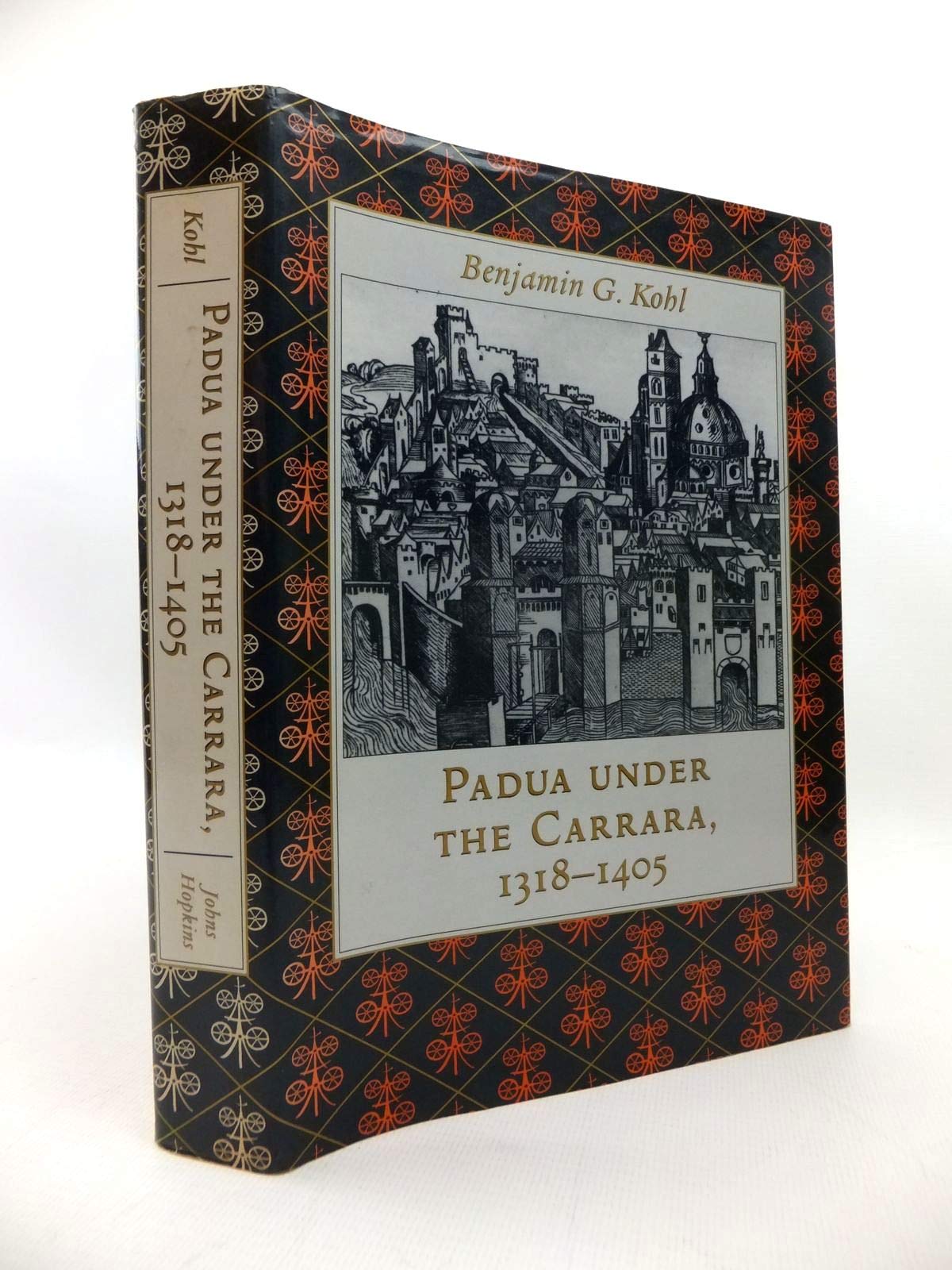
Padua under the Carrara, 13181405,Used
Sold by Ergodebooks, an authorized reseller.
Returns accepted within 30 days | support@ergodebooks.com
Shipping Information
- Free Standard Shipping — United States only
- Processing Time: 3–5 business days
- Estimated Delivery: 6–10 business days after dispatch
- Double-boxed, fully insured & discreetly packaged
- Tracking number sent via email once dispatched
Returns & Refund
Returns accepted within 30 days of delivery.
Damaged or Defective Item
Free return shipping + replacement or full refund
Wrong Item Received
Free return shipping + replacement or full refund
Change of Mind
Return shipping at customer's expense · 25% restocking fee applies
Payment Option

The product of years of archival research, this magisterial account is the first major work on the Carrara of Padua in more than a century and the first detailed study of an early Italian signorial regime ever published.Benjamin G. Kohl begins by describing Padua's late medieval setting, exploring the geographic and institutional givens inherited by the early Carrara lords as they fought to maintain their city's independence. He then offers a detailed analysis of the Carrara's centurylong relationship with their powerful neighbor, Venice sometimes protector and sometimes nemesis. Kohl shows how the Carrara, emboldened by new midcentury alliances with the Holy Roman Emporer and the King of Hungary, tried to carve out a large territorial state in northeast Italy, thereby directly challenging Venice's vital interests. In fighting for the city's survival, the Carrara lords revitalized the city's government and stabilized ties with other elite Paduan families to form a unified society. Yet in the end, Padua succumbed to Venice's overwhelming power.Kohl also examines the changing composition of the Carrara family relationships, the regime's household government, its economic and landed interests, investments in textiles and trade, and the development of its own mint and tax system. By providing a nuanced view of the growth of state power in the hands of a single dynasty, Kohl lays to rest the received notion of the lawless Renaissance despot. Enriched with illustrations from contemporary frescoes, architectural monuments, manuscripts, and maps, this important study will set the terms for all future discussion of the nature of the late medieval Italian dynastic state.
⚠️ WARNING (California Proposition 65):
This product may contain chemicals known to the State of California to cause cancer, birth defects, or other reproductive harm.
For more information, please visit www.P65Warnings.ca.gov.