
Title
Panarchy: Understanding Transformations in Human and Natural Systems,Used
Sold by Ergodebooks, an authorized reseller.
Returns accepted within 30 days | support@ergodebooks.com
Shipping Information
- Free Standard Shipping — United States only
- Processing Time: 3–5 business days
- Estimated Delivery: 6–10 business days after dispatch
- Double-boxed, fully insured & discreetly packaged
- Tracking number sent via email once dispatched
Returns & Refund
Returns accepted within 30 days of delivery.
Damaged or Defective Item
Free return shipping + replacement or full refund
Wrong Item Received
Free return shipping + replacement or full refund
Change of Mind
Return shipping at customer's expense · 25% restocking fee applies
Payment Option

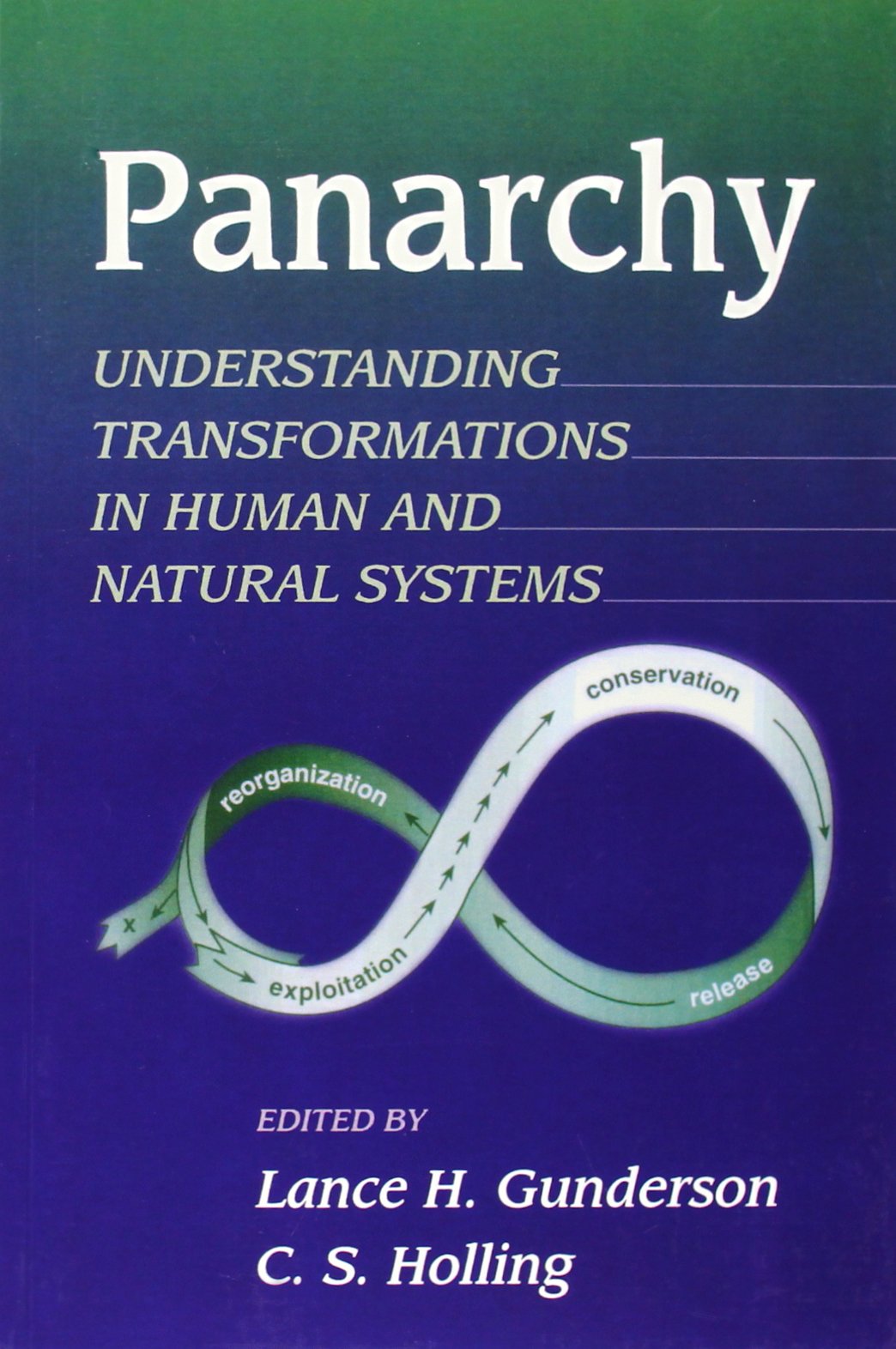
Creating institutions to meet the challenge of sustainability is arguably the most important task confronting society; it is also dauntingly complex. Ecological, economic, and social elements all play a role, but despite ongoing efforts, researchers have yet to succeed in integrating the various disciplines in a way that gives adequate representation to the insights of each.Panarchy, a term devised to describe evolving hierarchical systems with multiple interrelated elements, offers an important new framework for understanding and resolving this dilemma. Panarchy is the structure in which systems, including those of nature (e.g., forests) and of humans (e.g., capitalism), as well as combined humannatural systems (e.g., institutions that govern natural resource use such as the Forest Service), are interlinked in continual adaptive cycles of growth, accumulation, restructuring, and renewal. These transformational cycles take place at scales ranging from a drop of water to the biosphere, over periods from days to geologic epochs. By understanding these cycles and their scales, researchers can identify the points at which a system is capable of accepting positive change, and can use those leverage points to foster resilience and sustainability within the system.This volume brings together leading thinkers on the subject including Fikret Berkes, Buz Brock, Steve Carpenter, Carl Folke, Lance Gunderson, C.S. Holling, Don Ludwig, KarlGoran Maler, Charles Perrings, Marten Scheffer, Brian Walker, and Frances Westley to develop and examine the concept of panarchy and to consider how it can be applied to human, natural, and humannatural systems. Throughout, contributors seek to identify adaptive approaches to management that recognize uncertainty and encourage innovation while fostering resilience.The book is a fundamental new development in a widely acclaimed line of inquiry. It represents the first step in integrating disciplinary knowledge for the adaptive management of humannatural systems across widely divergent scales, and offers an important base of knowledge from which institutions for adaptive management can be developed. It will be an invaluable source of ideas and understanding for students, researchers, and professionals involved with ecology, conservation biology, ecological economics, environmental policy, or related fields.
⚠️ WARNING (California Proposition 65):
This product may contain chemicals known to the State of California to cause cancer, birth defects, or other reproductive harm.
For more information, please visit www.P65Warnings.ca.gov.
- Q: How many pages does this book have? A: This book contains five hundred thirty-six pages. It provides an in-depth exploration of panarchy in human and natural systems.
- Q: What is the binding type of this book? A: The book is available in paperback binding. This makes it lightweight and portable for easy reading.
- Q: What are the dimensions of the book? A: The book measures six inches in length, one and a half inches in width, and nine point zero two inches in height. These dimensions make it convenient for storage and handling.
- Q: Is this book suitable for beginners? A: Yes, this book is suitable for beginners. It introduces complex topics in an accessible manner, making it a great starting point.
- Q: What topics does this book cover? A: The book covers topics related to ecological, economic, and social systems. It emphasizes adaptive management and sustainability strategies.
- Q: What is the reading level of this book? A: The book is suitable for college-level readers and professionals. Its content is designed for those involved in environmental economics and related fields.
- Q: How should I store this book? A: Store this book in a cool, dry place away from direct sunlight. This will help preserve its condition over time.
- Q: Can I return this book if I don't like it? A: Yes, the book has a no-quibbles return policy. You can return it if it does not meet your expectations.
- Q: How do I keep this book in good condition? A: To keep the book in good condition, avoid bending the spine and handle it gently. Consider using a protective cover.
- Q: Is there a warranty for this book? A: No, there is no warranty for this book. However, it is guaranteed to arrive in mint condition.
- Q: What if the book arrives damaged? A: If the book arrives damaged, you can return it for a full refund. Ensure to check the condition upon receipt.
- Q: Is this book appropriate for environmental policy professionals? A: Yes, this book is highly appropriate for environmental policy professionals. It provides essential insights into adaptive management.
- Q: Does the book discuss innovative approaches to sustainability? A: Yes, it discusses innovative approaches to sustainability and resilience within human-natural systems.
- Q: Who is the author of this book? A: The author of this book is Lance H. Gunderson. He is known for his work in ecology and environmental management.
- Q: What is the main theme of the book? A: The main theme of the book is understanding transformational cycles in human and natural systems through the concept of panarchy.
- Q: Does the book include contributions from other experts? A: Yes, the book includes contributions from multiple leading thinkers in the field. Their insights enrich the discussion on panarchy.