
Title
Paper Families: Identity, Immigration Administration, And Chinese Exclusion (Politics, History, And Culture),Used
Sold by Ergodebooks, an authorized reseller.
Returns accepted within 30 days | support@ergodebooks.com
Shipping Information
- Free Standard Shipping — United States only
- Processing Time: 3–5 business days
- Estimated Delivery: 6–10 business days after dispatch
- Double-boxed, fully insured & discreetly packaged
- Tracking number sent via email once dispatched
Returns & Refund
Returns accepted within 30 days of delivery.
Damaged or Defective Item
Free return shipping + replacement or full refund
Wrong Item Received
Free return shipping + replacement or full refund
Change of Mind
Return shipping at customer's expense · 25% restocking fee applies
Payment Option

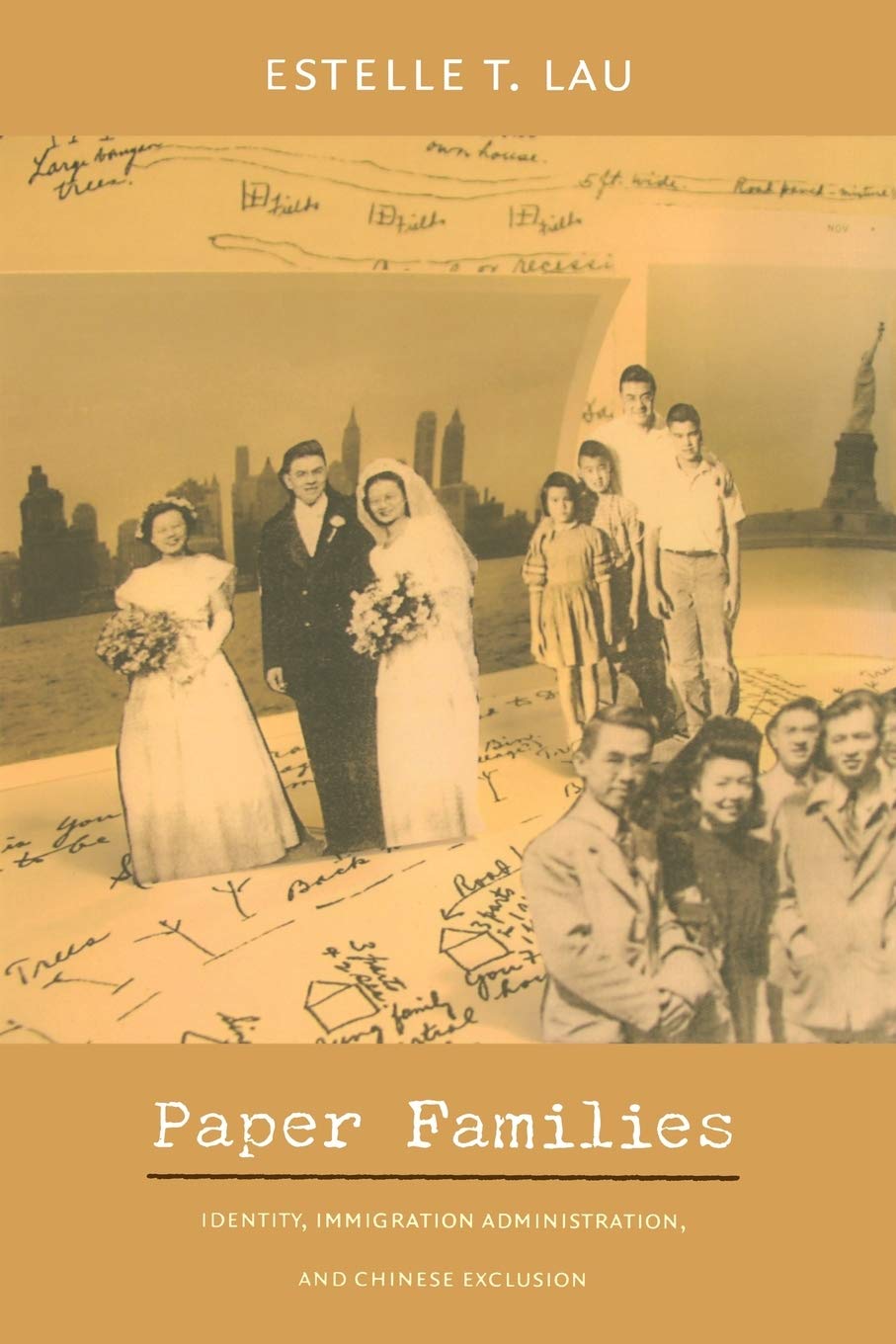
The Chinese Exclusion Act of 1882 made the Chinese the first immigrant group officially excluded from the United States. In Paper Families, Estelle T. Lau demonstrates how exclusion affected Chinese American communities and initiated the development of restrictive U.S. immigration policies and practices. Through the enforcement of the Exclusion Act and subsequent legislation, the U.S. immigration service developed new forms of record keeping and identification practices. Meanwhile, Chinese Americans took advantage of the systems loophole: children of U.S. citizens were granted automatic eligibility for immigration. The result was an elaborate system of paper families, in which U.S. citizens of Chinese descent claimed fictive, or paper, children who could then use their kinship status as a basis for entry into the United States. This subterfuge necessitated the creation of crib sheets outlining genealogies and providing village maps and other information that could be used during immigration processing.Drawing on these documents as well as immigration case files, legislative materials, and transcripts of interviews and court proceedings, Lau reveals immigration as an interactive process. Chinese immigrants and their U.S. families were subject to regulation and surveillance, but they also manipulated and thwarted those regulations, forcing the U.S. government to adapt its practices and policies. Lau points out that the Exclusion Acts and the pseudofamilial structures that emerged in response have had lasting effects on Chinese American identity. She concludes with a look at exclusions legacy, including the Confession Program of the 1960s that coerced people into divulging the names of paper family members and efforts made by Chinese American communities to recover their lost family histories.
⚠️ WARNING (California Proposition 65):
This product may contain chemicals known to the State of California to cause cancer, birth defects, or other reproductive harm.
For more information, please visit www.P65Warnings.ca.gov.