
Title
Paper Sloyd: A Handbook for Primary Grades (Yesterday's Classics),Used
Sold by Ergodebooks, an authorized reseller.
Returns accepted within 30 days | support@ergodebooks.com
Shipping Information
- Free Standard Shipping — United States only
- Processing Time: 3–5 business days
- Estimated Delivery: 6–10 business days after dispatch
- Double-boxed, fully insured & discreetly packaged
- Tracking number sent via email once dispatched
Returns & Refund
Returns accepted within 30 days of delivery.
Damaged or Defective Item
Free return shipping + replacement or full refund
Wrong Item Received
Free return shipping + replacement or full refund
Change of Mind
Return shipping at customer's expense · 25% restocking fee applies
Payment Option

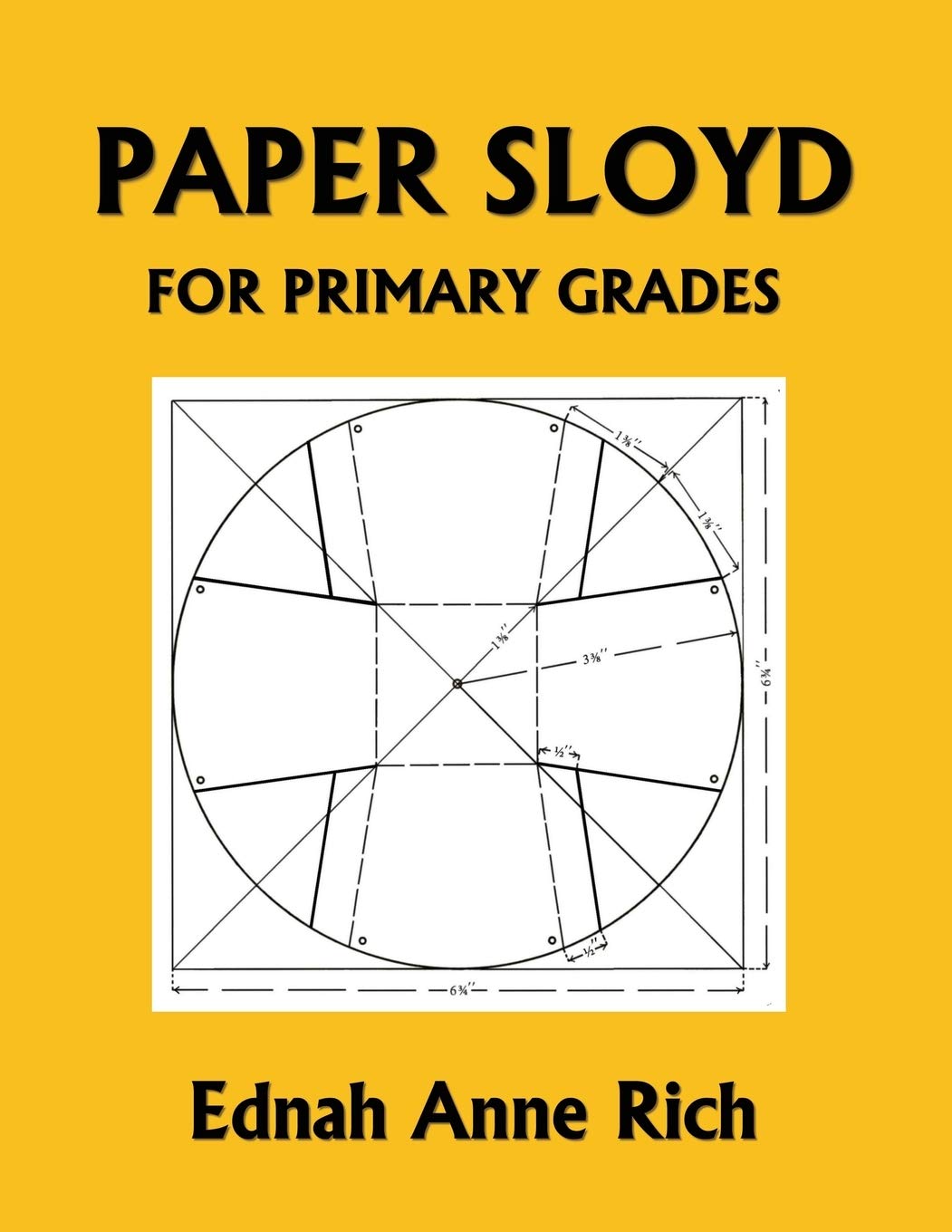
This Yesterday's Classics edition is a complete reproduction and updating of the 1905 edition by Ednah Anne Rich. While the text remains faithful to the original, the models have been remastered to be more useful to the student and the teacher. Each project consists of a newlyredrawn model along with its accompanying directions. Great care has been given to the readability of the directions, particularly the numbers, both in the text and the diagrams. The book contains models for the first, second, and third year, along with supplementary models for the advanced student. Miss Rich's extremely helpful introduction to the book has been retained, which covers not only the pedagogical foundations for paper sloyd, and the necessary equipment and materials, but also offers guidance to the lessexperienced teacher.Sloyd, which originated in Sweden and then grew popular throughout the world in the late 1800's and early 1900's, has been defined as 'tool work so arranged and employed as to stimulate and promote vigorous, intelligent selfactivity for a purpose, which the worker recognizes as good.' The construction of a concrete product, as a result of careful measurement, attention to detail, and the close reading of instructions has been shown to be important for a child's intellectual development. In the completion of projects and progression through the years, a student will be gradually introduced to mathematical and geometric concepts and will be able to see the relation between a threedimensional object and its corresponding twodimensional pattern. Each project builds on the ones that came before, so the student moves from the known to the unknown, the simple to the more complex, and the concrete to the abstract.Paper sloyd has the benefit of using easily accessible and inexpensive tools and materials, many of which can already be found in the home. The projects are simple, but designed to be useful and attractive to both the child and the family. And each project is completed entirely by the child, which generates a sense of pride and ownership. Sloyd was practiced in Charlotte Mason schools in the first three elementary grades, and remains a part of the national educational curriculum in several Scandinavian countries to this day.'Observation is quickened; eyes are trained to see right lines and distances, thusaiding in freehand drawing and writing; while the hand and wrist muscles, being used for a definite purpose, unconsciously become obedient assistants. Paper sloyd rightly presented justifies itself. ' (Paper Sloyd for Primary Grades, p.1.)
⚠️ WARNING (California Proposition 65):
This product may contain chemicals known to the State of California to cause cancer, birth defects, or other reproductive harm.
For more information, please visit www.P65Warnings.ca.gov.