
Title
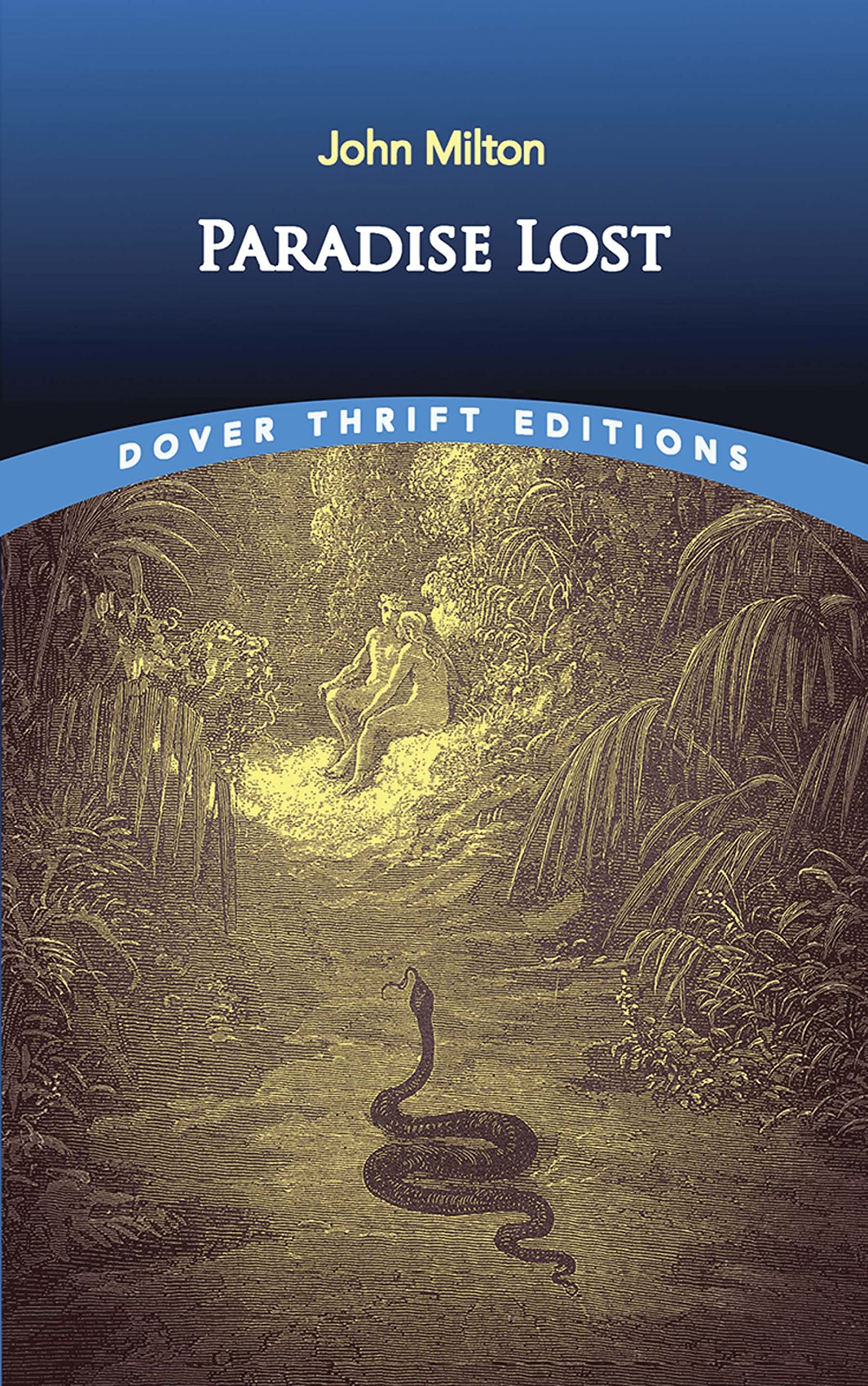
Paradise Lost (Dover Thrift Editions: Poetry),Used
Sold by Ergodebooks, an authorized reseller.
Returns accepted within 30 days | support@ergodebooks.com
Shipping Information
- Free Standard Shipping — United States only
- Processing Time: 3–5 business days
- Estimated Delivery: 6–10 business days after dispatch
- Double-boxed, fully insured & discreetly packaged
- Tracking number sent via email once dispatched
Returns & Refund
Returns accepted within 30 days of delivery.
Damaged or Defective Item
Free return shipping + replacement or full refund
Wrong Item Received
Free return shipping + replacement or full refund
Change of Mind
Return shipping at customer's expense · 25% restocking fee applies
Payment Option

John Milton's great 17thcentury epic draws upon Bible stories and classical mythology to explore the meaning of existence, as understood by people of the Western world. Its roots lie in the Genesis account of the world's creation and the first humans. Its focus is a poetic interpretation 'Of Man's first disobedience, and the fruit / Of that forbidden tree whose mortal taste / Brought death into the world, and all our woe / With loss of Eden.'In sublime poetry of extraordinary beauty, Milton's poem references tales from Ovid's Metamorphoses, Homer's Iliad and Odyssey, and Virgil's Aeneid. But one need not be a classical scholar to appreciate Paradise Lost. In addition to its imaginative use of language, the poem features a powerful and sympathetic portrait of Lucifer, the rebel angel who frequently outshines his moral superiors. With Milton's deft use of irony, the devil makes evil appear good, just as satanic practices may seem attractive at first glance.Paradise Lost has exercised enormous influence on generations of artists and their works, ranging from the Romantic poets William Blake and Percy Bysshe Shelley to Joseph Haydn's oratorio The Creation and J. R. R. Tolkien's The Lord of the Rings.
⚠️ WARNING (California Proposition 65):
This product may contain chemicals known to the State of California to cause cancer, birth defects, or other reproductive harm.
For more information, please visit www.P65Warnings.ca.gov.
- Q: What is the main theme of Paradise Lost? A: The main theme of Paradise Lost is the exploration of good and evil, free will, and the nature of rebellion, focusing on the biblical story of humanity's fall from grace.
- Q: Who is the author of Paradise Lost? A: Paradise Lost was authored by John Milton, a prominent 17th-century poet.
- Q: What is the significance of Lucifer's character in the poem? A: Lucifer, or Satan, is portrayed as a charismatic and morally complex figure, representing rebellion against divine authority, which captivates readers and raises questions on morality.
- Q: When was Paradise Lost first published? A: Paradise Lost was first published in 1667, making it one of the earliest and most important epic poems in English literature.
- Q: What type of binding is available for the Dover edition of Paradise Lost? A: The Dover edition of Paradise Lost is available in paperback binding.
- Q: How many pages are in the Dover Thrift edition of Paradise Lost? A: The Dover Thrift edition of Paradise Lost contains 480 pages.
- Q: What are some literary references found in Paradise Lost? A: Paradise Lost incorporates references to classical works such as Ovid's Metamorphoses, Homer's Iliad and Odyssey, and Virgil's Aeneid, showcasing Milton's extensive literary knowledge.
- Q: Is Paradise Lost accessible to modern readers? A: Yes, Paradise Lost is considered accessible to modern readers due to its imaginative language and thought-provoking themes, making it engaging for a wide audience.
- Q: What is the publication date of the Dover edition of Paradise Lost? A: The Dover edition of Paradise Lost was published on June 10, 2005.
- Q: What is included in the Dover Thrift Editions library? A: The Dover Thrift Editions library includes over 700 titles of classic literature, featuring a diverse range of authors and genres, including fiction, nonfiction, plays, and poetry.