
Title
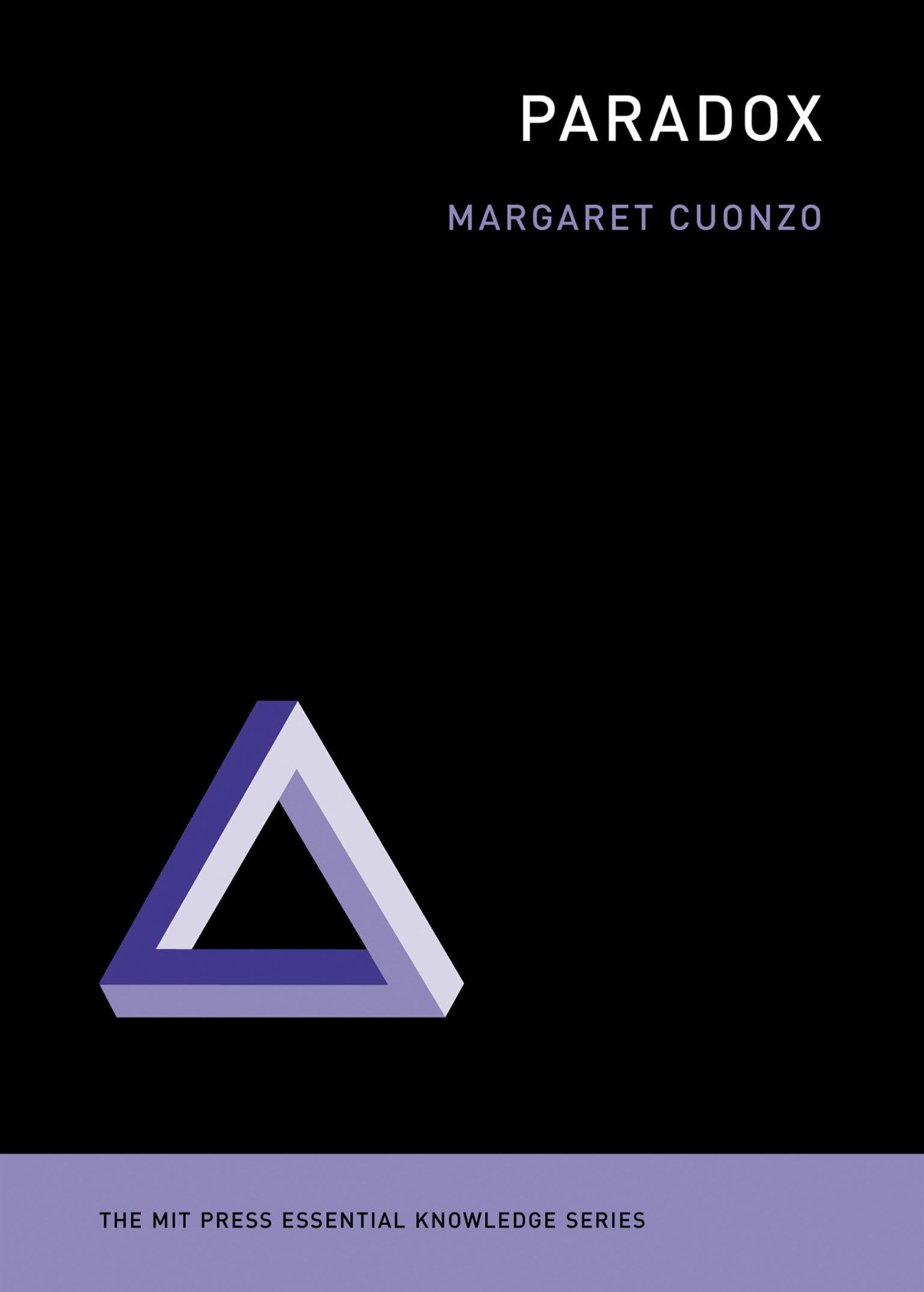
Paradox (The MIT Press Essential Knowledge series),Used
Sold by Ergodebooks, an authorized reseller.
Returns accepted within 30 days | support@ergodebooks.com
Shipping Information
- Free Standard Shipping — United States only
- Processing Time: 3–5 business days
- Estimated Delivery: 6–10 business days after dispatch
- Double-boxed, fully insured & discreetly packaged
- Tracking number sent via email once dispatched
Returns & Refund
Returns accepted within 30 days of delivery.
Damaged or Defective Item
Free return shipping + replacement or full refund
Wrong Item Received
Free return shipping + replacement or full refund
Change of Mind
Return shipping at customer's expense · 25% restocking fee applies
Payment Option

An introduction to paradoxes showing that they are more than mere puzzles but can prompt new ways of thinking.Thinkers have been fascinated by paradox since long before Aristotle grappled with Zeno's. In this volume in The MIT Press Essential Knowledge series, Margaret Cuonzo explores paradoxes and the strategies used to solve them. She finds that paradoxes are more than mere puzzles but can prompt new ways of thinking.A paradox can be defined as a set of mutually inconsistent claims, each of which seems true. Paradoxes emerge not just in salons and ivory towers but in everyday life. (An Internet search for paradox brings forth a picture of an ashtray with a no smoking symbol inscribed on it.) Proposing solutions, Cuonzo writes, is a natural response to paradoxes. She invites us to rethink paradoxes by focusing on strategies for solving them, arguing that there is much to be learned from this, regardless of whether any of the more powerful paradoxes is even capable of solution.Cuonzo offers a catalog of paradoxsolving strategiesincluding the PreemptiveStrike (questioning the paradox itself), the OddGuyOut (calling one of the assumptions into question), and the YouCan'tGetTherefromHere (denying the validity of the reasoning). She argues that certain types of solutions work better in some contexts than others, and that as paradoxicality increases, the success of certain strategies grows more unlikely. Cuonzo shows that the processes of paradox generation and solution proposal are interesting and important ones. Discovering a paradox leads to advances in knowledge: new science often stems from attempts to solve paradoxes, and the concepts used in the new sciences lead to new paradoxes. As Niels Bohr wrote, How wonderful that we have met with a paradox. Now we have some hope of making progress.
⚠️ WARNING (California Proposition 65):
This product may contain chemicals known to the State of California to cause cancer, birth defects, or other reproductive harm.
For more information, please visit www.P65Warnings.ca.gov.