If you have any questions, you are always welcome to contact us. We'll get back to you as soon as possible, withing 24 hours on weekdays.
Customer service
All questions about your order, return and delivery must be sent to our customer service team by e-mail at yourstore@yourdomain.com
Sale & Press
If you are interested in selling our products, need more information about our brand or wish to make a collaboration, please contact us at press@yourdomain.com
Help
If you have any questions, you are always welcome to contact us. We'll get back to you as soon as possible, withing 24 hours on weekdays.
Customer service
All questions about your order, return and delivery must be sent to our customer service team by e-mail at yourstore@yourdomain.com
Sale & Press
If you are interested in selling our products, need more information about our brand or wish to make a collaboration, please contact us at press@yourdomain.com
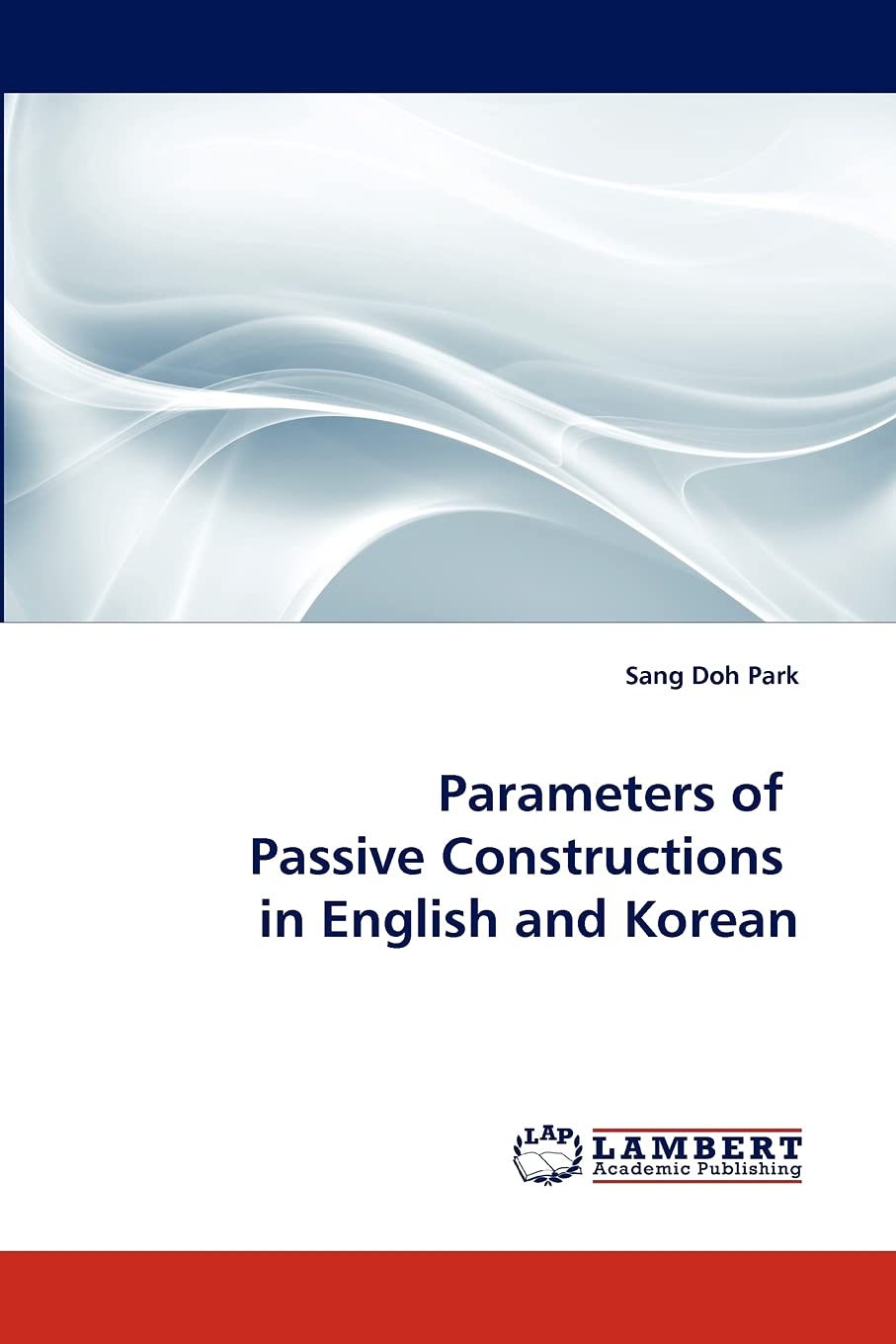
This monograph investigates the syntactic variation between English passives and their Korean counterparts. Descriptive and pedagogical treatments of Korean usually make an analogy between English passive sentences and Korean sentences involving the causative/passive suffixes i/hi/li/ki, but this commonly accepted correspondence between English and Korean passives results from the misleading assumption that verbal passive constructions show the identical syntactic pattern within and across languages. Park proposes a radical approach in which the Korean passives with the causativepassive suffixes are characterized by lexical rules that manipulate the argument structure of base verbs and require the socalled logical object to merge in the external argument position. The author's provocative ideas would provide fascinating insights for those who have a serious interest in Korean syntax and parametric variation in passives.
⚠️ WARNING (California Proposition 65):
This product may contain chemicals known to the State of California to cause cancer,
birth defects, or other reproductive harm.
For MAP (Minimum Advertised Price) violations and Intellectual Property (IP) or Trademark concerns, please contact:
support@ergodebooks.com
⚠️ California Proposition 65 Warning: Some products sold on this website may expose you to chemicals known to the State of California to cause cancer, birth defects, or other reproductive harm. For more information, visit www.P65Warnings.ca.gov.