
Title
Parking Reform Made Easy,Used
Sold by Ergodebooks, an authorized reseller.
Returns accepted within 30 days | support@ergodebooks.com
Shipping Information
- Free Standard Shipping — United States only
- Processing Time: 3–5 business days
- Estimated Delivery: 6–10 business days after dispatch
- Double-boxed, fully insured & discreetly packaged
- Tracking number sent via email once dispatched
Returns & Refund
Returns accepted within 30 days of delivery.
Damaged or Defective Item
Free return shipping + replacement or full refund
Wrong Item Received
Free return shipping + replacement or full refund
Change of Mind
Return shipping at customer's expense · 25% restocking fee applies
Payment Option

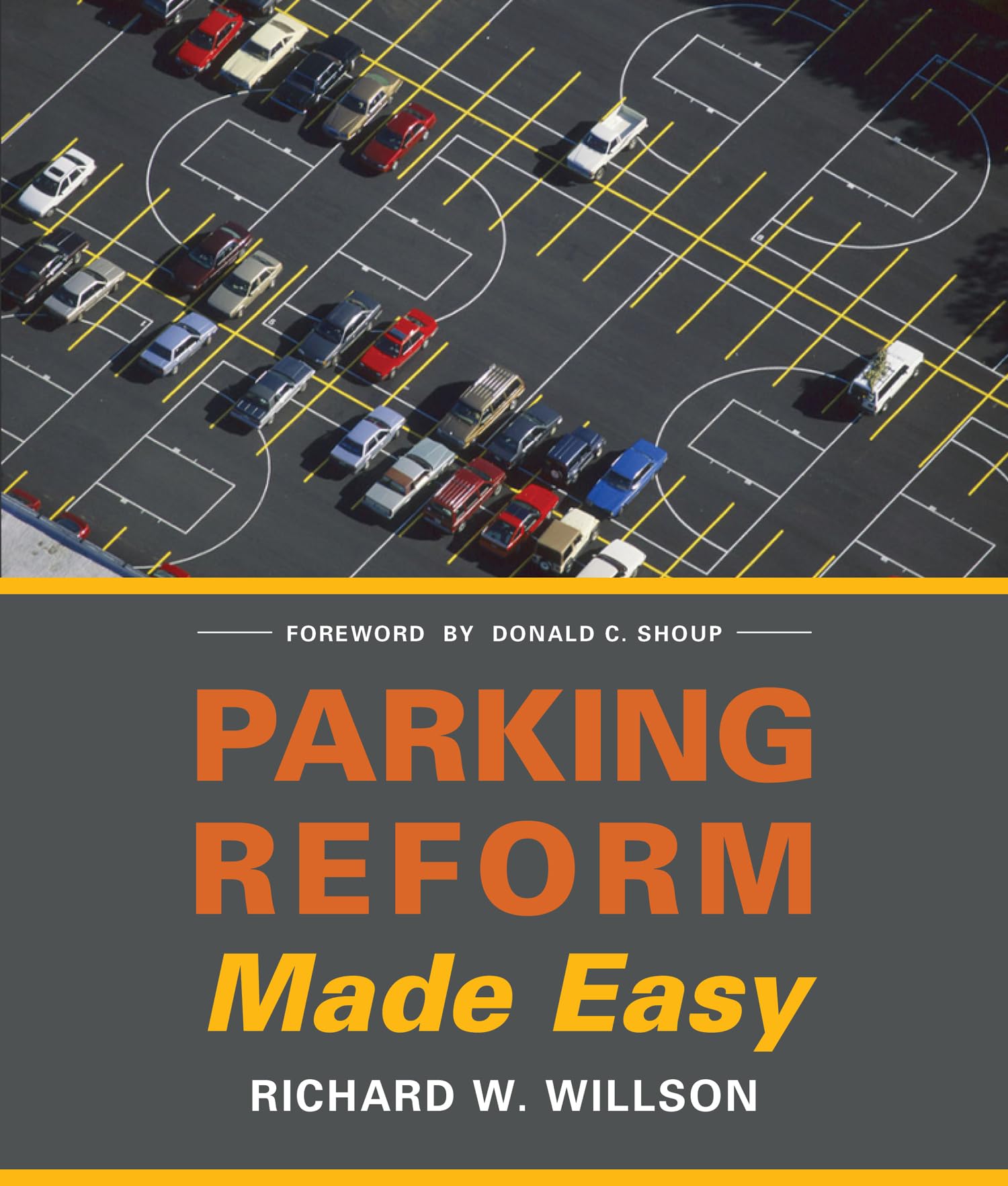
Today, there are more than three parking spaces for every car in the United States. No one likes searching for a space, but in many areas, there is an oversupply, wasting valuable land, damaging the environment, and deterring development. Richard W. Willson argues that the problem stems from outdated minimum parking requirements. In this practical guide, he shows practitioners how to reform parking requirements in a way that supports planning goals and creates vibrant cities.Local planners and policymakers, traffic engineers, developers, and community members are actively seeking this information as they institute principles of Smart Growth. But making effective changes requires more than relying on national averages or copying information from neighboring communities. Instead, Willson shows how professionals can confidently create requirements based on local parking data, an understanding of future trends affecting parking use, and clear policy choices.After putting parking and parking requirements in context, the book offers an accessible tool kit to get started and repair outdated requirements. It looks in depth at parking requirements for multifamily developments, including incomerestricted housing, workplaces, and mixeduse, transitoriented development. Case studies for each type of parking illustrate what works, what doesnt, and how to overcome challenges. Willson also explores the process of codifying regulations and how to work with stakeholders to avoid political conflicts.With Parking Reform Made Easy, practitioners will learn, stepbystep, how to improve requirements. The result will be higher density, healthier, more energyefficient, and livable communities. This book will be exceptionally useful for local and regional land use and transportation planners, transportation engineers, real estate developers, citizen activists, and students of transportation planning and urban policy.
⚠️ WARNING (California Proposition 65):
This product may contain chemicals known to the State of California to cause cancer, birth defects, or other reproductive harm.
For more information, please visit www.P65Warnings.ca.gov.