
Title
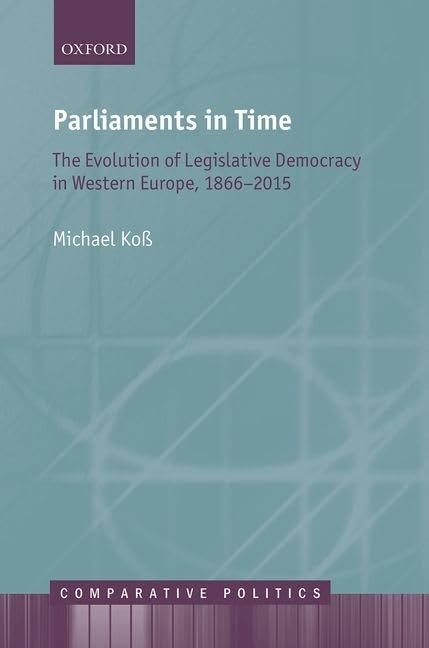
Parliaments in Time: The Evolution of Legislative Democracy in Western Europe, 18662015 (Comparative Politics),Used
Sold by Ergodebooks, an authorized reseller.
Returns accepted within 30 days | support@ergodebooks.com
Shipping Information
- Free Standard Shipping — United States only
- Processing Time: 3–5 business days
- Estimated Delivery: 6–10 business days after dispatch
- Double-boxed, fully insured & discreetly packaged
- Tracking number sent via email once dispatched
Returns & Refund
Returns accepted within 30 days of delivery.
Damaged or Defective Item
Free return shipping + replacement or full refund
Wrong Item Received
Free return shipping + replacement or full refund
Change of Mind
Return shipping at customer's expense · 25% restocking fee applies
Payment Option

Comparative Politics is a series for researchers, teachers, and students of political sciencethat deals with contemporary government and politics. Global in scope, books in the seriesare characterized by a stress on comparative analysis and strong methodological rigour. Theseries is published in association with the European Consortium for Political Research. Formore information visit: www.ecprnet.euThe series is edited by Emilie van Haute, Professor of Political Science, Universit libre deBruxelles; Ferdinand MllerRommel, Director of the Center for the Study of Democracy,Leuphana University; and Susan Scarrow, John and Rebecca Moores Professor of PoliticalScience, University of Houston.How can we explain the evolution of legislatures in Western Europe? This book analysesninety procedural reforms which restructured control over the plenary agenda andcommittee power in Britain, France, Sweden, and Germany between 1866 and 2015.Legislatures evolve towards one of two procedural ideal types: talking (where governmentscontrol the agenda) or working legislatures (with powerful committees). All else beingequal, legislators' demand for megaseats on legislative committees triggers the evolutionof working legislatures. If, however, legislators fail to centralize agenda control inresponse to antisystem obstruction, legislative procedures break down. Rather thana decline of legislatures, talking legislatures accordingly indicate the resilience oflegislative democracy. In conclusion, the book shows the causal nexus betweenprocedural reforms and (legislative) democracy.
⚠️ WARNING (California Proposition 65):
This product may contain chemicals known to the State of California to cause cancer, birth defects, or other reproductive harm.
For more information, please visit www.P65Warnings.ca.gov.