
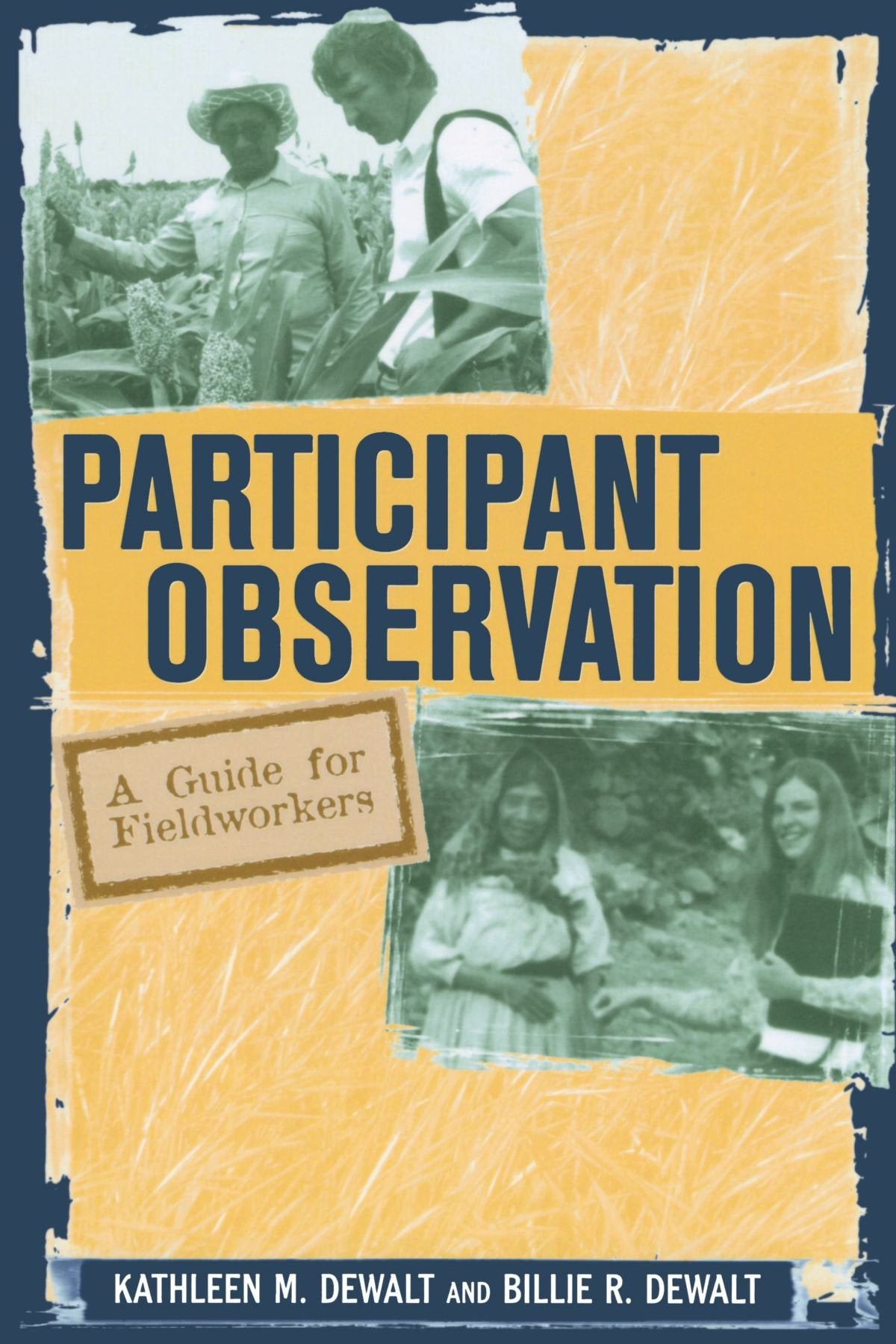
Title
Participant Observation: A Guide For Fieldworkers
Sold by Ergodebooks, an authorized reseller.
Returns accepted within 30 days | support@ergodebooks.com
Shipping Information
- Free Standard Shipping — United States only
- Processing Time: 3–5 business days
- Estimated Delivery: 6–10 business days after dispatch
- Double-boxed, fully insured & discreetly packaged
- Tracking number sent via email once dispatched
Returns & Refund
Returns accepted within 30 days of delivery.
Damaged or Defective Item
Free return shipping + replacement or full refund
Wrong Item Received
Free return shipping + replacement or full refund
Change of Mind
Return shipping at customer's expense · 25% restocking fee applies
Payment Option

Participant Observation Is A Central And Defining Method Of Research In Cultural Anthropology, As Well As A Common Feature Of Qualitative Research In A Number Of Other Disciplinessociology, Education, Health Sciences. The Authors Have Written The Basic Guide To The Collection Of Systematic Data In Naturalistic Settingscommunities In Many Different Culturesto Achieve An Understanding Of The Most Fundamental Processes And Patterns Of Social Life. This Book Is Written For The Beginning Researcher In Qualitative And Ethnographic Methods, And Is A Useful Reference For The Experienced Researcher Who Wishes To Develop Further Field Skills. Kathleen And Billie Dewalt Provide A Summary Of The Theoretical And Historical Background Of The Method, But Focus Especially On Practical Applications And Acquisition Of The Techniques Of Participant Observation. Chapters Include Explanations Of Becoming A Participant (Involvement) And An Observer (Detachment) In Fieldwork; Sampling Techniques; Gender And Sex Issues In The Field; Designing Research; Language Facility And Crosscultural Communication Skills; Informal Interviewing; Writing Descriptive Field Notes; Analyzing Field Notes; And Dealing With Culture Shock, Dangerous Field Situations And Ethical Concerns. The Advantages Of Participant Observation Exist In Enhancing The Quality Of Research Data And Continual Reassessment Of Research Questions. Participant Observation Is The Foundation Of Ethnographic Research Design, And Supports And Complements Other Types Of Qualitative And Quantitative Data Collection. This Book Will Be A Valuable Reference For Anthropologists, Sociologists, And Other Researchers Who Employ Qualitative Methods In Their Research.
⚠️ WARNING (California Proposition 65):
This product may contain chemicals known to the State of California to cause cancer, birth defects, or other reproductive harm.
For more information, please visit www.P65Warnings.ca.gov.
- Q: How many pages does this book have? A: This book has two hundred ninety-six pages. It's a comprehensive guide for fieldworkers in qualitative research.
- Q: What is the binding type of 'Participant Observation'? A: This book is a paperback edition. The paperback binding allows for easy handling and portability.
- Q: What are the dimensions of this book? A: The book measures six point fourteen inches in length, one point one inches in width, and nine point seventeen inches in height. These dimensions make it a convenient size for reading.
- Q: Who are the authors of this guide? A: The authors are Kathleen Musante DeWalt and Billie R. DeWalt. They are experienced researchers in qualitative and ethnographic methods.
- Q: Is this book suitable for beginners? A: Yes, this book is designed for beginning researchers. It provides practical guidance on participant observation techniques.
- Q: Can experienced researchers benefit from this book? A: Yes, experienced researchers can also find this book useful. It offers advanced insights for developing field skills.
- Q: How should I approach participant observation? A: The book explains how to become both a participant and an observer in fieldwork. It includes strategies for balancing involvement with detachment.
- Q: Does this book cover ethical concerns in research? A: Yes, ethical concerns are addressed in the book. It provides guidance on navigating ethical dilemmas in fieldwork.
- Q: What techniques are discussed in the book? A: The book covers techniques such as sampling, informal interviewing, and writing descriptive field notes. These techniques are essential for effective qualitative research.
- Q: How should I store this book? A: Store this book in a cool, dry place to maintain its condition. Avoid exposure to direct sunlight to prevent fading.
- Q: Can I clean this book if it gets dirty? A: Yes, you can gently wipe the cover with a damp cloth. Avoid using harsh chemicals that could damage the material.
- Q: What if my book arrives damaged? A: If your book arrives damaged, you should contact the seller for a return or exchange. Most sellers have policies in place for such issues.
- Q: Is this book focused on a specific culture? A: No, the book is not limited to a specific culture. It discusses participant observation in various cultural settings.
- Q: Are there examples of fieldwork in the book? A: Yes, the authors include examples from different research contexts. These examples illustrate the application of participant observation.
- Q: What is the primary focus of the book? A: The primary focus is on the methods and techniques of participant observation in research. It aims to enhance the quality of qualitative data.
- Q: Does this book provide a historical background of participant observation? A: Yes, it includes a summary of the theoretical and historical background. This context helps readers understand the evolution of the method.