If you have any questions, you are always welcome to contact us. We'll get back to you as soon as possible, withing 24 hours on weekdays.
Customer service
All questions about your order, return and delivery must be sent to our customer service team by e-mail at yourstore@yourdomain.com
Sale & Press
If you are interested in selling our products, need more information about our brand or wish to make a collaboration, please contact us at press@yourdomain.com
Help
If you have any questions, you are always welcome to contact us. We'll get back to you as soon as possible, withing 24 hours on weekdays.
Customer service
All questions about your order, return and delivery must be sent to our customer service team by e-mail at yourstore@yourdomain.com
Sale & Press
If you are interested in selling our products, need more information about our brand or wish to make a collaboration, please contact us at press@yourdomain.com
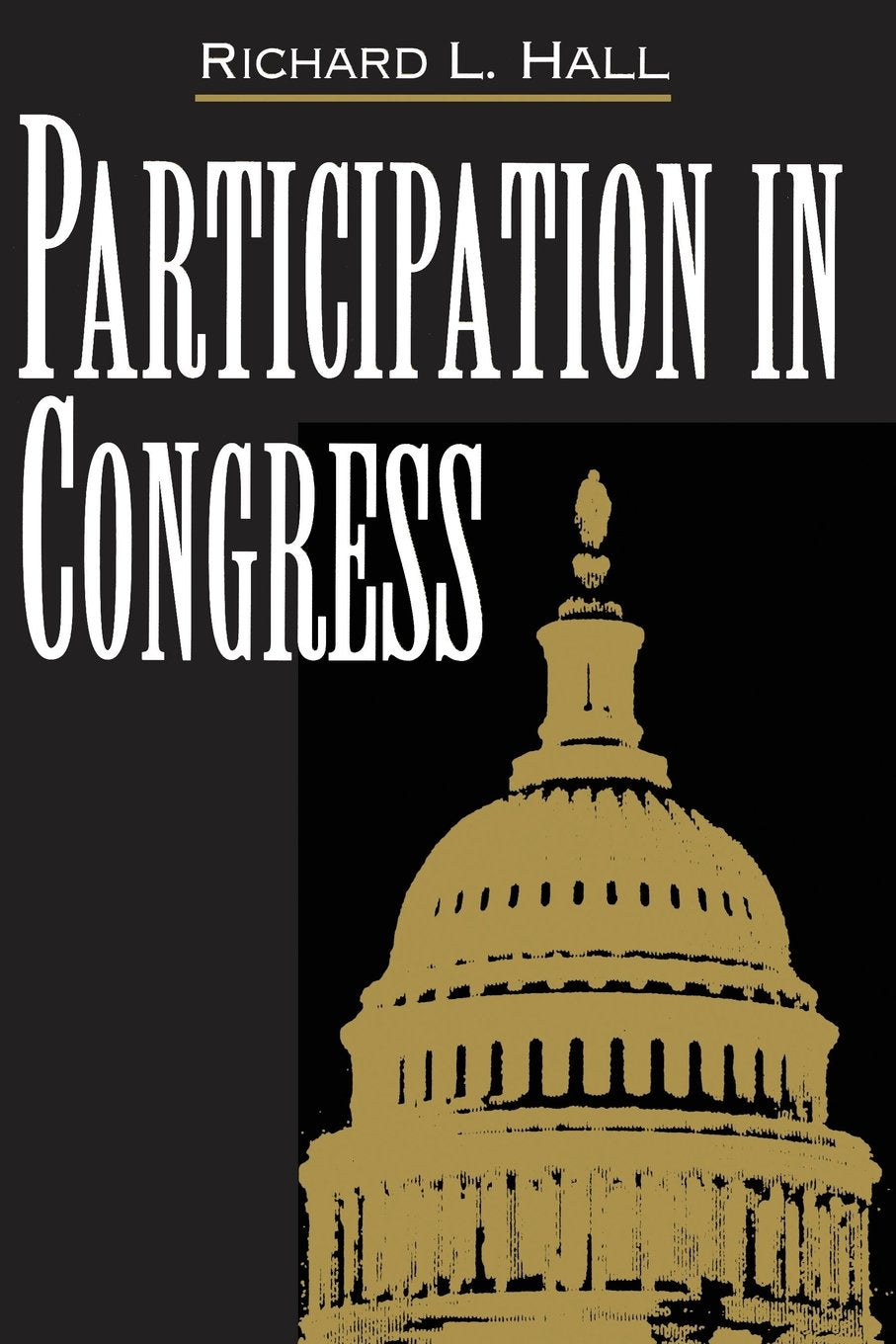
For every issue that arises on the legislative agenda, each member of Congress must make two decisions: What position to take and how active to be. The first has been thoroughly studied. But little is understood about the second. In this landmark book, a leading scholar of congressional studies draws on extensive interviews and congressional documents to uncover when and how members of congress participate at the subcommittee, committee, and floor stages of legislative decision making. Richard L. Hall develops an original theory to account for varying levels of participation across members and issues, within House and Senate, and across pre and postreform periods of the modern Congress.By closely analyzing behavior on sixty bills in the areas of agriculture, human resources, and commerce, Hall finds that participation at each stage of the legislative process is rarely universal and never equal. On any given issue, most members who are eligible to participate forego the opportunity to do so, leaving a selfselected few to deliberate on the policy. These active members often do not reflect the values and interests evident in their parent chamber. A deeper understanding of congressional participation, the author contends, informs related inquiries into how well members of congress represent constituents' interests, what factors influence legislative priorities, how members gain legislative leverage on specific issues, and how well collective choice in Congress meets democratic standards of representative deliberation.
⚠️ WARNING (California Proposition 65):
This product may contain chemicals known to the State of California to cause cancer,
birth defects, or other reproductive harm.
For MAP (Minimum Advertised Price) violations and Intellectual Property (IP) or Trademark concerns, please contact:
support@ergodebooks.com
⚠️ California Proposition 65 Warning: Some products sold on this website may expose you to chemicals known to the State of California to cause cancer, birth defects, or other reproductive harm. For more information, visit www.P65Warnings.ca.gov.