
Title
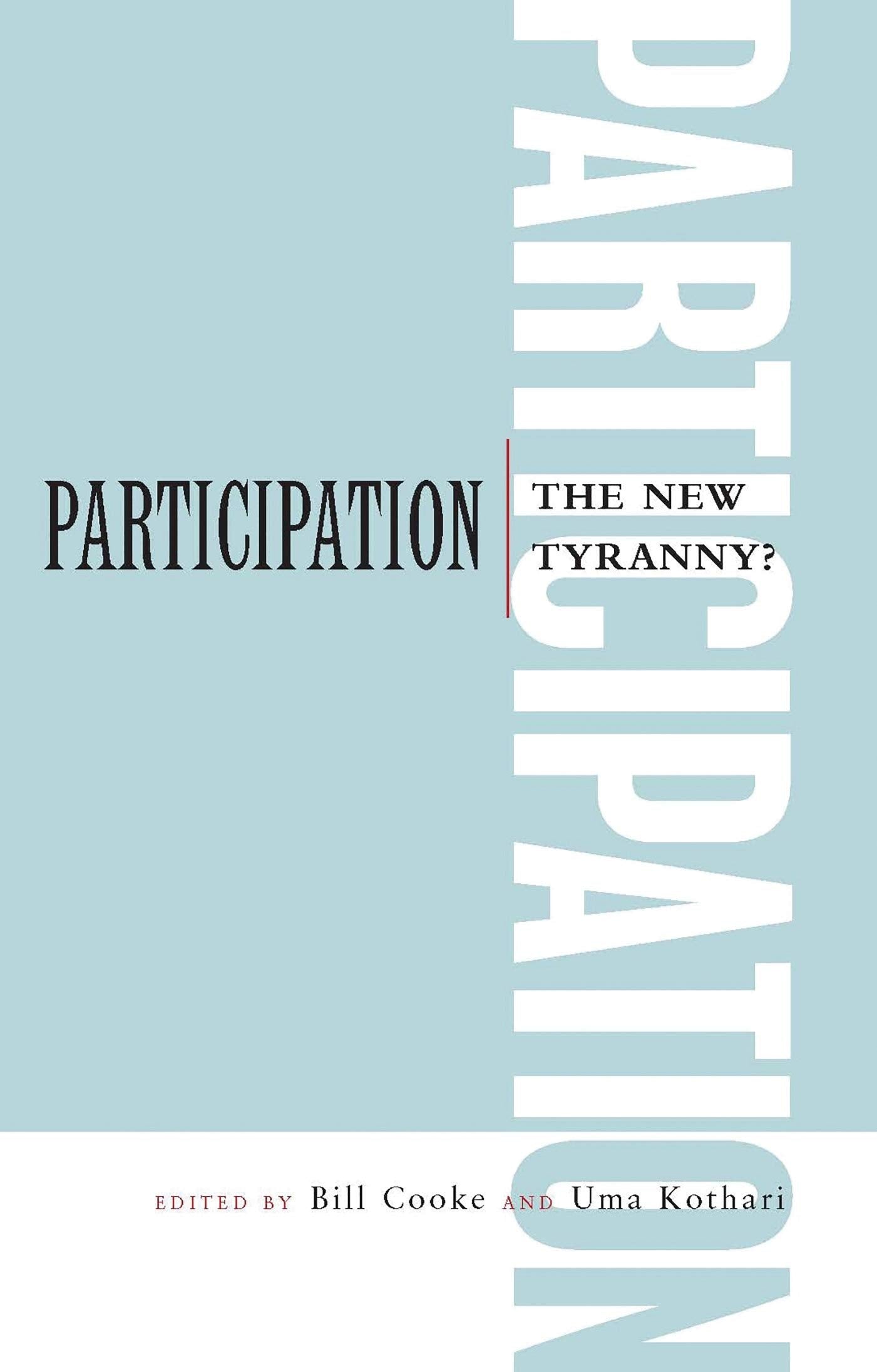
Participation: The New Tyranny?,Used
Sold by Ergodebooks, an authorized reseller.
Returns accepted within 30 days | support@ergodebooks.com
Shipping Information
- Free Standard Shipping — United States only
- Processing Time: 3–5 business days
- Estimated Delivery: 6–10 business days after dispatch
- Double-boxed, fully insured & discreetly packaged
- Tracking number sent via email once dispatched
Returns & Refund
Returns accepted within 30 days of delivery.
Damaged or Defective Item
Free return shipping + replacement or full refund
Wrong Item Received
Free return shipping + replacement or full refund
Change of Mind
Return shipping at customer's expense · 25% restocking fee applies
Payment Option

This book is about participatory development's potential for tyranny, showing how it can lead to the unjust and illegitimate exercise of power. It is the first booklength treatment to address the gulf between the almost universally fashionable rhetoric of participation, which promises empowerment and appropriate development on the one hand, and what actually happens when consultants and activists promote and practise participatory development, on the other.The contributors, all social scientists and development specialists, come from various disciplines and a wide variety of hands on experience. Their aim is to provide a sharp contrast to the seductive claims of participation, and to warn its advocates of the pitfalls and limitations of participatory development. The book also challenges participatory practitioners and theorists to reassess their own role in promoting a set of practices which are at best naive about questions of power, and at worst serve systematically to reinforce, rather than overthrow, existing inequalities.For the recipients of participatory development this book provides critical insights into the history, institutions, and daytoday activities through which participation is 'done to' them. It provides them with a range of arguments which support the legitimate decision not to participate on others' terms.This rigorous and provocative understanding of participatory development is one which donors, academics and practitioners will find hard to ignore.
⚠️ WARNING (California Proposition 65):
This product may contain chemicals known to the State of California to cause cancer, birth defects, or other reproductive harm.
For more information, please visit www.P65Warnings.ca.gov.
- Q: How many pages does the book have? A: The book has two hundred twenty-four pages. This length allows for an in-depth exploration of participatory development and its implications.
- Q: What is the binding type of this book? A: This book is paperback bound. The paperback format makes it lightweight and easy to carry.
- Q: What are the dimensions of the book? A: The dimensions are five point five one inches in length, zero point five two inches in width, and eight point five inches in height. These dimensions make it a convenient size for reading.
- Q: Who is the author of this book? A: The author is Professor Bill Cooke. He is known for his expertise in social science and development practices.
- Q: What is the primary focus of the book? A: The primary focus is on the potential tyranny of participatory development. It critiques how these practices can reinforce existing inequalities.
- Q: Is this book suitable for academic use? A: Yes, this book is suitable for academic use. It offers critical insights and discussions valuable for students and professionals in development studies.
- Q: How can I apply the insights from this book? A: You can apply the insights by critically evaluating participatory practices in your own work. The book encourages readers to reassess their roles in development.
- Q: Is this book recommended for practitioners in development? A: Yes, it is recommended for practitioners. The book provides warnings about the pitfalls of participatory development, making it essential reading.
- Q: What audience is this book intended for? A: The intended audience includes academics, donors, and practitioners in development. It addresses both theoretical and practical concerns in the field.
- Q: Can this book help in decision-making for participation? A: Yes, it can aid in decision-making regarding participation. It offers arguments supporting the choice not to participate under certain conditions.
- Q: Does the book provide historical context? A: Yes, the book provides historical context for participatory development. It explores how these practices have evolved over time.
- Q: What type of insights does the book offer? A: The book offers critical insights into the actual effects of participatory development. It contrasts theory with practice, highlighting potential issues.
- Q: Is the book appropriate for casual readers? A: While it is academic in nature, casual readers interested in social issues may find it insightful. However, some concepts may require background knowledge.
- Q: What should I do if the book arrives damaged? A: If the book arrives damaged, you should contact customer support for a return or exchange. Most retailers have policies in place for such issues.
- Q: How should I store this book for longevity? A: Store the book in a dry, cool place away from direct sunlight. Proper storage will help maintain its condition over time.