
Title
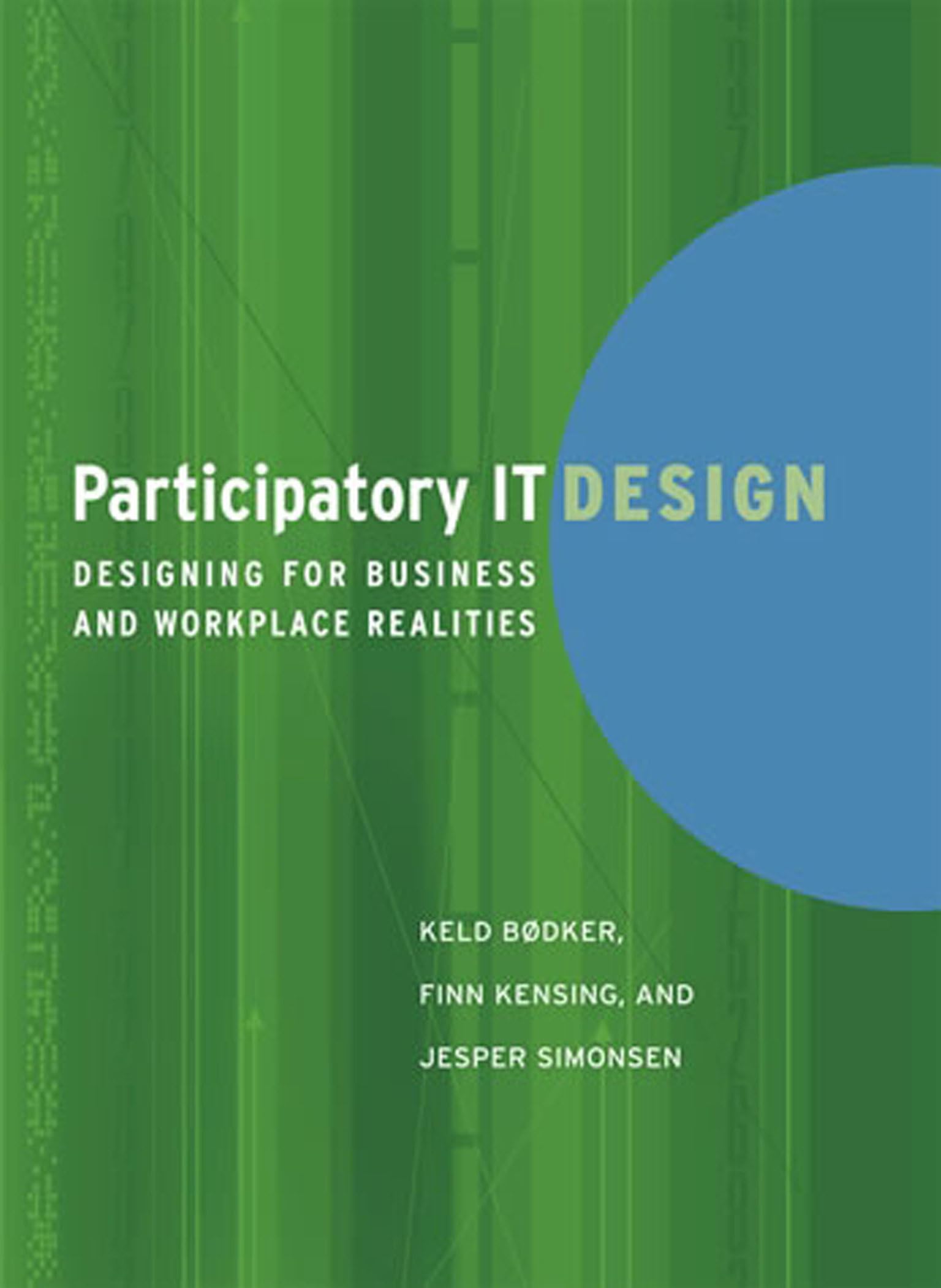
Participatory IT Design: Designing for Business and Workplace Realities (Mit Press),Used
Sold by Ergodebooks, an authorized reseller.
Returns accepted within 30 days | support@ergodebooks.com
Shipping Information
- Free Standard Shipping — United States only
- Processing Time: 3–5 business days
- Estimated Delivery: 6–10 business days after dispatch
- Double-boxed, fully insured & discreetly packaged
- Tracking number sent via email once dispatched
Returns & Refund
Returns accepted within 30 days of delivery.
Damaged or Defective Item
Free return shipping + replacement or full refund
Wrong Item Received
Free return shipping + replacement or full refund
Change of Mind
Return shipping at customer's expense · 25% restocking fee applies
Payment Option

A stateoftheart method for introducing new information technology systems into an organization, illustrated by case studies drawn from a tenyear research project.The goal of participatory IT design is to set sensible, general, and workable guidelines for the introduction of new information technology systems into an organization. Reflecting the latest systemsdevelopment research, this book encourages a businessoriented and socially sensitive approach that takes into consideration the specific organizational context as well as firsthand knowledge of users' work practices and allows all stakeholdersusers, management, and staffto participate in the process. Participatory IT Design is a guide to the theory and practice of this process that can be used as a reference work by IT professionals and as a textbook for classes in information technology at introductory through advanced levels. Drawing on the work of a tenyear research program in which the authors worked with Danish and American companies, the book offers a framework for carrying out IT design projects as well as case studies that stand as examples of the process.The method presented in Participatory IT Designknown as the MUST method, after a Danish acronym for theories and methods of initial analysis and design activitieswas developed and tested in thirteen industrial design projects for companies and organizations that included an American airline, a multinational pharmaceutical company, a national broadcasting corporation, a multinational software house, and American and Danish universities. The first part of the book introduces the concepts and guidelines on which the method is based, while the second and third parts are designed as a practical toolbox for utilizing the MUST method. Part II describes the four phases of a design projectinitiation, inline analysis, indepth analysis, and innovation. Part III explains the method's sixteen techniques and related representation tools, offering first an overview and then specific descriptions of each in separate sections.
⚠️ WARNING (California Proposition 65):
This product may contain chemicals known to the State of California to cause cancer, birth defects, or other reproductive harm.
For more information, please visit www.P65Warnings.ca.gov.
- Q: What is the page count of the book? A: The book has three hundred fifty-six pages. This makes it a comprehensive resource for understanding participatory IT design.
- Q: What are the dimensions of this book? A: The book measures seven point zero one inches in length, nine point zero two inches in height, and zero point nine one inches in width. These dimensions make it portable for reading.
- Q: What binding type does this book have? A: The book is available in paperback binding. This allows for flexibility and ease of use while reading.
- Q: Who is the author of this book? A: The author of the book is Keld Bodker. He is known for his expertise in information technology design.
- Q: What is the book's primary focus? A: The book focuses on participatory IT design in organizations. It emphasizes user involvement and practical strategies for implementing technology.
- Q: Is there a specific method discussed in the book? A: Yes, the book discusses the MUST method for IT design. This method is backed by extensive research and practical case studies.
- Q: How can I apply the concepts in this book? A: You can apply the concepts by following the guidelines and techniques outlined in each section. The book provides a practical toolbox for implementation.
- Q: Is this book suitable for beginners? A: Yes, it is suitable for both beginners and advanced readers. The book serves as both a reference and a textbook for various levels of information technology courses.
- Q: How does the book address user needs? A: The book encourages consideration of users' work practices. It aims to integrate their feedback into the design process.
- Q: What type of case studies are featured in the book? A: The book includes case studies from a ten-year research project. These case studies illustrate the application of the MUST method in real-world settings.
- Q: What are the key phases of the design process mentioned? A: The book outlines four key phases: initiation, in-line analysis, in-depth analysis, and innovation. Each phase is crucial for successful IT design.
- Q: Does this book cover the latest research in IT design? A: Yes, it reflects the latest systems-development research. It combines theoretical insights with practical applications.
- Q: Is the content of the book suitable for management professionals? A: Yes, the content is relevant for management professionals. It addresses the importance of stakeholder involvement in IT design.
- Q: What techniques does the book introduce? A: The book introduces sixteen techniques related to the MUST method. Each technique is described in detail for practical application.
- Q: Can this book be used as a textbook for classes? A: Yes, it can be used as a textbook for classes in information technology. Its structured approach makes it ideal for educational settings.
- Q: What is the overall goal of participatory IT design discussed in the book? A: The overall goal is to establish workable guidelines for introducing new information technology systems. It emphasizes a socially sensitive approach.