
Title
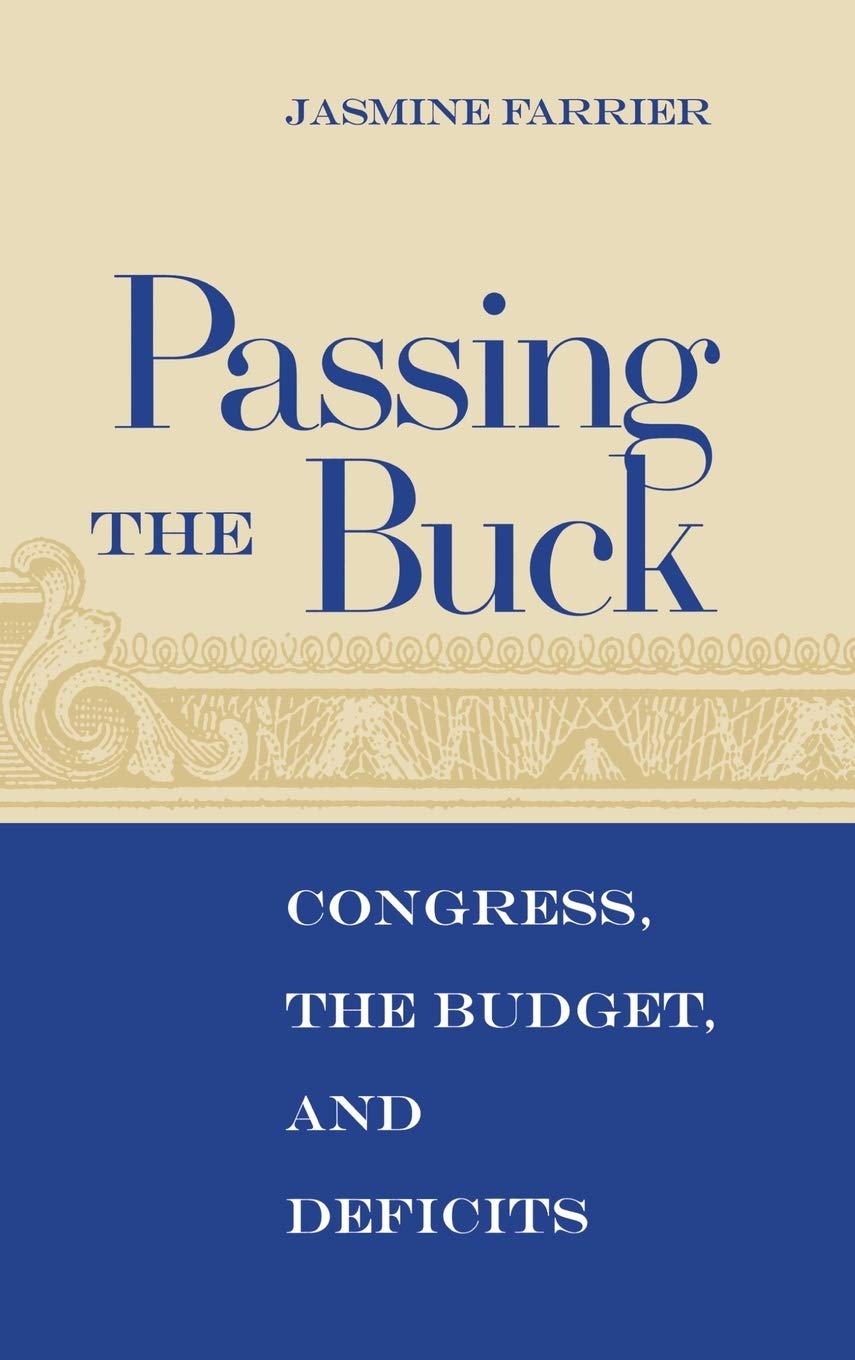
Passing The Buck: Congress, The Budget, And Deficits,Used
Sold by Ergodebooks, an authorized reseller.
Returns accepted within 30 days | support@ergodebooks.com
Shipping Information
- Free Standard Shipping — United States only
- Processing Time: 3–5 business days
- Estimated Delivery: 6–10 business days after dispatch
- Double-boxed, fully insured & discreetly packaged
- Tracking number sent via email once dispatched
Returns & Refund
Returns accepted within 30 days of delivery.
Damaged or Defective Item
Free return shipping + replacement or full refund
Wrong Item Received
Free return shipping + replacement or full refund
Change of Mind
Return shipping at customer's expense · 25% restocking fee applies
Payment Option

In the past thirty years, Congress has dramatically changed its response to unpopular deficit spending. While the landmark Congressional Budget Act of 1974 tried to increase congressional budgeting powers, new budget processes created in the 1980s and 1990s were all explicitly designed to weaken member, majority, and institutional budgeting prerogatives. These later reforms shared the premise that Congress cannot naturally forge balanced budgets without new automatic mechanisms and enhanced presidential oversight. So Democratic majorities in Congress gave new budgeting powers to Presidents Reagan and Bush, and then Republicans did the same for President Clinton.Passing the Buck examines how Congress is increasing delegation of a wide variety of powers to the president in recent years. Jasmine Farrier assesses why institutional ambition in the early 1970s turned into institutional ambivalence about whether Congress is equipped to handle its constitutional duties.
⚠️ WARNING (California Proposition 65):
This product may contain chemicals known to the State of California to cause cancer, birth defects, or other reproductive harm.
For more information, please visit www.P65Warnings.ca.gov.