
Title
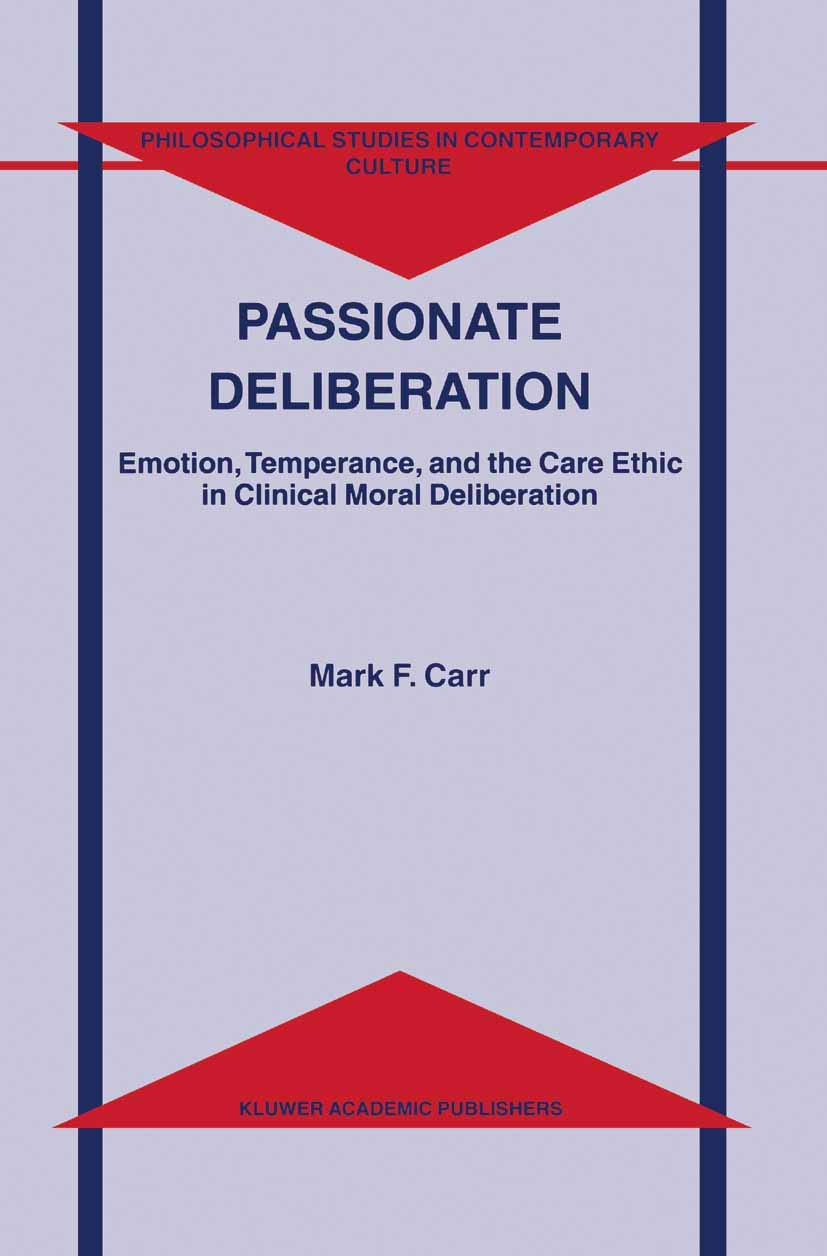
Passionate Deliberation: Emotion, Temperance, and the Care Ethic in Clinical Moral Deliberation (Philosophical Studies in Contem,Used
Sold by Ergodebooks, an authorized reseller.
Returns accepted within 30 days | support@ergodebooks.com
Shipping Information
- Free Standard Shipping — United States only
- Processing Time: 3–5 business days
- Estimated Delivery: 6–10 business days after dispatch
- Double-boxed, fully insured & discreetly packaged
- Tracking number sent via email once dispatched
Returns & Refund
Returns accepted within 30 days of delivery.
Damaged or Defective Item
Free return shipping + replacement or full refund
Wrong Item Received
Free return shipping + replacement or full refund
Change of Mind
Return shipping at customer's expense · 25% restocking fee applies
Payment Option

Despite the modem recovery of virtue theory in ethics, conceptions of temperance remain largely unexamined. In this study I offer an examination ofcertain interpretive threads oftemperance as a virtue beginning in classical philosophy and moving through early to medieval Christian conceptions. I find contemporary notions oftemperance to be sorely lacking when compared and contrasted to these historical conceptions. Aristotelian and Thomistic accounts of temperance are particularly important to the normative statement of temperance I offer here. To fully understand temperance one must recognize its place among the moral virtues, in particular phronesis or practical judgment. Though I place temperance within practical judgment, this study stops short ofoffering a full account of virtue theory and how it mayor may not relate to other theories ofthe moral life. While contemporary views of temperance occasionally note its general relevance to the experience of emotion, I elaborate upon the work of temperance as an essential part of the effort to include emotion in the moral life. In presentday studies of the psychology of emotion, cognitive theories have reasserted the classical conception of emotion as consisting of both physiological and psychological elements ofhuman personhood. Temperance is the primary virtue in the moral agent's effort to appropriately include the entirety ofthe emotional experience in moral deliberation. I find it relevant to a moral response to both the physiological and psychological elements of emotion.
⚠️ WARNING (California Proposition 65):
This product may contain chemicals known to the State of California to cause cancer, birth defects, or other reproductive harm.
For more information, please visit www.P65Warnings.ca.gov.