
Title
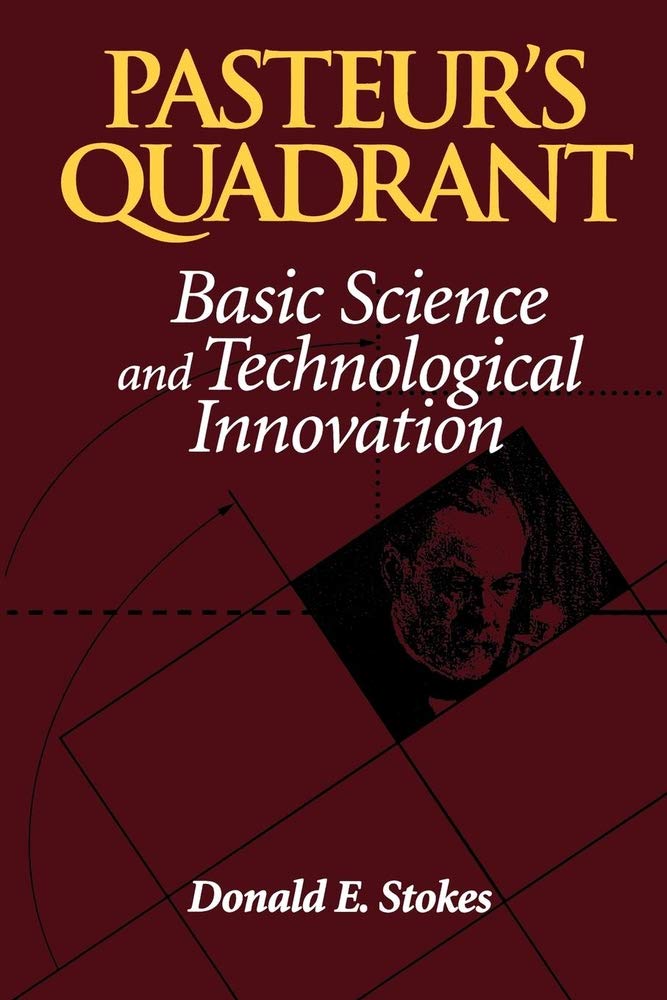
Pasteur'S Quadrant: Basic Science And Technological Innovation
Sold by Ergodebooks, an authorized reseller.
Returns accepted within 30 days | support@ergodebooks.com
Shipping Information
- Free Standard Shipping — United States only
- Processing Time: 3–5 business days
- Estimated Delivery: 6–10 business days after dispatch
- Double-boxed, fully insured & discreetly packaged
- Tracking number sent via email once dispatched
Returns & Refund
Returns accepted within 30 days of delivery.
Damaged or Defective Item
Free return shipping + replacement or full refund
Wrong Item Received
Free return shipping + replacement or full refund
Change of Mind
Return shipping at customer's expense · 25% restocking fee applies
Payment Option

Over Fifty Years Ago, Vannevar Bush Released His Enormously Influential Report, Science, The Endless Frontier, Which Asserted A Dichotomy Between Basic And Applied Science. This View Was At The Core Of The Compact Between Government And Science That Led To The Golden Age Of Scientific Research After World War Iia Compact That Is Currently Under Severe Stress. In This Book, Donald Stokes Challenges Bush'S View And Maintains That We Can Only Rebuild The Relationship Between Government And The Scientific Community When We Understand What Is Wrong With That View. Stokes Begins With An Analysis Of The Goals Of Understanding And Use In Scientific Research. He Recasts The Widely Accepted View Of The Tension Between Understanding And Use, Citing As A Model Case The Fundamental Yet Useinspired Studies By Which Louis Pasteur Laid The Foundations Of Microbiology A Century Ago. Pasteur Worked In The Era Of The Second Industrial Revolution, When The Relationship Between Basic Science And Technological Change Assumed Its Modern Form. Over Subsequent Decades, Technology Has Been Increasingly Sciencebased. But Science Has Been Increasingly Technologybasedwith The Choice Of Problems And The Conduct Of Research Often Inspired By Societal Needs. An Example Is The Work Of The Quantumeffects Physicists Who Are Probing The Phenomena Revealed By The Miniaturization Of Semiconductors From The Time Of The Transistor'S Discovery After World War Ii. On This Revised, Interactive View Of Science And Technology, Stokes Builds A Convincing Case That By Recognizing The Importance Of Useinspired Basic Research We Can Frame A New Compact Between Science And Government. His Conclusions Have Major Implications For Both The Scientific And Policy Communities And Will Be Of Great Interest To Those In The Broader Public Who Are Troubled By The Current Role Of Basic Science In American Democracy.
⚠️ WARNING (California Proposition 65):
This product may contain chemicals known to the State of California to cause cancer, birth defects, or other reproductive harm.
For more information, please visit www.P65Warnings.ca.gov.
- Q: How many pages does this book have? A: This book has one hundred ninety-six pages. It offers a comprehensive exploration of the relationship between science and technology.
- Q: What is the binding type of this book? A: The binding type is hardcover. This ensures durability and a premium feel for readers.
- Q: What are the dimensions of this book? A: The dimensions are six point two five inches by one point one inches by nine point five inches. This size makes it easy to handle and read.
- Q: Who is the author of this book? A: The author is Donald E. Stokes. He provides a unique perspective on the interplay between basic science and technological innovation.
- Q: What genre does this book fall under? A: This book falls under the Development and Growth genre. It discusses significant themes related to science and policy.
- Q: How do I read this book? A: You can read this book like any other. Simply open it and start from the first page, absorbing the insights it offers.
- Q: Is this book suitable for academic purposes? A: Yes, this book is suitable for academic purposes. It provides in-depth analysis that can benefit students and professionals alike.
- Q: What is the target audience of this book? A: The target audience includes policymakers, educators, and anyone interested in the relationship between science and society.
- Q: Is there a recommended reading age for this book? A: There is no specific age recommendation, but it is best suited for adults and advanced students. The themes are complex and thought-provoking.
- Q: How should I store this book? A: Store this book in a cool, dry place. Avoid direct sunlight to prevent fading of the cover and pages.
- Q: Can I clean the cover of this book? A: Yes, you can clean the cover with a soft, damp cloth. Avoid using harsh chemicals to maintain its condition.
- Q: What if the book arrives damaged? A: If the book arrives damaged, contact the seller for a replacement or refund. Most sellers have a return policy for damaged items.
- Q: Is this book a good gift for someone interested in science? A: Yes, this book makes an excellent gift for anyone interested in science and technology. It offers valuable insights into historical and contemporary issues.
- Q: What are some key themes discussed in this book? A: Key themes include the relationship between basic and applied science and the impact of societal needs on research. These themes are crucial for understanding modern science.
- Q: Does this book contain illustrations or diagrams? A: No, this book does not contain illustrations or diagrams. It focuses on text-based analysis and arguments.