
Title
Patently Contestable: Electrical Technologies and Inventor Identities on Trial in Britain (Inside Technology (Hardcover)),Used
Sold by Ergodebooks, an authorized reseller.
Returns accepted within 30 days | support@ergodebooks.com
Shipping Information
- Free Standard Shipping — United States only
- Processing Time: 3–5 business days
- Estimated Delivery: 6–10 business days after dispatch
- Double-boxed, fully insured & discreetly packaged
- Tracking number sent via email once dispatched
Returns & Refund
Returns accepted within 30 days of delivery.
Damaged or Defective Item
Free return shipping + replacement or full refund
Wrong Item Received
Free return shipping + replacement or full refund
Change of Mind
Return shipping at customer's expense · 25% restocking fee applies
Payment Option

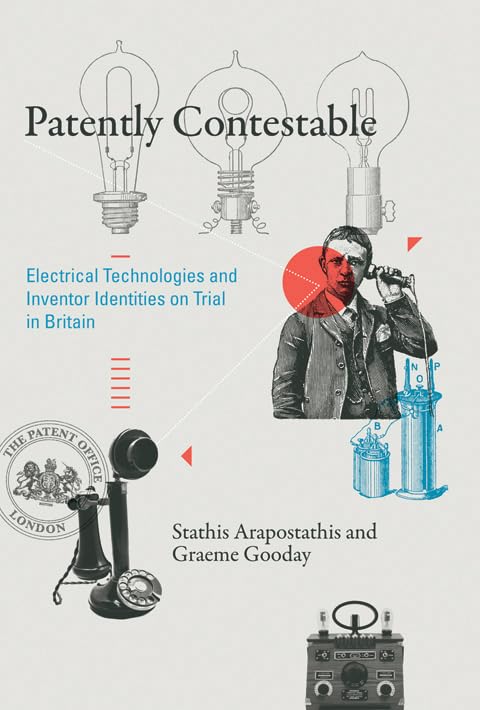
An examination of the fierce disputes that arose in Britain in the decades around 1900 concerning patents for electrical power and telecommunications.Late nineteenthcentury Britain saw an extraordinary surge in patent disputes over the new technologies of electrical power, lighting, telephony, and radio. These battles played out in the twin tribunals of the courtroom and the press. In Patently Contestable, Stathis Arapostathis and Graeme Gooday examine how Britain's patent laws and associated cultures changed from the 1870s to the 1920s. They consider how patent rights came to be so widely disputed and how the identification of apparently solo heroic inventors was the contingent outcome of patent litigation. Furthermore, they point out potential parallels between the British experience of allegedly patenteefriendly legislation introduced in 1883 and a similar potentially empowering shift in American patent policy in 2011.After explaining the trajectory of an invention from laboratory to Patent Office to the court and the key role of patent agents, Arapostathis and Gooday offer four case studies of patentcentered disputes in Britain. These include the mostly unsuccessful claims against the UK alliance of Alexander Graham Bell and Thomas Edison in telephony; publicly disputed patents for technologies for the generation and distribution of electric power; challenges to Marconi's patenting of wireless telegraphy as an appropriation of public knowledge; and the emergence of patent pools to control the market in incandescent light bulbs.
⚠️ WARNING (California Proposition 65):
This product may contain chemicals known to the State of California to cause cancer, birth defects, or other reproductive harm.
For more information, please visit www.P65Warnings.ca.gov.