
Title
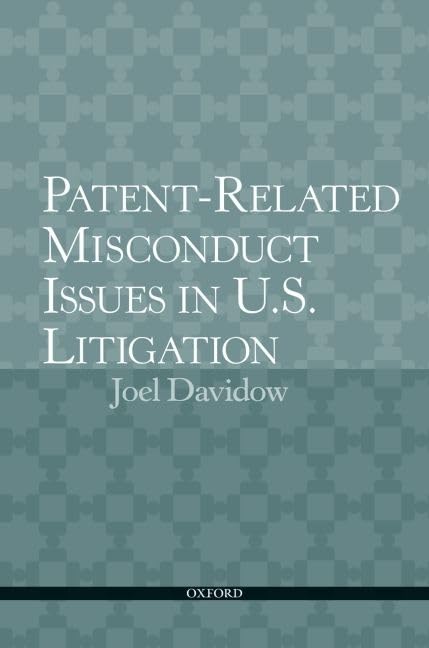
PatentRelated Misconduct Issues in U.S. Litigation,Used
Sold by Ergodebooks, an authorized reseller.
Returns accepted within 30 days | support@ergodebooks.com
Shipping Information
- Free Standard Shipping — United States only
- Processing Time: 3–5 business days
- Estimated Delivery: 6–10 business days after dispatch
- Double-boxed, fully insured & discreetly packaged
- Tracking number sent via email once dispatched
Returns & Refund
Returns accepted within 30 days of delivery.
Damaged or Defective Item
Free return shipping + replacement or full refund
Wrong Item Received
Free return shipping + replacement or full refund
Change of Mind
Return shipping at customer's expense · 25% restocking fee applies
Payment Option

This book is designed to serve as the first comprehensive review of conduct defenses and counterclaims, with a focus on existing case law and litigation strategies.The first section of the book addresses claims involving misuse of the patenting process, with a focus on patents on a product or process the patentee did not invent as claimed and inequitable conduct claims, including intentional failure to cite material references and false or misleading declarations. From here the book turns to claims based on the misuse of the litigation process, including baseless and badpurpose suits. The third and final section of the book describes claims based on the misuse of the competitive (antitrust) and licensing processes. Each section of the book is divided into sections devoted to law and strategy, with practical guidance related to handling document demands and other discovery requests, expert testimony and waiver issues.This book is designed to provide patent litigators with a double arsenal of unprecedented caselaw analysis and litigation strategy related to the "wild cards" of infringement cases: affirmative defenses and counterclaims based on assertions of patentholder misconduct. Such claims can include:BL inequitable conduct, including intentional failure to cite material references and false or misleading declarationsBL misuse of the litigation process, including baseless and badpurpose suitsBL claims that an opposing party knew or should have known that the patent was invalid or not infringedBL antitrust law violationsBL tortuous interferenceBL defamationBL RICO allegationsIn addition, each chapter of the book has a section devoted to litigation strategy related to a particular claim, with practical guidance on a range of issues including:BL document demands and party depositions used to show that putative inventor had access to another's similar inventionBL deposition tactics to establish what the inventor or patent holder knew and when they knew it, along with indications of intent.BL the use of expert testimony to establish materiality or intentBL summary judgment and motion practiceBL the use of expert testimony to prove claims of market definition and market powerBL thirdparty discovery to prove what persons skilled in the art understood or how the market functionsBL waiver of privilege issuesBL the use of discovery to establish the existence of past licenses and negotiationsBL postverdict Rule 11 claims or recovery under 35 USC 285
⚠️ WARNING (California Proposition 65):
This product may contain chemicals known to the State of California to cause cancer, birth defects, or other reproductive harm.
For more information, please visit www.P65Warnings.ca.gov.