
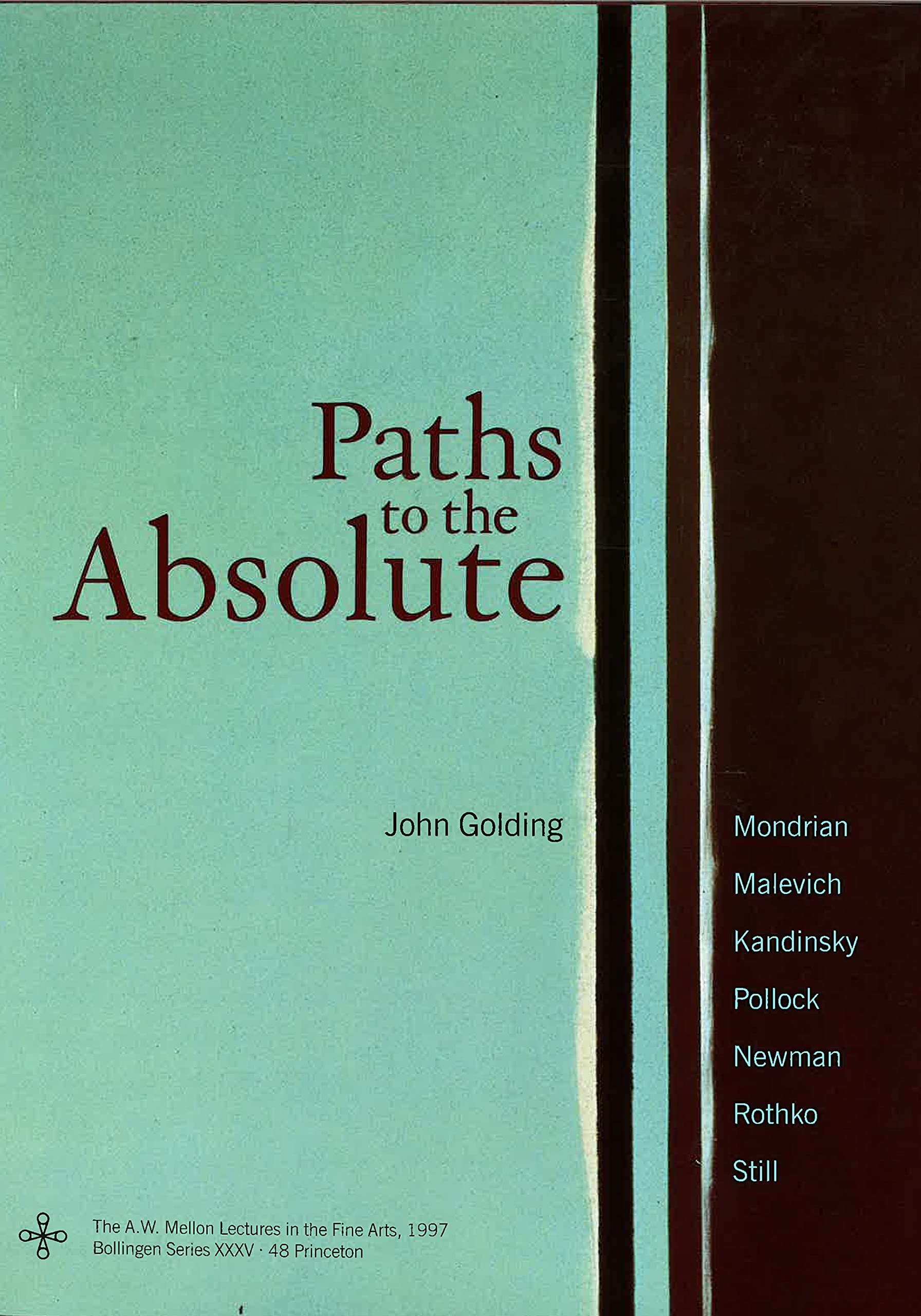
Title
Paths To The Absolute,Used
Sold by Ergodebooks, an authorized reseller.
Returns accepted within 30 days | support@ergodebooks.com
Shipping Information
- Free Standard Shipping — United States only
- Processing Time: 3–5 business days
- Estimated Delivery: 6–10 business days after dispatch
- Double-boxed, fully insured & discreetly packaged
- Tracking number sent via email once dispatched
Returns & Refund
Returns accepted within 30 days of delivery.
Damaged or Defective Item
Free return shipping + replacement or full refund
Wrong Item Received
Free return shipping + replacement or full refund
Change of Mind
Return shipping at customer's expense · 25% restocking fee applies
Payment Option

A Groundbreaking Account Of The Meaning Of Abstract Paintingfrom Mondrian'S Bold Geometric Forms To Kandinsky'S Use Of Symbols To Pollock'S 'Dripped Paintings,' The Richly Diverse Movement Of Abstract Painting Challenges Anyone Trying To Make Sense Of Either Individual Works Or The Phenomenon As A Whole. Applying His Insights As An Art Historian And A Painter, John Golding Offers A Unique Approach To Understanding The Evolution Of Abstractionism By Looking At The Personal Artistic Development Of Seven Of Its Greatest Practitioners. He Recreates The Journey Undertaken By Each Painter In His Move From Representational Art To The Abstracta Journey That In Most Cases Began With Cubism But Led Variously To Symbolism, Futurism, Surrealism, Theosophy, Anthropology, Jungian Analysis, And Beyond. For Each Artist, Spiritual Quest And Artistic Experimentation Became Inseparable. And Despite Their Different Techniques And Philosophies, These Artists Shared One Goal: To Break A Path To A New, Ultimate Pictorial Truth.The Book First Explores The Works And Concerns Of Three Pioneering European Abstract Paintersmondrian, Malevich, Kandinskyand Then Those Of Their American Successorspollock, Newman, Rothko, And Still. Golding Shows How Each Painter Sought To See The World And Communicate His Vision In The Purest Or Most Expressive Form Possible. For Example, Mondrian Found His Way Into Abstraction Through A Spiritual Response To The Landscape Of His Native Holland, Malevich Through His Apprehension Of The Human Body, Kandinsky Through A Blend Of Religious Mysticism And Symbolism. Line And Color Became The Focus For Many Of Their Creative Endeavors. In The 1940S And 50S, The Americans Raised The Level Of Pictorial Innovation, Beginning Most Notably With Pollock And His Junginspired Concept Of Action.Golding Makes A Powerful Case That At Its Best And Most Profound, Abstract Painting Is Heavily Imbued With Meaning And Content. Through A Blend Of Biography, Art Analysis, And Cultural History, Paths To The Absolute Offers Remarkable Insights Into How A Sense Of Purpose Is Achieved In Painting, And How Abstractionism Engaged With The Intellectual Currents Of Its Time.
⚠️ WARNING (California Proposition 65):
This product may contain chemicals known to the State of California to cause cancer, birth defects, or other reproductive harm.
For more information, please visit www.P65Warnings.ca.gov.
- Q: How many pages does 'Paths to the Absolute' have? A: The book has two hundred forty pages. This length allows for a comprehensive exploration of abstract painting and its evolution.
- Q: What are the dimensions of this book? A: The book measures seven point seventy-six inches long, one point twenty-six inches wide, and ten point fifty-one inches high. These dimensions make it a standard hardcover size.
- Q: What type of binding does 'Paths to the Absolute' have? A: It has a hardcover binding. This type of binding offers durability and a professional appearance.
- Q: Who is the author of 'Paths to the Absolute'? A: The author is John Golding. He is known for his insights as both an art historian and a painter.
- Q: What category does this book fall under? A: This book is categorized under Criticism. It provides critical insights into the genre of abstract painting.
- Q: How do I read 'Paths to the Absolute' effectively? A: You can read it cover to cover or focus on specific artists discussed in the book. The book provides a detailed analysis of seven key abstract painters.
- Q: Is this book suitable for beginners in art history? A: Yes, it is suitable for beginners. John Golding's accessible writing style makes complex concepts understandable.
- Q: What themes are explored in 'Paths to the Absolute'? A: The book explores themes of spiritual quest, artistic experimentation, and the evolution of abstractionism. It delves into the connection between personal development and artistic expression.
- Q: How should I store this book to maintain its condition? A: Store it upright in a cool, dry place. Avoid direct sunlight to prevent fading of the cover and pages.
- Q: Can I clean the book's cover if it gets dirty? A: Yes, you can gently wipe the cover with a soft, dry cloth. Avoid using water or cleaning agents to prevent damage.
- Q: What if the book arrives damaged? A: If the book arrives damaged, you can initiate a return through the retailer's policy. Be sure to keep the packaging for verification.
- Q: Does this book contain illustrations or images? A: Yes, it contains illustrations that enhance understanding of the discussed artworks. The visuals complement the text effectively.
- Q: Is there a specific audience for this book? A: Yes, it targets art enthusiasts, students, and professionals interested in abstract painting. It provides valuable insights for various audiences.
- Q: What is the main focus of 'Paths to the Absolute'? A: The main focus is on the evolution of abstract painting through the personal journeys of seven influential artists. It analyzes their techniques and philosophies.
- Q: Is there a bibliography or reference section in the book? A: Yes, it includes a bibliography. This section offers additional resources for further exploration of the topics discussed.