
Title
Patterns in Nature,Used
Sold by Ergodebooks, an authorized reseller.
Returns accepted within 30 days | support@ergodebooks.com
Shipping Information
- Free Standard Shipping — United States only
- Processing Time: 3–5 business days
- Estimated Delivery: 6–10 business days after dispatch
- Double-boxed, fully insured & discreetly packaged
- Tracking number sent via email once dispatched
Returns & Refund
Returns accepted within 30 days of delivery.
Damaged or Defective Item
Free return shipping + replacement or full refund
Wrong Item Received
Free return shipping + replacement or full refund
Change of Mind
Return shipping at customer's expense · 25% restocking fee applies
Payment Option

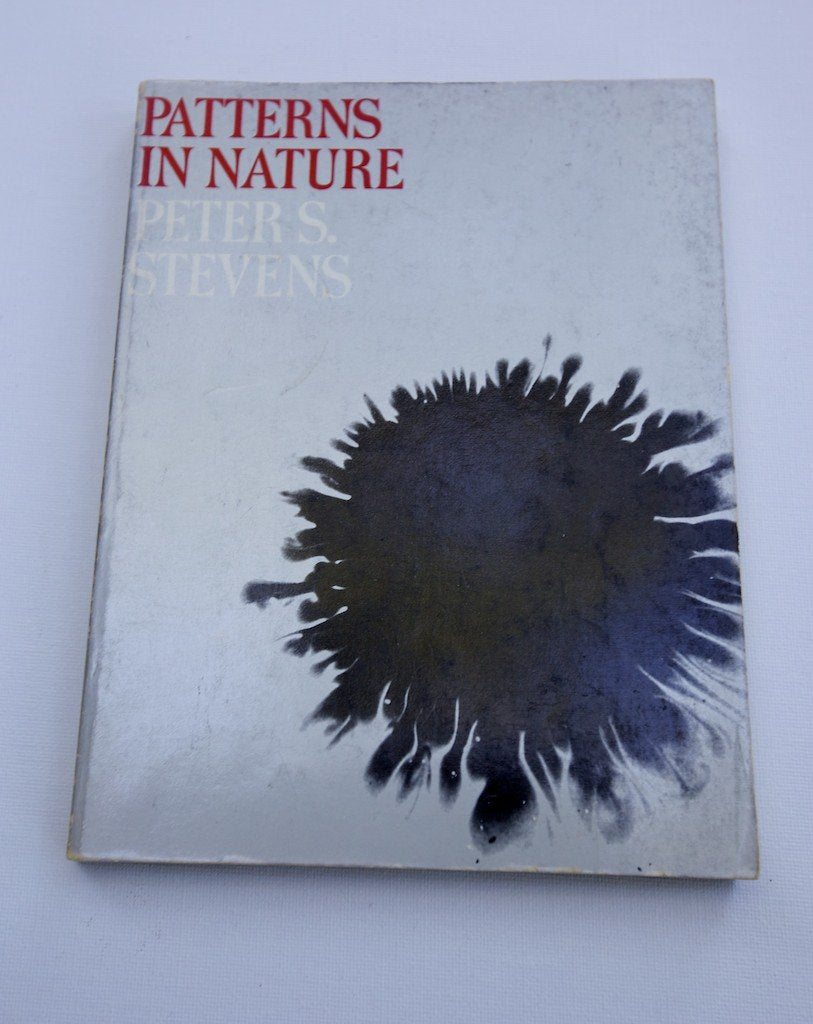
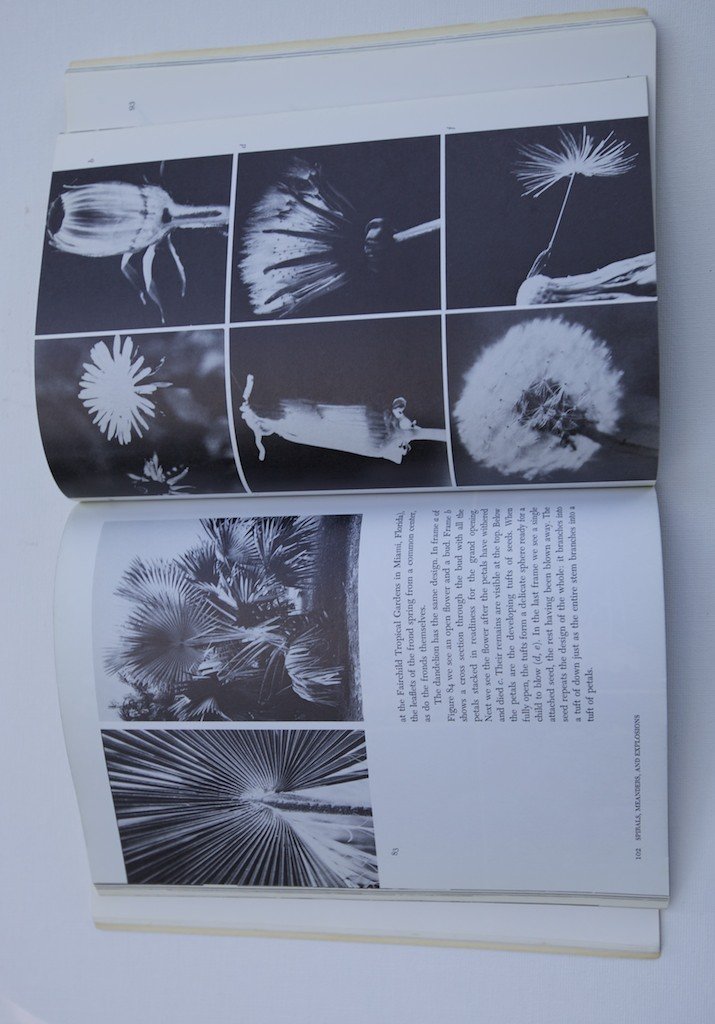
And this our life, exempt from public haunt,Finds tongues in trees, books in the running brooks,Sermons in stones, and good in everything.Shakespeare,AS YOU LIKE IT, Act II, Sc. IIn a stunning synthesis of art and science, Peter Stevens explores the universal patterns in which nature expresses herself. He provides a fresh way of viewing and understanding the physical world.When we see how the branching of trees resembles the branching of arteries and the branching of rivers, how crystal grains look like soap bubbles and the plates of a tortoises shell, how the fiddleheads of ferns, stellar galaxies, and water emptying from the bathtub spiral in a similar manner, then we cannot help but wonder why nature uses only a few kindred forms in so many contextsIt turns out that those patterns and forms are peculiarly restricted, that the immense variety that nature creates emerges from the working and reworking of only a few formal themes.In elegant and lucid prose, illuminated by hundreds of extraordinary photographs and geometrical drawings, Stevens examines those themes spirals, meanders, branching patterns, explosions and explains how they evolve according to the laws of stress, flow, turbulence, least effort, surface tension, close packing, and most important, the constraints of threedimensional space. Stevens insights about space and its limitations enable us to compare a lightning stroke with the tributaries of a river, and a splash of milk with galaxies in the heavens. He explores the spiral of a seashell, the markings of a giraffe, the spikes of an inkblot. His investigation carries him from the evolution of trees to the drifting of the continents, from the packing of billiard balls to black holes in space, and everywhere he rigorously shows us not only the individual beauty of natural objects, but the underlying harmony that they share.PATTERNS IN NATURE is a pleasure to read and to behold, a vivid and original piece of scholarship whose implications will influence scientists, architects and engineers for years to come and whose aesthetic truth will enrich our appreciation of the natural world.
⚠️ WARNING (California Proposition 65):
This product may contain chemicals known to the State of California to cause cancer, birth defects, or other reproductive harm.
For more information, please visit www.P65Warnings.ca.gov.
- Q: How many pages are in 'Patterns in Nature'? A: There are two hundred fifty-six pages in 'Patterns in Nature'. This length allows for an in-depth exploration of nature's patterns.
- Q: What type of binding does 'Patterns in Nature' have? A: The book is published in paperback. This binding makes it lightweight and portable for readers.
- Q: Who is the author of 'Patterns in Nature'? A: The author is Peter S. Stevens. He combines art and science in his examination of natural patterns.
- Q: What is the main theme of 'Patterns in Nature'? A: The main theme is the exploration of universal patterns found in nature. Stevens highlights how these patterns relate to various natural phenomena.
- Q: Is 'Patterns in Nature' suitable for children? A: Yes, it is suitable for older children and teenagers. The book's concepts can engage curious minds interested in nature and science.
- Q: What reading level is 'Patterns in Nature' aimed at? A: It is aimed at a general audience, including those with an interest in science and mathematics. The writing is accessible while still being informative.
- Q: How should I care for my copy of 'Patterns in Nature'? A: Keep it in a dry, cool place to prevent damage. Avoid exposure to direct sunlight to maintain the integrity of the pages and cover.
- Q: Can I clean the book if it gets dirty? A: Yes, you can gently wipe the cover with a soft, dry cloth. Avoid using water or cleaning solutions on the pages.
- Q: What is the recommended storage for 'Patterns in Nature'? A: Store it upright on a bookshelf or flat in a drawer. This prevents bending and ensures it remains in good condition.
- Q: How does 'Patterns in Nature' compare to other science books? A: It uniquely blends art and science, focusing on visual patterns in nature. This distinguishes it from more technical science texts.
- Q: Is 'Patterns in Nature' good for beginners in science? A: Yes, it is an excellent choice for beginners. The book presents complex ideas in an engaging and understandable way.
- Q: What aspects of nature does the book cover? A: It covers various aspects, including tree branching and galaxy formations. Stevens connects these themes through visual patterns.
- Q: What if my copy of 'Patterns in Nature' arrives damaged? A: You can return it within the specified return window. Contact customer service for assistance with the return process.
- Q: Is there a warranty for 'Patterns in Nature'? A: Generally, books do not come with a warranty. However, check with the retailer for their specific return and exchange policies.
- Q: What should I do if I have issues with my order? A: Contact customer service directly for support regarding your order. They can assist with any problems you encounter.