
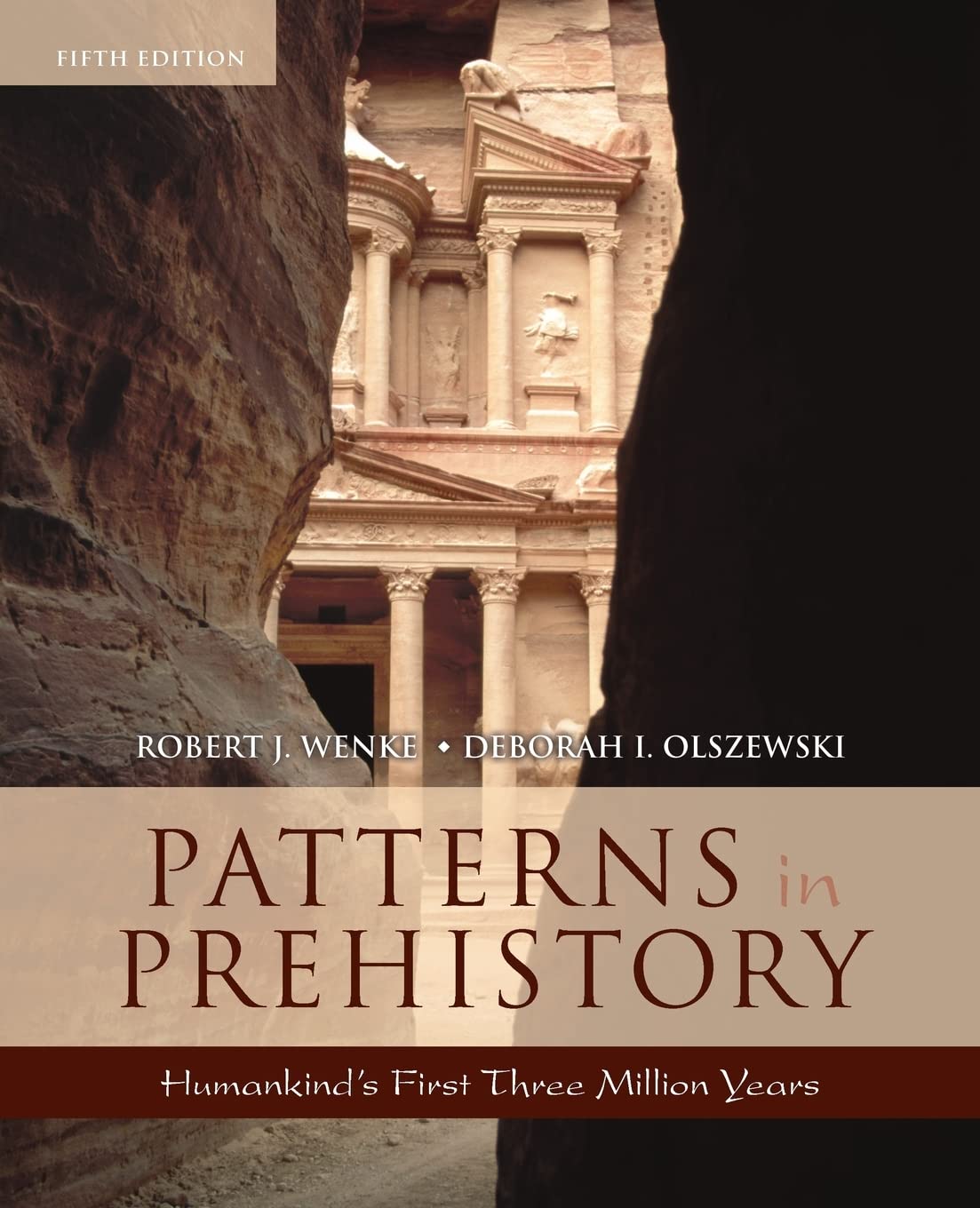
Title
Patterns In Prehistory: Humankind'S First Three Million Years, 5Th Edition (Casebooks In Criticism)
Sold by Ergodebooks, an authorized reseller.
Returns accepted within 30 days | support@ergodebooks.com
Shipping Information
- Free Standard Shipping — United States only
- Processing Time: 3–5 business days
- Estimated Delivery: 6–10 business days after dispatch
- Double-boxed, fully insured & discreetly packaged
- Tracking number sent via email once dispatched
Returns & Refund
Returns accepted within 30 days of delivery.
Damaged or Defective Item
Free return shipping + replacement or full refund
Wrong Item Received
Free return shipping + replacement or full refund
Change of Mind
Return shipping at customer's expense · 25% restocking fee applies
Payment Option

Who Are We? How Did The World Become What It Is Today? What Paths Did Humanity Traverse Along The Way?Patterns In Prehistory, Fifth Edition, Is A Comprehensive And Engaging Survey Of Humanity'S Past Three Million Years. It Brings Together Theories And Archaeological Examples To Pose Questions About Who We Are And The Means By Which Humanity Evolved Into What It Is Today.Ideal For Introductory Courses In World Prehistory And Origins Of Complex Societies, Patterns In Prehistory, Fifth Edition, Offers A Unified And Thematic Approach To The Four Great Transformationsor Patternsthat Characterize Humanity'S Past: The Origins And Evolution Of Culture; The Origins Of Modern Humans And Human Behaviors; The Origins Of Agriculture; And The Origins Of Complex Societies, Civilizations, And Preindustrial States. Integrating Theoretical Approaches With Archaeological Data From The Middle East, Mesoamerica, North And South America, Egypt, China, The Indus Valley, And Temperate Europe, Patterns In Prehistory, Fifth Edition, Reveals How Archaeologists Decipher The Past. It Demonstrates How Theory And Method Are Combined To Derive Interpretations And Also Considers How Interpretations Evolve As A Result Of Accumulating Data, Technological Advances In Recording And Analyzing Data Sets, And Newer Theoretical Perspectives.This New Edition Of Patterns In Prehistory Provides:* Fresh Insights With The Addition Of Coauthor Deborah Olszewski, Who Has Carefully Reviewed And Revamped The Material With An Eye Toward Making The Text Clearly Understandable To Today'S Students* Updated Discussions Throughout, Including Expanded Information On Postprocessual Archaeology, Current Methodologies, And Technological Advances* Approximately 250 Illustrations And Maps, More Than Half Of Which Are New To This Edition* Groundbreaking Research On New Discoveries Of Hominin Fossils, Genetic Research, Prehistoric Migrations, The Peopling Of The Americas, And Theories Of The Origins Of Agriculture And The Origins Of Complex Societies* Timelines For All Relevant Chapters As Well As An Overarching Timeline For The Entire Book To Help Students Place Events In Context* Extensively Updated Chapter Bibliographies And Chapter Endnotes
⚠️ WARNING (California Proposition 65):
This product may contain chemicals known to the State of California to cause cancer, birth defects, or other reproductive harm.
For more information, please visit www.P65Warnings.ca.gov.
- Q: What is the page count of Patterns in Prehistory? A: The book has six hundred forty pages. This extensive length allows for a detailed exploration of human history over three million years.
- Q: What are the dimensions of the book? A: The book measures nine point twenty-five inches in length, zero point ninety-one inches in width, and seven point fifty-two inches in height. These dimensions make it a manageable size for reading.
- Q: What type of binding does this book have? A: Patterns in Prehistory has a paperback binding. This makes it lightweight and easy to handle for students and readers.
- Q: How do I use Patterns in Prehistory for my course? A: You can use this book as a primary text for introductory courses in world prehistory. It offers a thematic approach, making it ideal for both teaching and self-study.
- Q: Is this book suitable for beginners in history? A: Yes, it is suitable for beginners. The content is designed to be accessible and engaging for students new to the subject of prehistory.
- Q: What age group is Patterns in Prehistory appropriate for? A: This book is appropriate for college students and advanced high school students. It provides a comprehensive overview suitable for those studying history.
- Q: How should I store Patterns in Prehistory? A: Store the book in a cool, dry place away from direct sunlight. This will help prevent damage to the cover and pages.
- Q: Can I clean the book if it gets dirty? A: Yes, you can gently wipe the cover with a soft, dry cloth. Avoid using liquids, as they can damage the pages and binding.
- Q: Does this book contain updated research? A: Yes, it includes groundbreaking research on new discoveries and theories in prehistory. This makes it relevant for current academic discussions.
- Q: What makes this edition different from previous ones? A: This edition features updated discussions, fresh insights from coauthor Deborah Olszewski, and new illustrations. These enhancements improve clarity and relevance.
- Q: What topics are covered in Patterns in Prehistory? A: The book covers the origins of culture, modern humans, agriculture, and complex societies. It integrates theoretical approaches with archaeological data.
- Q: Is there a timeline included in the book? A: Yes, the book includes timelines for all relevant chapters. This helps readers place historical events in context.
- Q: Are there bibliographies and endnotes in the book? A: Yes, it has extensively updated chapter bibliographies and endnotes. This allows readers to explore sources for further research.
- Q: Who is the author of Patterns in Prehistory? A: The book is authored by Robert J. Wenke. He is known for his expertise in archaeology and prehistory.
- Q: What is the main theme of Patterns in Prehistory? A: The main theme is to explore humanity's past through a unified and thematic lens. It examines significant transformations in human history.