If you have any questions, you are always welcome to contact us. We'll get back to you as soon as possible, withing 24 hours on weekdays.
Customer service
All questions about your order, return and delivery must be sent to our customer service team by e-mail at yourstore@yourdomain.com
Sale & Press
If you are interested in selling our products, need more information about our brand or wish to make a collaboration, please contact us at press@yourdomain.com
Help
If you have any questions, you are always welcome to contact us. We'll get back to you as soon as possible, withing 24 hours on weekdays.
Customer service
All questions about your order, return and delivery must be sent to our customer service team by e-mail at yourstore@yourdomain.com
Sale & Press
If you are interested in selling our products, need more information about our brand or wish to make a collaboration, please contact us at press@yourdomain.com
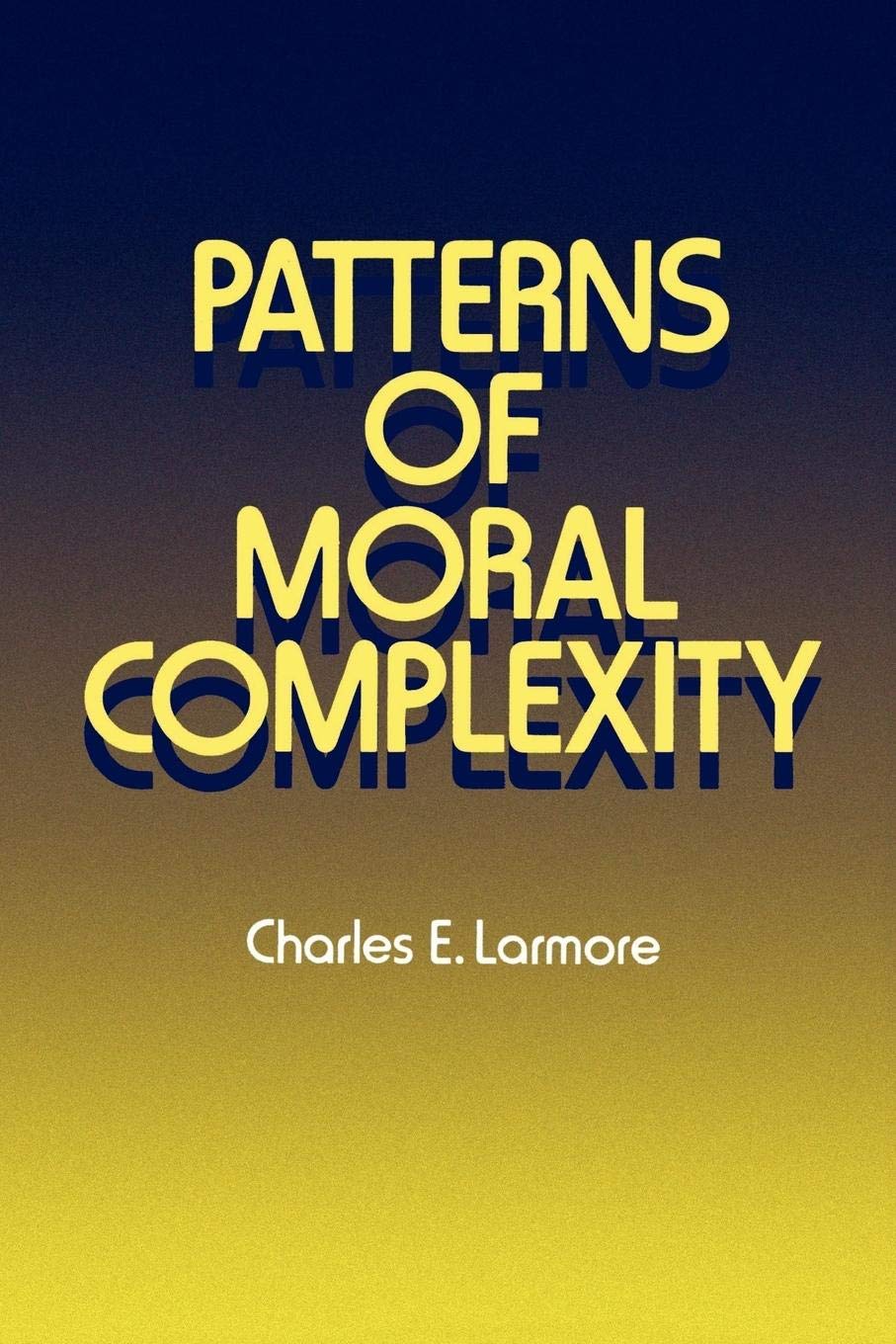
Larmore aims to recover three forms of moral complexity that have often been neglected by moral and political philosophers. First, he argues that virtue is not simply the conscientious adherence to principle. Rather, the exercise of virtue apply. He argues and this is the second pattern of complexity that recognizing the value of constitutive ties with shared forms of life does not undermine the liberal ideal of political neutrality toward differing ideals of the good life. Finally Larmore agrues for what he calls the heterogeneity of morality. Moral thinking need not be exclusively deontological or consequentialist, and we should recognize that the ultimate sources of moral value are diverse. The arguments presented here do not attack the possibility of moral theory. But in addressing some of the central issues of moral and political thinking today thay attempt to restore to that thinking greater flexibility and a necessary sensitivity to our common experience.
⚠️ WARNING (California Proposition 65):
This product may contain chemicals known to the State of California to cause cancer,
birth defects, or other reproductive harm.
For MAP (Minimum Advertised Price) violations and Intellectual Property (IP) or Trademark concerns, please contact:
support@ergodebooks.com
⚠️ California Proposition 65 Warning: Some products sold on this website may expose you to chemicals known to the State of California to cause cancer, birth defects, or other reproductive harm. For more information, visit www.P65Warnings.ca.gov.