
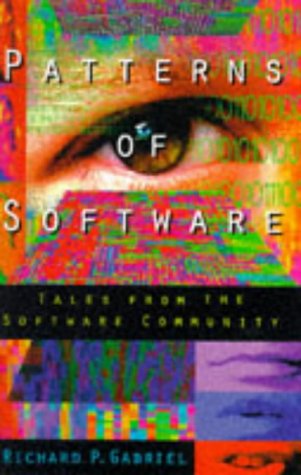
Title
Patterns Of Software: Tales From The Software Community,Used
Sold by Ergodebooks, an authorized reseller.
Returns accepted within 30 days | support@ergodebooks.com
Shipping Information
- Free Standard Shipping — United States only
- Processing Time: 3–5 business days
- Estimated Delivery: 6–10 business days after dispatch
- Double-boxed, fully insured & discreetly packaged
- Tracking number sent via email once dispatched
Returns & Refund
Returns accepted within 30 days of delivery.
Damaged or Defective Item
Free return shipping + replacement or full refund
Wrong Item Received
Free return shipping + replacement or full refund
Change of Mind
Return shipping at customer's expense · 25% restocking fee applies
Payment Option

In Our Homes, Our Schools, And Our Businesses, Computers Play An Everincreasing Role. But While Most Of Us Today Can Work A Computeralbeit With The Help Of The Everpresent Computer Software Manualwe Know Little About What Goes On Inside The Box And Virtually Nothing About Software Design Or The World Of Computer Programming.In Patterns Of Software, The Respected Software Pioneer And Computer Scientist, Richard Gabriel, Gives Us An Informative Inside Look At The World Of Software Design And Computer Programming And The Business That Surrounds Them. In This Wideranging Volume, Gabriel Discusses Such Topics As What Makes A Successful Programming Language, How The Rest Of The World Looks At And Responds To The Work Of Computer Scientists, How He First Became Involved In Computer Programming And Software Development, What Makes A Successful Software Business, And Why His Own Company, Lucid, Failed In 1994, Ten Years After Its Inception.Perhaps The Most Interesting And Enlightening Section Of The Book Is Gabriel'S Detailed Look At What He Believes Are The Lessons That Can Be Learned From Architect Christopher Alexander, Whose Booksincluding The Seminal A Pattern Languagehave Had A Profound Influence On The Computer Programming Community. Gabriel Illuminates Some Of Alexander'S Key Insights'The Quality Without A Name,' Pattern Languages, Habitability, Piecemeal Growthand Reveals How These Influential Architectural Ideas Apply Equally Well To The Construction Of A Computer Program. Gabriel Explains The Concept Of Habitability, For Example, By Comparing A Program To A New England Farmhouse And The Surrounding Structures Which Slowly Grow And Are Modified According To The Needs And Desires Of The People Who Live And Work On The Farm. 'Programs Live And Grow, And Their Inhabitantsthe Programmersneed To Work With That Program The Way The Farmer Works With The Homestead.'Although Computer Scientists And Software Entrepreneurs Will Get Much Out Of This Book, The Essays Are Accessible To Everyone And Will Intrigue Anyone Curious About Silicon Valley, Computer Programming, Or The World Of High Technology.
⚠️ WARNING (California Proposition 65):
This product may contain chemicals known to the State of California to cause cancer, birth defects, or other reproductive harm.
For more information, please visit www.P65Warnings.ca.gov.
- Q: What are the dimensions of the book? A: The book measures six and a half inches in length, nine and sixty-five hundredths inches in height, and is nine-tenths of an inch thick.
- Q: How many pages does this book have? A: This book contains two hundred fifty-six pages, providing a comprehensive look at software design and programming.
- Q: What type of binding does the book have? A: The book is bound in hardcover, ensuring durability and a professional appearance.
- Q: What is the main topic of 'Patterns of Software'? A: This book explores the world of software design and programming, discussing key insights from the software community.
- Q: Who is the author of this book? A: The book is authored by Richard Gabriel, a respected software pioneer and computer scientist.
- Q: Is this book suitable for beginners? A: Yes, the essays are accessible to everyone, making it suitable for both beginners and experienced readers interested in software.
- Q: Who would benefit from reading this book? A: Computer scientists, software entrepreneurs, and anyone curious about technology and software design will find value in this book.
- Q: What themes are explored in the book? A: Themes include successful programming languages, software business strategies, and lessons from architecture applied to programming.
- Q: How should I care for this hardcover book? A: To keep the book in good condition, store it upright in a cool, dry place and avoid exposing it to direct sunlight.
- Q: Can this book be used as a textbook? A: Yes, it can serve as a supplementary text for courses on software design, programming, and technology.
- Q: What if the book arrives damaged? A: If the book arrives damaged, you can contact the seller for a return or exchange process.
- Q: Is there any warranty for this book? A: Typically, books do not come with a warranty, but check the seller's return policy for specific details.
- Q: Does this book cover modern programming languages? A: Yes, it discusses what makes a successful programming language, including insights relevant to modern languages.
- Q: Are there any illustrations or diagrams in the book? A: The book primarily features essays and discussions, so it may not contain many illustrations or diagrams.
- Q: How can I get support if I have questions about the book? A: You can reach out to the publisher or check online resources for any questions related to the book's content.
- Q: Is this book appropriate for a general audience? A: Yes, the content is written to be accessible and intriguing for a general audience interested in technology.