
Title
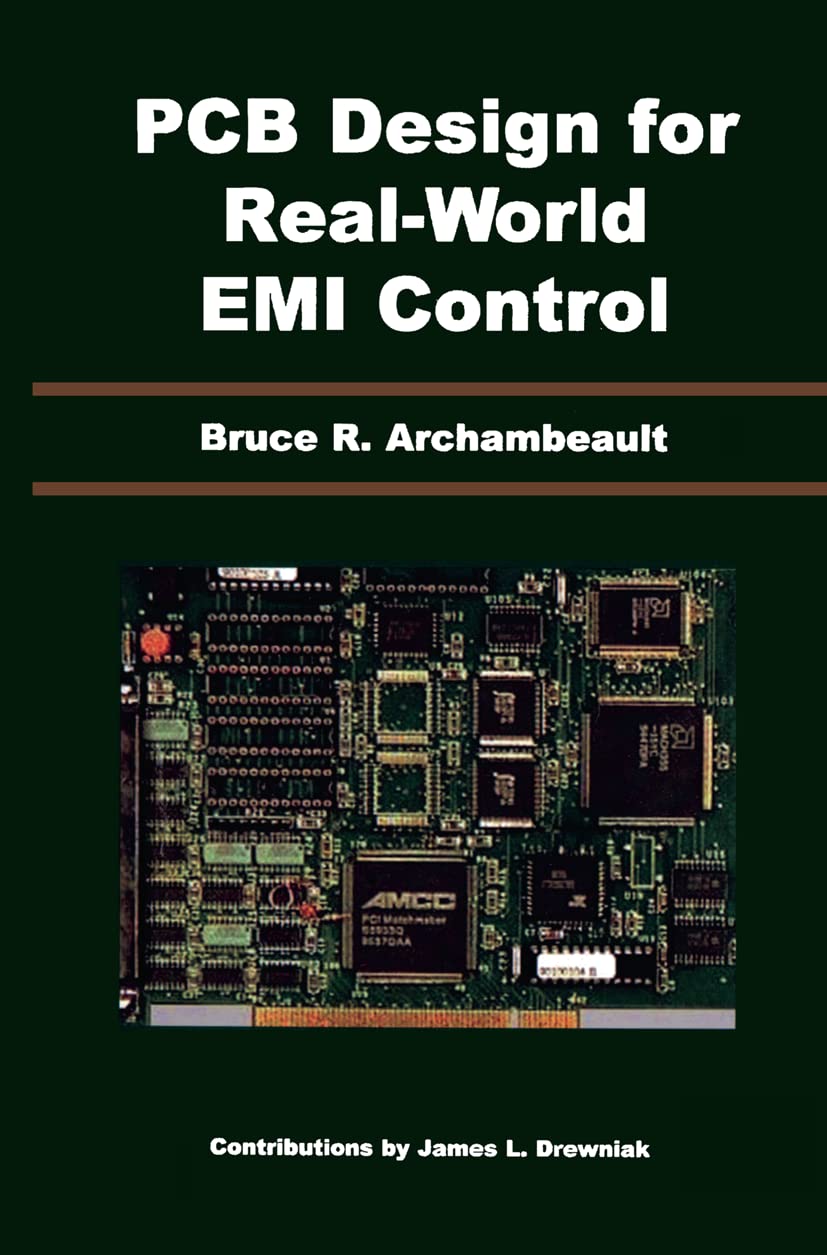
PCB Design for RealWorld EMI Control (The Springer International Series in Engineering and Computer Science, 696),Used
Sold by Ergodebooks, an authorized reseller.
Returns accepted within 30 days | support@ergodebooks.com
Shipping Information
- Free Standard Shipping — United States only
- Processing Time: 3–5 business days
- Estimated Delivery: 6–10 business days after dispatch
- Double-boxed, fully insured & discreetly packaged
- Tracking number sent via email once dispatched
Returns & Refund
Returns accepted within 30 days of delivery.
Damaged or Defective Item
Free return shipping + replacement or full refund
Wrong Item Received
Free return shipping + replacement or full refund
Change of Mind
Return shipping at customer's expense · 25% restocking fee applies
Payment Option

Proper design of printed circuit boards can make the difference between a product passing emissions requirements during the first cycle or not. Traditional EMC design practices have been simply rulebased, that is, a list of rulesofthumb are presented to the board designers to implement. When a particular ruleofthumb is difficult to implement, it is often ignored. After the product is built, it will often fail emission requirements and various time consuming and costly addons are then required. Proper EMC design does not require advanced degrees from universities, nor does it require strenuous mathematics. It does require a basic understanding of the underlying principles of the potential causes of EMC emissions. With this basic understanding, circuit board designers can make tradeoff decisions during the design phase to ensure optimum EMC design. Consideration of these potential sources will allow the design to pass the emissions requirements the first time in the test laboratory. A number of other books have been published on EMC. Most are general books on EMC and do not focus on printed circuit board is intended to help EMC engineers and design design. This book engineers understand the potential sources of emissions and how to reduce, control, or eliminate these sources. This book is intended to be a 'handson' book, that is, designers should be able to apply the concepts in this book directly to their designs in the realworld.
⚠️ WARNING (California Proposition 65):
This product may contain chemicals known to the State of California to cause cancer, birth defects, or other reproductive harm.
For more information, please visit www.P65Warnings.ca.gov.