
Title
Peopling The World: Representing Human Mobility From Milton To Malthus,Used
Sold by Ergodebooks, an authorized reseller.
Returns accepted within 30 days | support@ergodebooks.com
Shipping Information
- Free Standard Shipping — United States only
- Processing Time: 3–5 business days
- Estimated Delivery: 6–10 business days after dispatch
- Double-boxed, fully insured & discreetly packaged
- Tracking number sent via email once dispatched
Returns & Refund
Returns accepted within 30 days of delivery.
Damaged or Defective Item
Free return shipping + replacement or full refund
Wrong Item Received
Free return shipping + replacement or full refund
Change of Mind
Return shipping at customer's expense · 25% restocking fee applies
Payment Option

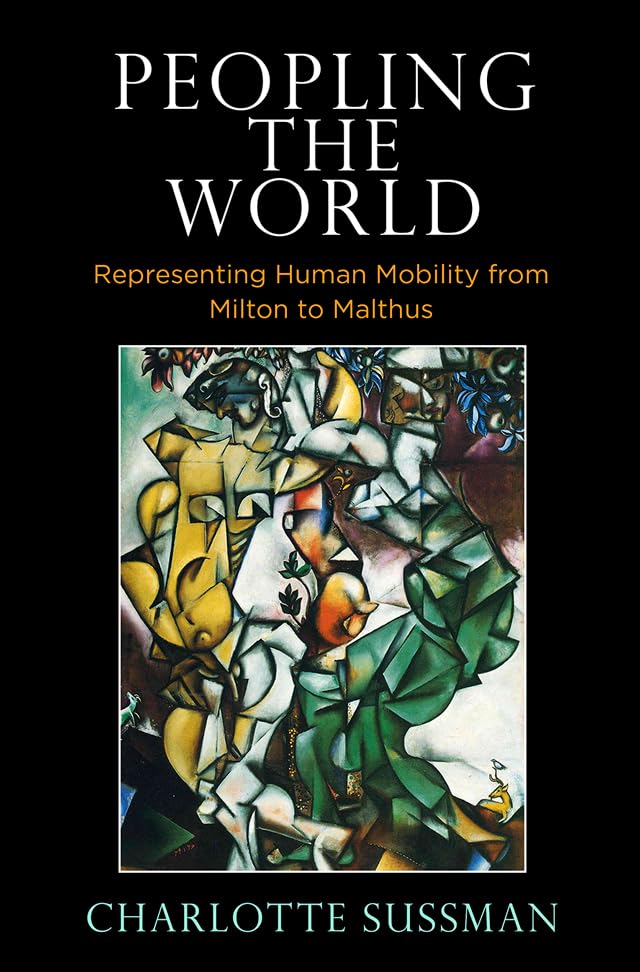
A compelling study of views about population and demographic mobility in the British long eighteenth centuryIn John Milton's Paradise Lost of 1667, Adam and Eve are promised they will produce a 'race to fill the world,' a thought that consoles them even after the trauma of the fall. By 1798, the idea that the world would one day be entirely filled by people had become, in Thomas Malthus's hands, a nightmarish vision. In Peopling the World, Charlotte Sussman asks how and why this shift took place. How did Britain's understanding of the value of reproduction, the vacancy of the planet, and the necessity of moving people around to fill its empty spaces change? Sussman addresses these questions through readings of texts by Malthus, Milton, Swift, Defoe, Goldsmith, Sir Walter Scott, Mary Shelley, and others, and by placing these authors in the context of debates about scientific innovation, emigration, cultural memory, and colonial settlement.Sussman argues that a shift in thinking about population and mobility occurred in the third quarter of the eighteenth century. Before that point, both political and literary texts were preoccupied with 'useless' populations that could be made useful by being dispersed over Britain's domestic and colonial territories; after 1760, a concern with the depopulation caused by emigration began to take hold. She explains this change in terms of the interrelated developments of a labor theory of value, a new idea of national identity after the collapse of Britain's American empire, and a move from thinking of reproduction as a national resource to thinking of it as an individual choice. She places Malthus at the end of this history because he so decisively moved thinking about population away from a worldview in which there was always more space to be filled and toward the temporal inevitability of the whole world filling up with people.
⚠️ WARNING (California Proposition 65):
This product may contain chemicals known to the State of California to cause cancer, birth defects, or other reproductive harm.
For more information, please visit www.P65Warnings.ca.gov.