If you have any questions, you are always welcome to contact us. We'll get back to you as soon as possible, withing 24 hours on weekdays.
Customer service
All questions about your order, return and delivery must be sent to our customer service team by e-mail at yourstore@yourdomain.com
Sale & Press
If you are interested in selling our products, need more information about our brand or wish to make a collaboration, please contact us at press@yourdomain.com
Help
If you have any questions, you are always welcome to contact us. We'll get back to you as soon as possible, withing 24 hours on weekdays.
Customer service
All questions about your order, return and delivery must be sent to our customer service team by e-mail at yourstore@yourdomain.com
Sale & Press
If you are interested in selling our products, need more information about our brand or wish to make a collaboration, please contact us at press@yourdomain.com
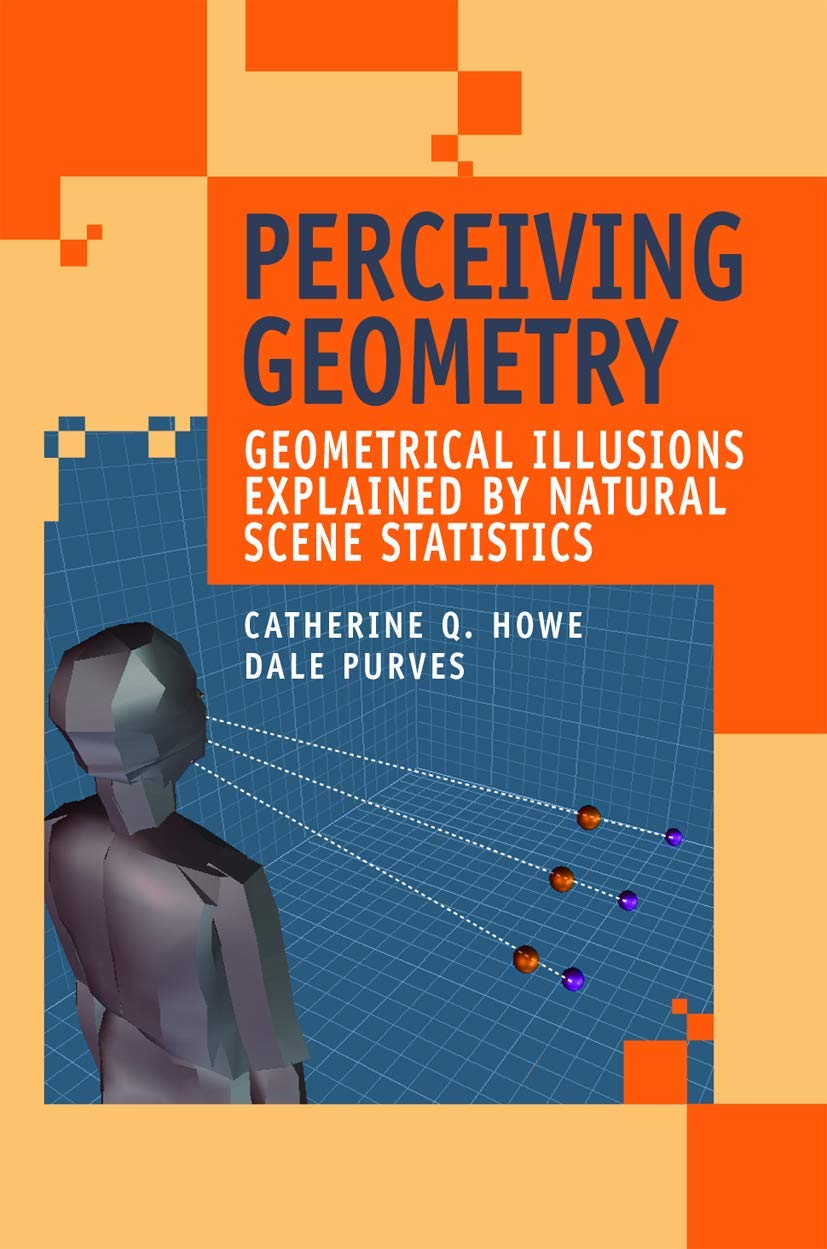
During the last few centuries, natural philosophers, and more recently vision scientists, have recognized that a fundamental problem in biological vision is that the sources underlying visual stimuli are unknowable in any direct sense, because of the inherent ambiguity of the stimuli that impinge on sensory receptors. The light that reaches the eye from any scene conflates the contributions of reflectance, illumination, transmittance, and subsidiary factors that affect these primary physical parameters. Spatial properties such as the size, distance and orientation of physical objects are also conflated in light stimuli. As a result, the provenance of light reaching the eye at any moment is uncertain. This quandary is referred to as the inverse optics problem. This book considers the evidence that the human visual system solves this problem by incorporating past human experience of what retinal images have typically corresponded to in the real world.
⚠️ WARNING (California Proposition 65):
This product may contain chemicals known to the State of California to cause cancer,
birth defects, or other reproductive harm.
For MAP (Minimum Advertised Price) violations and Intellectual Property (IP) or Trademark concerns, please contact:
support@ergodebooks.com
⚠️ California Proposition 65 Warning: Some products sold on this website may expose you to chemicals known to the State of California to cause cancer, birth defects, or other reproductive harm. For more information, visit www.P65Warnings.ca.gov.