
Title
Perception and its Objects,Used
Sold by Ergodebooks, an authorized reseller.
Returns accepted within 30 days | support@ergodebooks.com
Shipping Information
- Free Standard Shipping — United States only
- Processing Time: 3–5 business days
- Estimated Delivery: 6–10 business days after dispatch
- Double-boxed, fully insured & discreetly packaged
- Tracking number sent via email once dispatched
Returns & Refund
Returns accepted within 30 days of delivery.
Damaged or Defective Item
Free return shipping + replacement or full refund
Wrong Item Received
Free return shipping + replacement or full refund
Change of Mind
Return shipping at customer's expense · 25% restocking fee applies
Payment Option

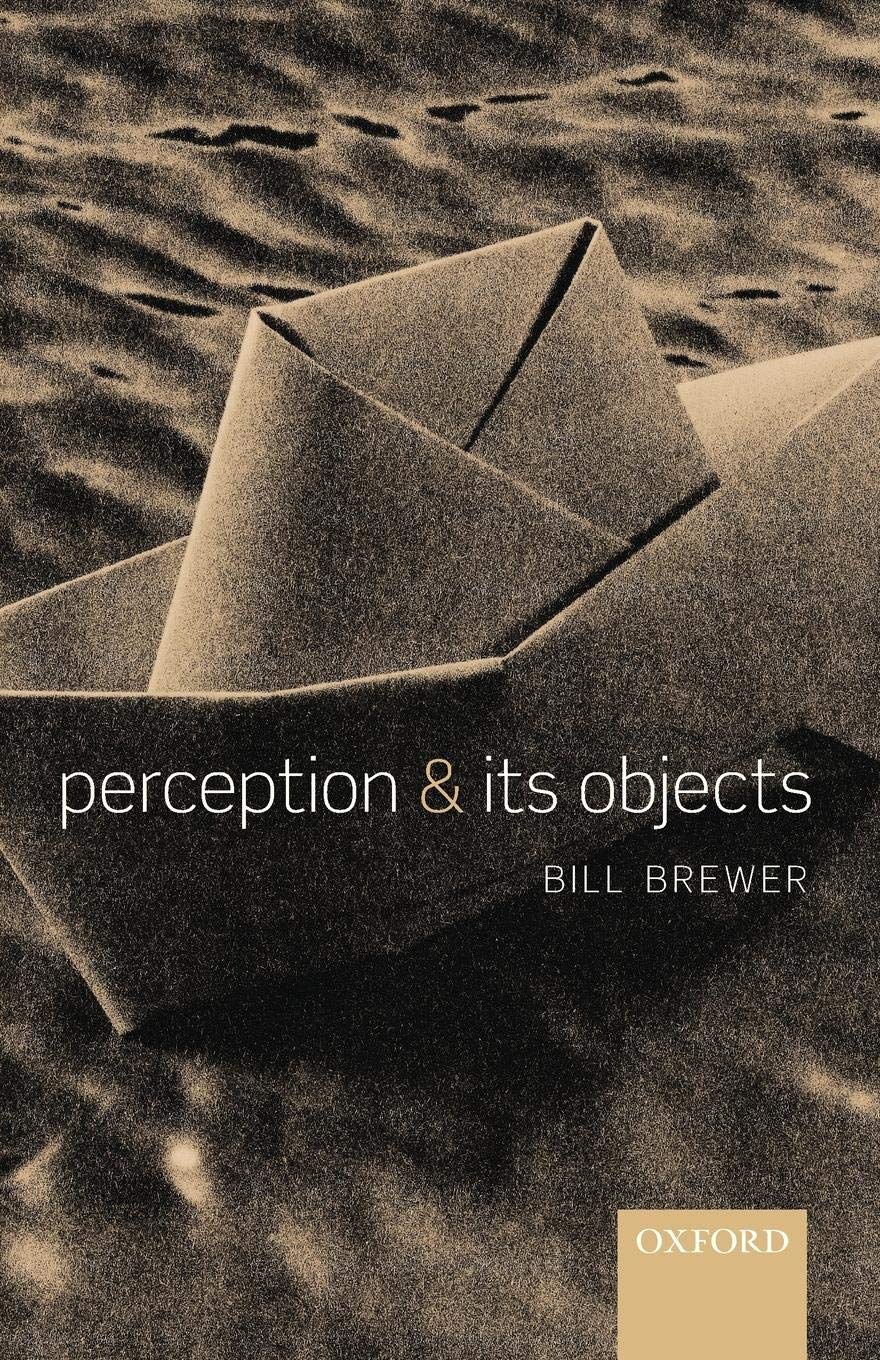
Bill Brewer presents, motivates, and defends a bold new solution to a fundamental problem in the philosophy of perception. What is the correct theoretical conception of perceptual experience, and how should we best understand the most fundamental nature of our perceptual relation with the physical objects in the world around us? Most theorists today analyse perception in terms of its representational content, in large part in order to avoid fatal problems attending the early modern conception of perception as a relation with particular minddependent objects of experience. Having set up the underlying problem and explored the lessons to be learnt from the various difficulties faced by opposing early modern responses to it, Bill Brewer argues that this contemporary approach has serious problems of its own. Furthermore, the early modern insight that perception is most fundamentally to be construed as a relation of conscious acquaintance with certain direct objects of experience is, he claims, perfectly consistent with the commonsense identification of such direct objects with persisting mindindependent physical objects themselves. Brewer here provides a critical, historical account of the philosophy of perception, in order to present a defensible vindication of empirical realism.
⚠️ WARNING (California Proposition 65):
This product may contain chemicals known to the State of California to cause cancer, birth defects, or other reproductive harm.
For more information, please visit www.P65Warnings.ca.gov.
- Q: How many pages does the book have? A: This book contains two hundred sixteen pages. It provides a thorough exploration of the philosophy of perception.
- Q: What are the book's dimensions? A: The book measures zero point five nine inches in thickness, five point five one inches in width, and eight point five inches in height.
- Q: What type of binding does this book have? A: This book is available in paperback binding. It's designed for easy handling and reading.
- Q: Who is the author of this book? A: The author of this book is Bill Brewer. He is known for his contributions to philosophy, especially in perception.
- Q: What is the main topic of this book? A: The main topic of this book is the philosophy of perception. It discusses how we perceive physical objects in the world.
- Q: Is this book suitable for beginners in philosophy? A: Yes, this book is suitable for beginners. It provides a clear introduction to complex philosophical ideas.
- Q: Can this book be used for academic study? A: Yes, this book is appropriate for academic study. It includes critical discussions relevant to philosophy courses.
- Q: Is this book appropriate for casual readers? A: Yes, casual readers can enjoy this book. It presents philosophical concepts in an engaging manner.
- Q: How should I store this book to keep it in good condition? A: Store this book in a cool, dry place away from direct sunlight. This helps prevent wear and fading.
- Q: Can this book be cleaned, and if so, how? A: Yes, you can clean the book cover with a dry cloth. Avoid using liquids to prevent damage to the pages.
- Q: What if the book arrives damaged? A: If the book arrives damaged, you should contact the seller for a return or replacement. Keep the original packaging for returns.
- Q: Is there a warranty for this book? A: No, there is typically no warranty for books. However, sellers may have return policies for damaged items.
- Q: What should I do if I have questions about the content? A: If you have questions about the content, consider reaching out to philosophy forums or groups. Engaging with others can enhance understanding.
- Q: Is the book safe for young readers? A: Yes, this book is safe for young readers with an interest in philosophy. It encourages critical thinking and exploration.
- Q: What makes this book unique in its approach? A: This book is unique for its historical account of perception philosophy. It contrasts contemporary theories with early modern insights.
- Q: Are there any features that stand out in this book? A: Yes, one standout feature is its critical analysis of representational content in perception. This offers readers a deeper understanding of the topic.