
Title
Performance Modeling and Design of Computer Systems: Queueing Theory in Action,Used
Sold by Ergodebooks, an authorized reseller.
Returns accepted within 30 days | support@ergodebooks.com
Shipping Information
- Free Standard Shipping — United States only
- Processing Time: 3–5 business days
- Estimated Delivery: 6–10 business days after dispatch
- Double-boxed, fully insured & discreetly packaged
- Tracking number sent via email once dispatched
Returns & Refund
Returns accepted within 30 days of delivery.
Damaged or Defective Item
Free return shipping + replacement or full refund
Wrong Item Received
Free return shipping + replacement or full refund
Change of Mind
Return shipping at customer's expense · 25% restocking fee applies
Payment Option

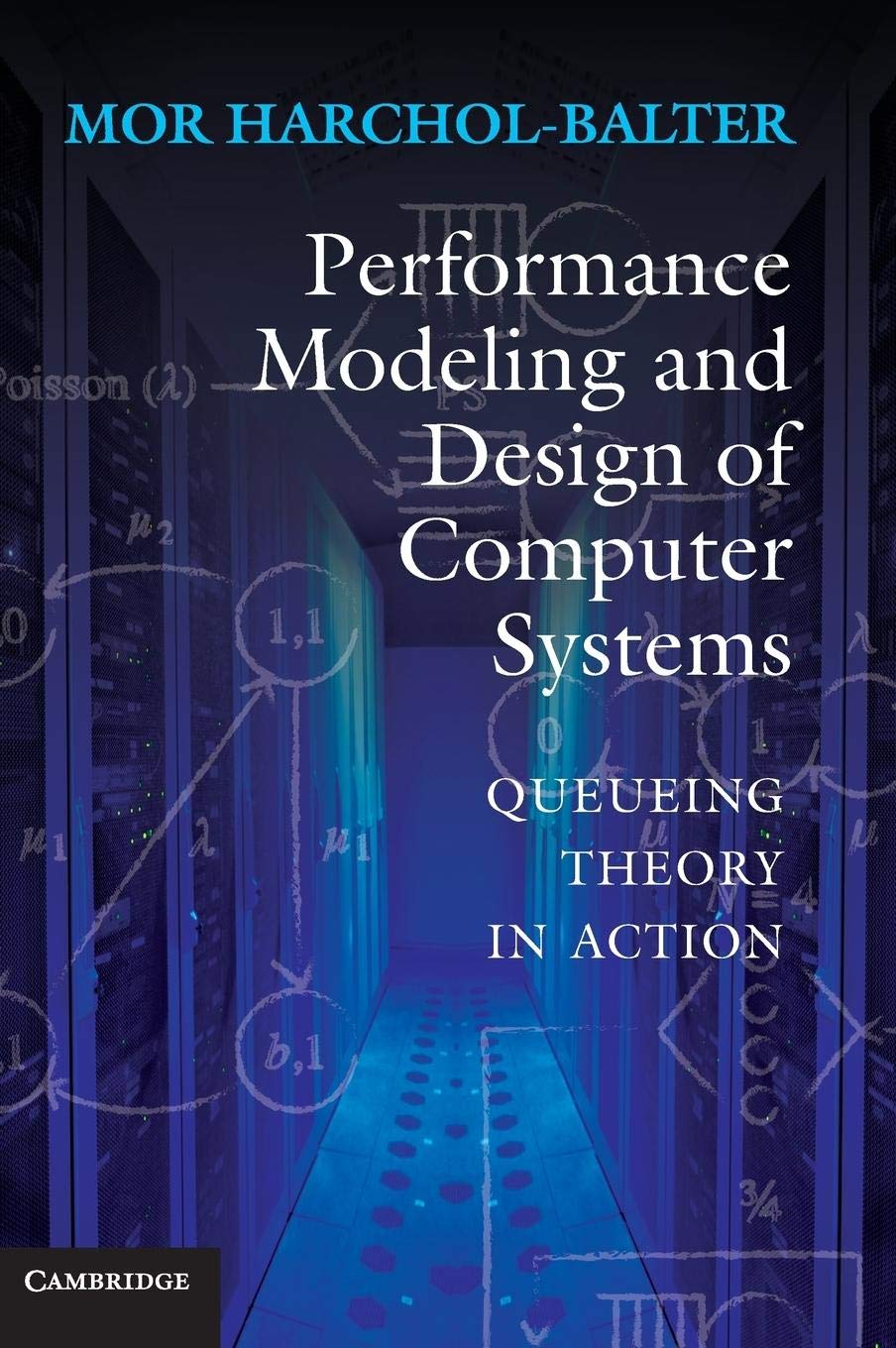
Computer systems design is full of conundrums:Given a choice between a single machine with speed s, or n machines each with speed s/n, which should we choose?If both the arrival rate and service rate double, will the mean response time stay the same?Should systems really aim to balance load, or is this a convenient myth?If a scheduling policy favors one set of jobs, does it necessarily hurt some other jobs, or are these conservation laws being misinterpreted?Do greedy, shortestdelay, routing strategies make sense in a server farm, or is what's good for the individual disastrous for the system as a whole?How do high job size variability and heavytailed workloads affect the choice of a scheduling policy?How should one trade off energy and delay in designing a computer system?If 12 servers are needed to meet delay guarantees when the arrival rate is 9 jobs/sec, will we need 12,000 servers when the arrival rate is 9,000 jobs/sec?Tackling the questions that systems designers care about, this book brings queueing theory decisively back to computer science. The book is written with computer scientists and engineers in mind and is full of examples from computer systems, as well as manufacturing and operations research. Fun and readable, the book is highly approachable, even for undergraduates, while still being thoroughly rigorous and also covering a much wider span of topics than many queueing books. Readers benefit from a lively mix of motivation and intuition, with illustrations, examples, and more than 300 exercises all while acquiring the skills needed to model, analyze, and design largescale systems with good performance and low cost. The exercises are an important feature, teaching researchlevel counterintuitive lessons in the design of computer systems. The goal is to train readers not only to customize existing analyses but also to invent their own.
⚠️ WARNING (California Proposition 65):
This product may contain chemicals known to the State of California to cause cancer, birth defects, or other reproductive harm.
For more information, please visit www.P65Warnings.ca.gov.