
Title

Permaculture: Principles and Pathways beyond Sustainability,Used
Sold by Ergodebooks, an authorized reseller.
Returns accepted within 30 days | support@ergodebooks.com
Shipping Information
- Free Standard Shipping — United States only
- Processing Time: 3–5 business days
- Estimated Delivery: 6–10 business days after dispatch
- Double-boxed, fully insured & discreetly packaged
- Tracking number sent via email once dispatched
Returns & Refund
Returns accepted within 30 days of delivery.
Damaged or Defective Item
Free return shipping + replacement or full refund
Wrong Item Received
Free return shipping + replacement or full refund
Change of Mind
Return shipping at customer's expense · 25% restocking fee applies
Payment Option

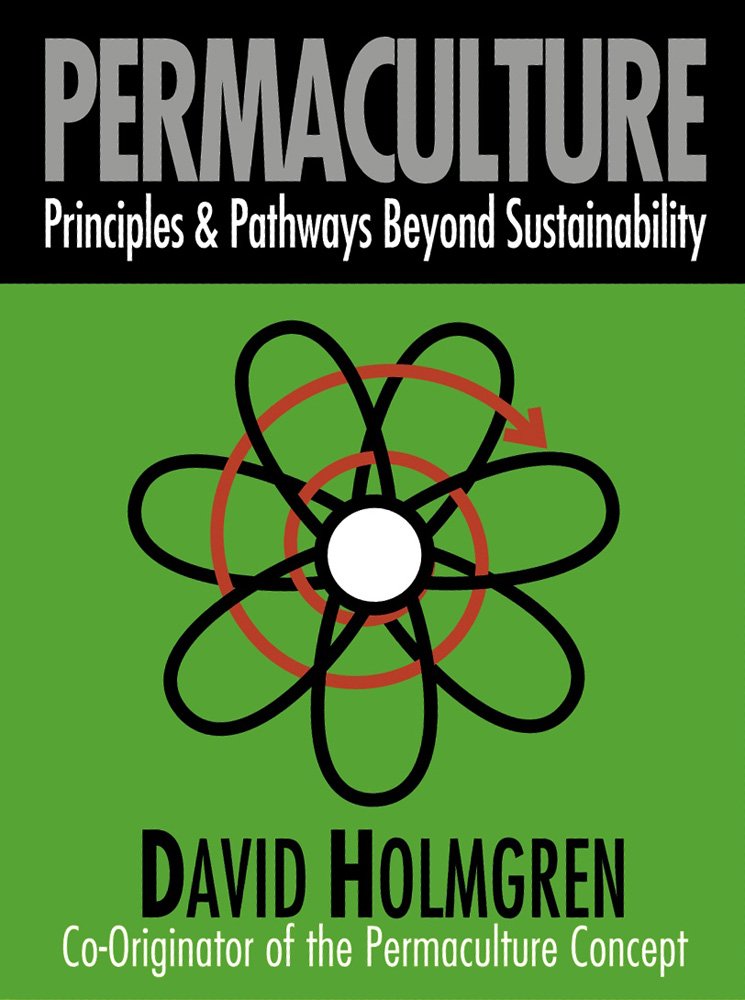
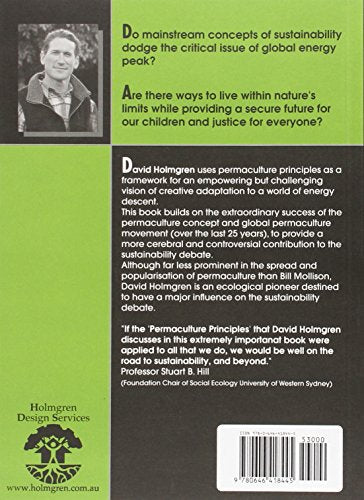
David Holmgren brings into sharper focus the powerful and still evolving Permaculture concept he pioneered with Bill Mollison in the 1970s. It draws together and integrates 25 years of thinking and teaching to reveal a whole new way of understanding and action behind a simple set of design principles. The 12 design principles are each represented by a positive action statement, an icon and a traditional proverb or two that captures the essence of each principle.Holmgren draws a correlation between every aspect of how we organize our lives, communities and landscapes and our ability to creatively adapt to the ecological realities that shape human destiny. For students and teachers of Permaculture this book provides something more fundamental and distilled than Mollison's encyclopedic Designers Manual. For the general reader it provides refreshing perspectives on a range of environmental issues and shows how permaculture is much more than just a system of gardening. For anyone seriously interested in understanding the foundations of sustainable design and culture, this book is essential reading. Although a book of ideas, the big picture is repeatedly grounded by reference to Holmgren's own place, Melliodora, and other practical examples.
⚠️ WARNING (California Proposition 65):
This product may contain chemicals known to the State of California to cause cancer, birth defects, or other reproductive harm.
For more information, please visit www.P65Warnings.ca.gov.
- Q: What is the main focus of 'Permaculture: Principles and Pathways beyond Sustainability'? A: The book focuses on the evolving concept of permaculture, integrating 25 years of thinking and teaching into a new understanding of sustainable design principles.
- Q: Who is the author of this book and what is his background? A: The author, David Holmgren, is a co-originator of the permaculture concept, having developed it alongside Bill Mollison in the 1970s.
- Q: What are the key features of the book? A: The book outlines 12 design principles, each represented by an action statement, an icon, and proverbs that encapsulate their essence.
- Q: Is this book suitable for beginners in permaculture? A: Yes, it provides fundamental insights and perspectives on permaculture that are accessible to both students and general readers.
- Q: How does this book differ from Bill Mollison's works? A: Holmgren's book is more distilled and focused, offering a clearer understanding of permaculture principles compared to Mollison's comprehensive Designers Manual.
- Q: What topics does the book cover beyond gardening? A: It explores broader environmental issues and how permaculture principles can be applied to various aspects of life and community organization.
- Q: What is the format and condition of the book? A: The book is a paperback edition with 320 pages and is listed as being in good condition.
- Q: When was 'Permaculture: Principles and Pathways beyond Sustainability' published? A: The book was published on December 1, 2002.
- Q: What kind of examples does Holmgren include in the book? A: The author includes practical examples, such as his own place, Melliodora, to ground the theoretical concepts in real-life applications.
- Q: What is the significance of the 12 design principles mentioned in the book? A: These principles serve as foundational guidelines for creating sustainable systems that adapt to ecological realities, emphasizing actionable steps.