If you have any questions, you are always welcome to contact us. We'll get back to you as soon as possible, withing 24 hours on weekdays.
Customer service
All questions about your order, return and delivery must be sent to our customer service team by e-mail at yourstore@yourdomain.com
Sale & Press
If you are interested in selling our products, need more information about our brand or wish to make a collaboration, please contact us at press@yourdomain.com
Help
If you have any questions, you are always welcome to contact us. We'll get back to you as soon as possible, withing 24 hours on weekdays.
Customer service
All questions about your order, return and delivery must be sent to our customer service team by e-mail at yourstore@yourdomain.com
Sale & Press
If you are interested in selling our products, need more information about our brand or wish to make a collaboration, please contact us at press@yourdomain.com
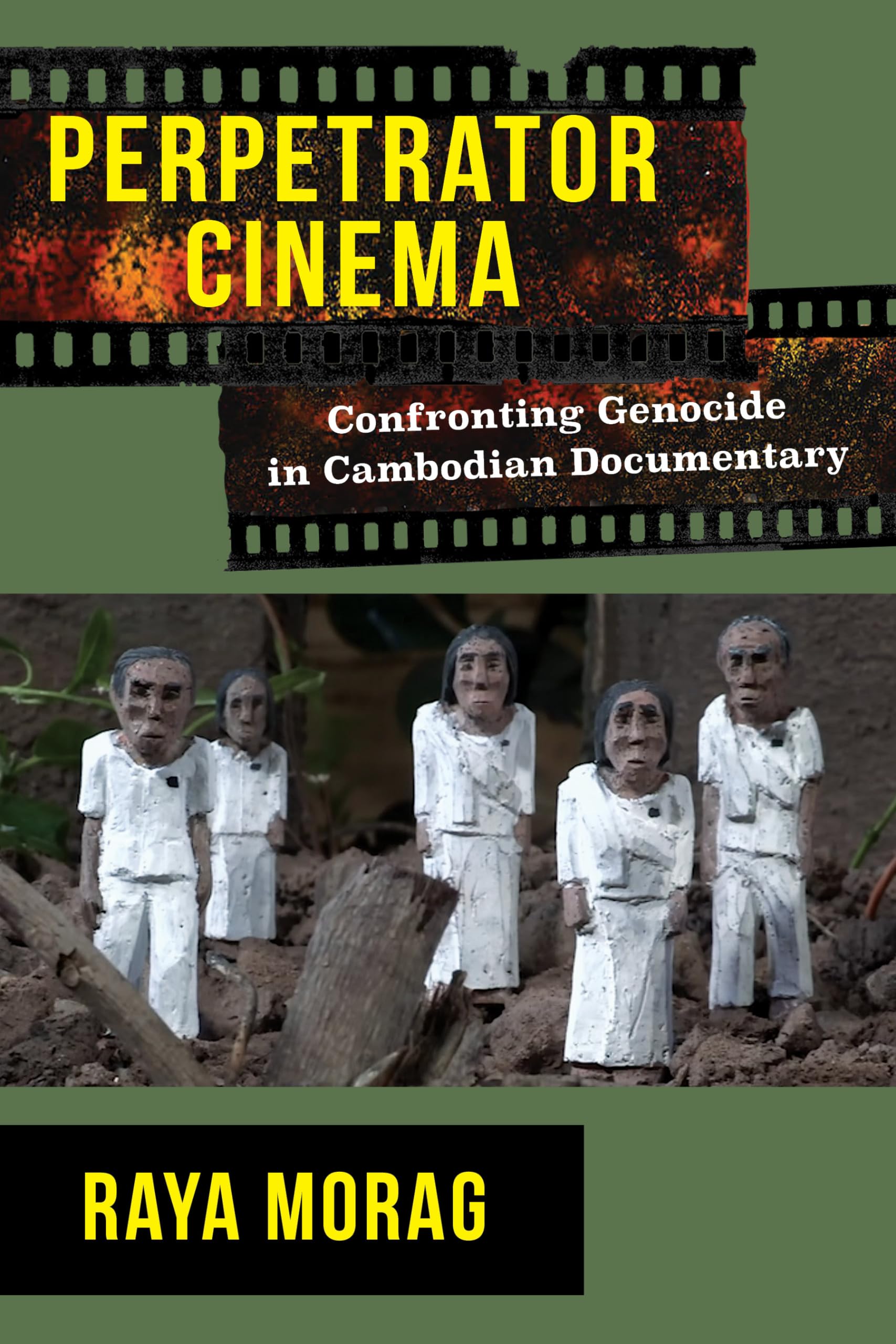
Perpetrator Cinema explores a new trend in the cinematic depiction of genocide that has emerged in Cambodian documentary in the late twentieth and early twentyfirst centuries. While past films documenting the Holocaust and genocides in Yugoslavia, Rwanda, and elsewhere have focused on collecting and foregrounding the testimony of survivors and victims, the intimate horror of the autogenocide enables postKhmer Rouge Cambodian documentarians to propose a direct confrontation between the firstgeneration survivor and the perpetrator of genocide. These films break with Western tradition and disrupt the political view that reconciliation is the only legitimate response to atrocities of the past. Rather, transcending the perpetrators typical denial or partial confession, this extraordinary form of duel documentary creates confrontational tension and opens up the possibility of a transformation in power relations, allowing viewers to access feelings of moral resentment.Raya Morag examines works by Rithy Panh, Rob Lemkin and Thet Sambath, and Lida Chan and Guillaume Suon, among others, to uncover the ways in which filmmakers endeavor to allow the survivors moral status and courage to guide viewers to a new, more complete understanding of the processes of coming to terms with the past. These documentaries show how moral resentment becomes a way to experience, symbolize, judge, and finally incorporate evil into a system of ethics. Morags analysis reveals how perpetrator cinema provides new epistemic tools and propels the recent socialculturalpsychological shift from the era of the witness to the era of the perpetrator.
⚠️ WARNING (California Proposition 65):
This product may contain chemicals known to the State of California to cause cancer,
birth defects, or other reproductive harm.
For MAP (Minimum Advertised Price) violations and Intellectual Property (IP) or Trademark concerns, please contact:
support@ergodebooks.com
⚠️ California Proposition 65 Warning: Some products sold on this website may expose you to chemicals known to the State of California to cause cancer, birth defects, or other reproductive harm. For more information, visit www.P65Warnings.ca.gov.