If you have any questions, you are always welcome to contact us. We'll get back to you as soon as possible, withing 24 hours on weekdays.
Customer service
All questions about your order, return and delivery must be sent to our customer service team by e-mail at yourstore@yourdomain.com
Sale & Press
If you are interested in selling our products, need more information about our brand or wish to make a collaboration, please contact us at press@yourdomain.com
Help
If you have any questions, you are always welcome to contact us. We'll get back to you as soon as possible, withing 24 hours on weekdays.
Customer service
All questions about your order, return and delivery must be sent to our customer service team by e-mail at yourstore@yourdomain.com
Sale & Press
If you are interested in selling our products, need more information about our brand or wish to make a collaboration, please contact us at press@yourdomain.com
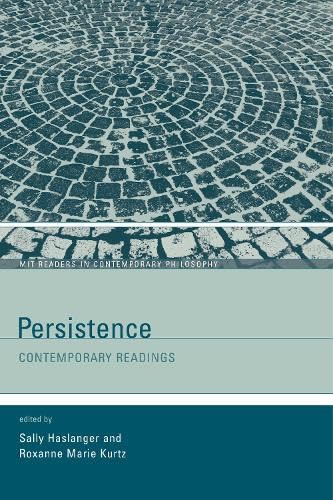
How does an object persist through change? How can a book, for example, open in the morning and shut in the afternoon, persist through a change that involves the incompatible properties of being open and being shut? The goal of this reader is to inform and reframe the philosophical debate around persistence; it presents influential accounts of the problem that range from classic papers by W. V. O. Quine, David Lewis, and Judith Jarvis Thomson to recent work by contemporary philosophers. The authors take on the question of persistence by examining three broad approaches: perdurantism, which holds that change over time is analogous to change over space; exdurantism, according to which identity over time is analogous to identity across possible worlds; and endurantism, which holds that ordinary objects persist by enduring. Each of these approaches appears to be coherent, but each also has its own metaphysical problems. Persistence includes papers that argue for perdurantism, exdurantism, or endurantism, as well as papers that explore some metaphysical difficulties challenging each account. In this way the collection allows readers to balance the tradeoffs of each approach in terms of intuitiveness, theoretical attractiveness, and elegance.ContributorsYuri Balashov, William Carter, Graeme Forbes, Sally Haslanger, Katherine Hawley, H. S. Hestevold, Mark Hinchliffe, Mark Johnston, Roxanne Marie Kurtz, David K. Lewis, Ned Markosian, D. H. Mellor, W. V. O. Quine, Theodore Sider, Richard Taylor, Judith Jarvis Thomson, Peter van Inwagen, Dean Zimmerman
⚠️ WARNING (California Proposition 65):
This product may contain chemicals known to the State of California to cause cancer,
birth defects, or other reproductive harm.
For MAP (Minimum Advertised Price) violations and Intellectual Property (IP) or Trademark concerns, please contact:
support@ergodebooks.com
⚠️ California Proposition 65 Warning: Some products sold on this website may expose you to chemicals known to the State of California to cause cancer, birth defects, or other reproductive harm. For more information, visit www.P65Warnings.ca.gov.