
Title
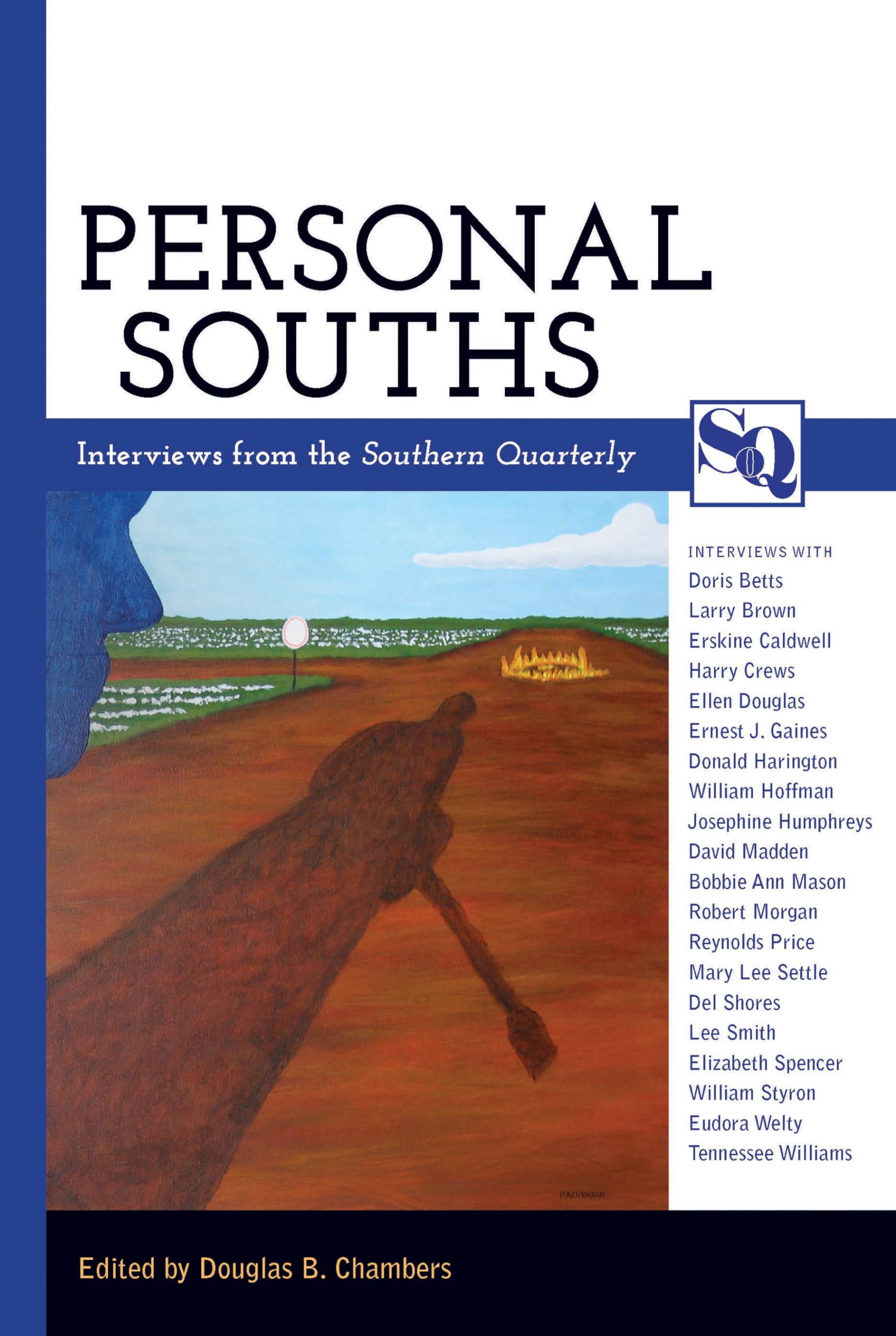
Personal Souths: Interviews From The Southern Quarterly,Used
Sold by Ergodebooks, an authorized reseller.
Returns accepted within 30 days | support@ergodebooks.com
Shipping Information
- Free Standard Shipping — United States only
- Processing Time: 3–5 business days
- Estimated Delivery: 6–10 business days after dispatch
- Double-boxed, fully insured & discreetly packaged
- Tracking number sent via email once dispatched
Returns & Refund
Returns accepted within 30 days of delivery.
Damaged or Defective Item
Free return shipping + replacement or full refund
Wrong Item Received
Free return shipping + replacement or full refund
Change of Mind
Return shipping at customer's expense · 25% restocking fee applies
Payment Option

Personal Souths, a collection of twenty interviews with famous southern writers, will mark the fiftieth anniversary of The Southern Quarterly, one of the oldest scholarly journals (founded in 1962) dedicated to southern studies. The figures interviewed range from Erskine Caldwell, Eudora Welty and Tennessee Williams (all from the 1970s), to a virtual Who's Who of southern literature in the second half of the twentieth century. All of these interviews were originally published in the journal in the 1980s, 1990s and 2000s and are collected here for the first time. The South is represented broadly, with writers from eight states; at least four represent the mountain South (Donald Harrington, Bobbie Ann Mason, Robert Morgan, Lee Smith), while another four typify a cosmopolitan South (Reynolds Price, Mary Lee Settle, Elizabeth Spencer, Tennessee Williams). The greatest number of voices, at least eight of the authors, speak for or from the poor white South (Larry Brown, Erskine Caldwell, Harry Crews, Donald Harrington, Bobbie Ann Mason, Robert Morgan, Del Shores, Lee Smith). Though there is only one African American writer, Ernest J. Gaines, another interview (William Styron, Pulitzer Prizewinning author of The Confessions of Nat Turner) also focuses on a conversation about African American literature.The interviews are all fascinating. Not only do they reveal the personalities of these southern literary stars, but they also represent a selfconscious community of writers. It is a testament to the quality of The Southern Quarterly that many of these writers, when discussing their most important contemporaries, often refer to other writers whose interviews are also in this collection. These firsthand discussions will continue to illuminate and inform our understanding of their creative work.
⚠️ WARNING (California Proposition 65):
This product may contain chemicals known to the State of California to cause cancer, birth defects, or other reproductive harm.
For more information, please visit www.P65Warnings.ca.gov.