If you have any questions, you are always welcome to contact us. We'll get back to you as soon as possible, withing 24 hours on weekdays.
Customer service
All questions about your order, return and delivery must be sent to our customer service team by e-mail at yourstore@yourdomain.com
Sale & Press
If you are interested in selling our products, need more information about our brand or wish to make a collaboration, please contact us at press@yourdomain.com
Help
If you have any questions, you are always welcome to contact us. We'll get back to you as soon as possible, withing 24 hours on weekdays.
Customer service
All questions about your order, return and delivery must be sent to our customer service team by e-mail at yourstore@yourdomain.com
Sale & Press
If you are interested in selling our products, need more information about our brand or wish to make a collaboration, please contact us at press@yourdomain.com
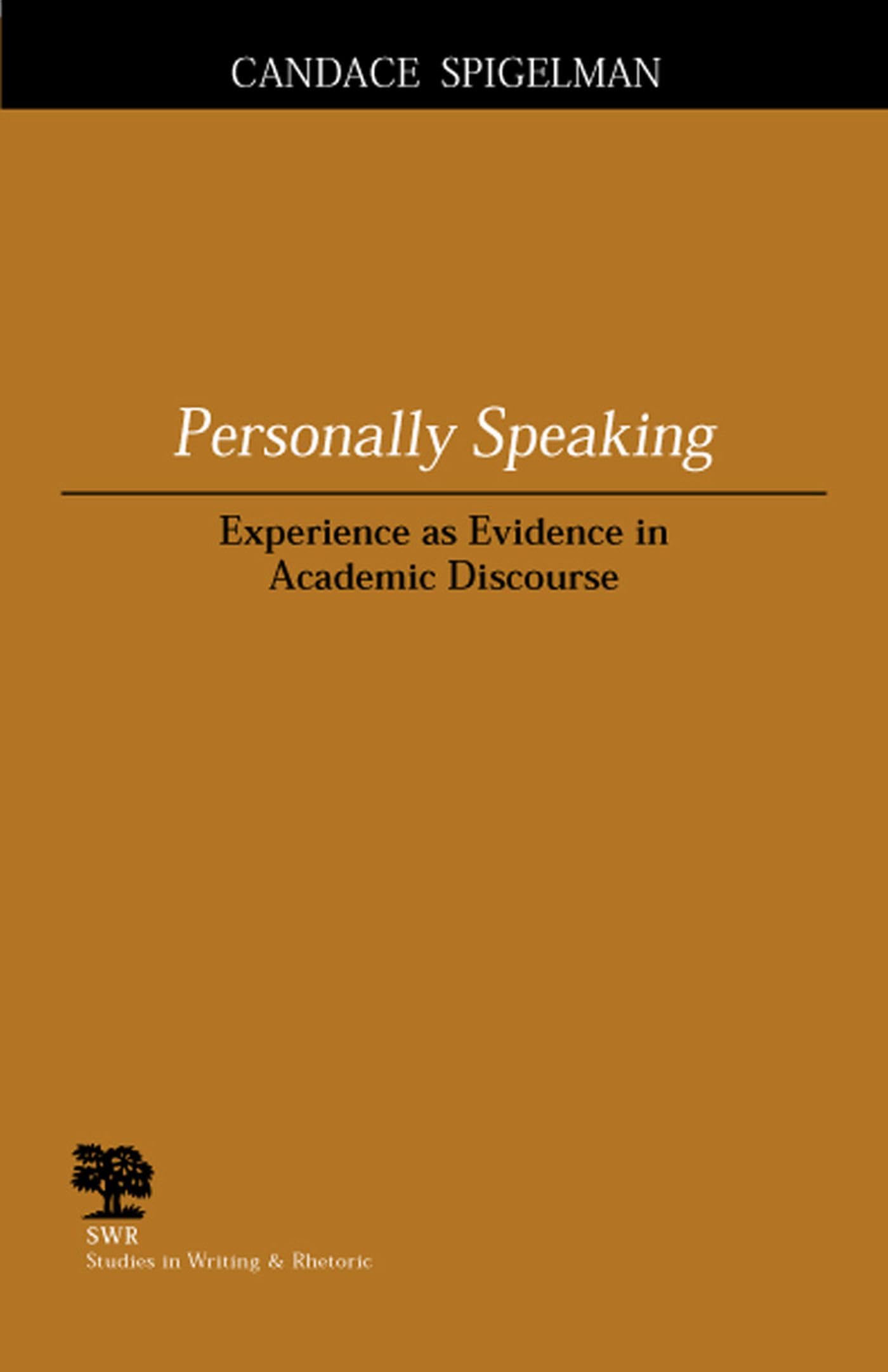
Responding to contemporary discussion about using personal accounts in academic writing, Personally Speaking: Experience as Evidence in Academic Discourse draws on classical and current rhetorical theory, feminist theory, and relevant examples from both published writers and firstyear writing students to illustrate the advantages of blending experiential and academic perspectives.Candace Spigelman examines how merging personal and scholarly worldviews produces useful contradictions and contributes to a more a complex understanding in academic writing. This rhetorical move allows for greater insights than the reading or writing of experiential or academic modes separately does. Personally Speaking foregrounds the semifictitious nature of personal stories and the rhetorical possibilities of evidence as Spigelman provides strategies for writing instructors who want to teach personal academic argument while supplying practical mechanisms for evaluating experiential claims.The volume seeks to complicate and intensify disciplinary debates about how compositionists should write for publication and what kinds of writing should be taught to composition students. Spigelman not only supplies evidence as to why the personal can count as evidence but also relates how to use it effectively by including student samples that reflect particular features of personal writing. Finally, she lays the groundwork to move narrative from its current site as confessional writing to the domain of academic discourse.
⚠️ WARNING (California Proposition 65):
This product may contain chemicals known to the State of California to cause cancer,
birth defects, or other reproductive harm.
For MAP (Minimum Advertised Price) violations and Intellectual Property (IP) or Trademark concerns, please contact:
support@ergodebooks.com
⚠️ California Proposition 65 Warning: Some products sold on this website may expose you to chemicals known to the State of California to cause cancer, birth defects, or other reproductive harm. For more information, visit www.P65Warnings.ca.gov.