
Title
Pesos And Politics: Business, Elites, Foreigners, And Government In Mexico, 18541940,Used
Sold by Ergodebooks, an authorized reseller.
Returns accepted within 30 days | support@ergodebooks.com
Shipping Information
- Free Standard Shipping — United States only
- Processing Time: 3–5 business days
- Estimated Delivery: 6–10 business days after dispatch
- Double-boxed, fully insured & discreetly packaged
- Tracking number sent via email once dispatched
Returns & Refund
Returns accepted within 30 days of delivery.
Damaged or Defective Item
Free return shipping + replacement or full refund
Wrong Item Received
Free return shipping + replacement or full refund
Change of Mind
Return shipping at customer's expense · 25% restocking fee applies
Payment Option

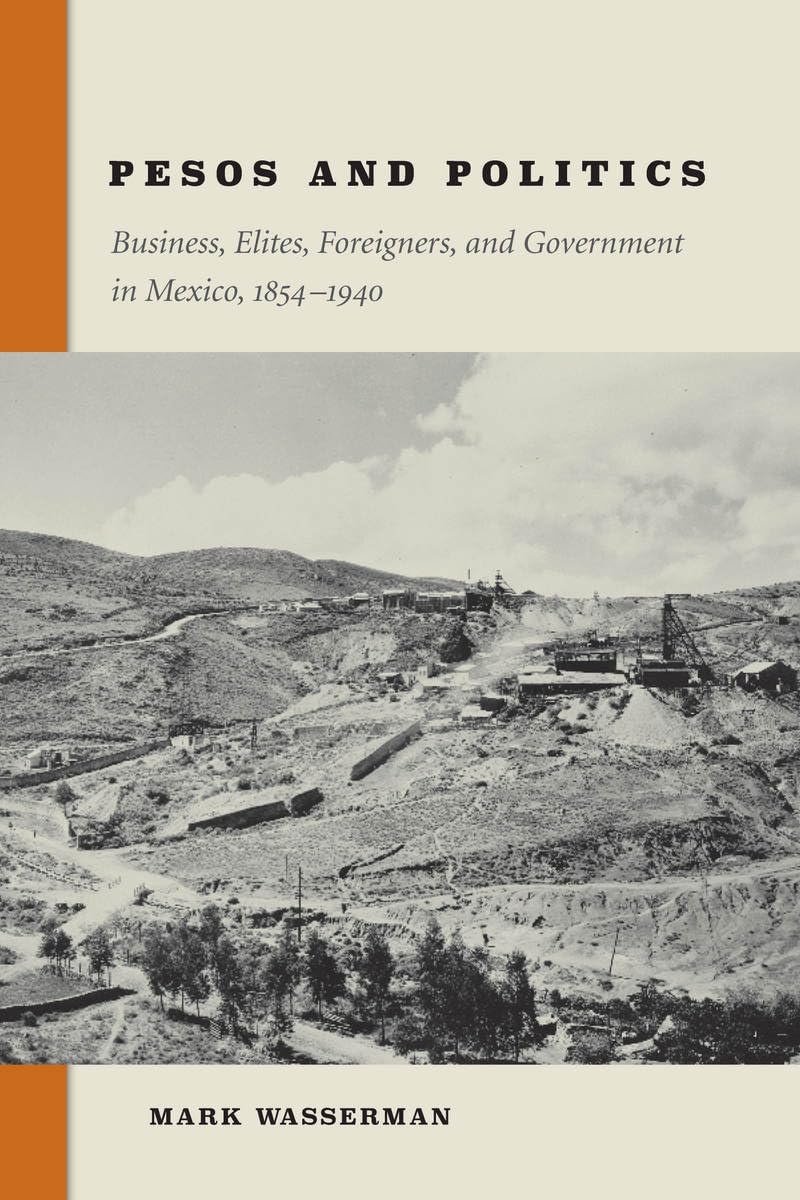
The relationship between business and politics is crucial to understanding Mexican history, and Pesos and Politics explores this relationship from the midnineteenth century dictatorship of Porfirio Diaz through the Mexican Revolution (18761940). Historian Mark Wasserman argues that throughout this era, over the course of successive regimes, there was an evolving enterprise system that had to balance the interests of the Mexican national elite, state and local governments, large foreign corporations, and individual foreign entrepreneurs. During and after the Revolution these groups were joined by organized labor and organized peasants. Contrary to past assessments, Wasserman argues that no one of these groups was ever powerful enough to dominate another. Because Mexican governments and elites committed themselves to economic models that relied on foreign investment and technology, they had to reach a balance that simultaneously attracted foreign entrepreneurs, but did not allow them to become too powerful or too privileged. Concentrating on the three most important sectors of the Mexican economy: mining, agriculture, and railroads, and employing a series of case studies of the careers of prominent Mexican business people and the operations of large U.S.owned ranching and mining companies, Wasserman effectively demonstrates that Mexicans in fact controlled their economy from the 1880s through 1940; foreigners did not exploit the country; and, Mexicans established, sometimes shakily, sometimes unplanned, a system of relations between foreigners, elite and government (and later unions and peasant organizations) that maintained checks and balances on all parties.
⚠️ WARNING (California Proposition 65):
This product may contain chemicals known to the State of California to cause cancer, birth defects, or other reproductive harm.
For more information, please visit www.P65Warnings.ca.gov.