
Title
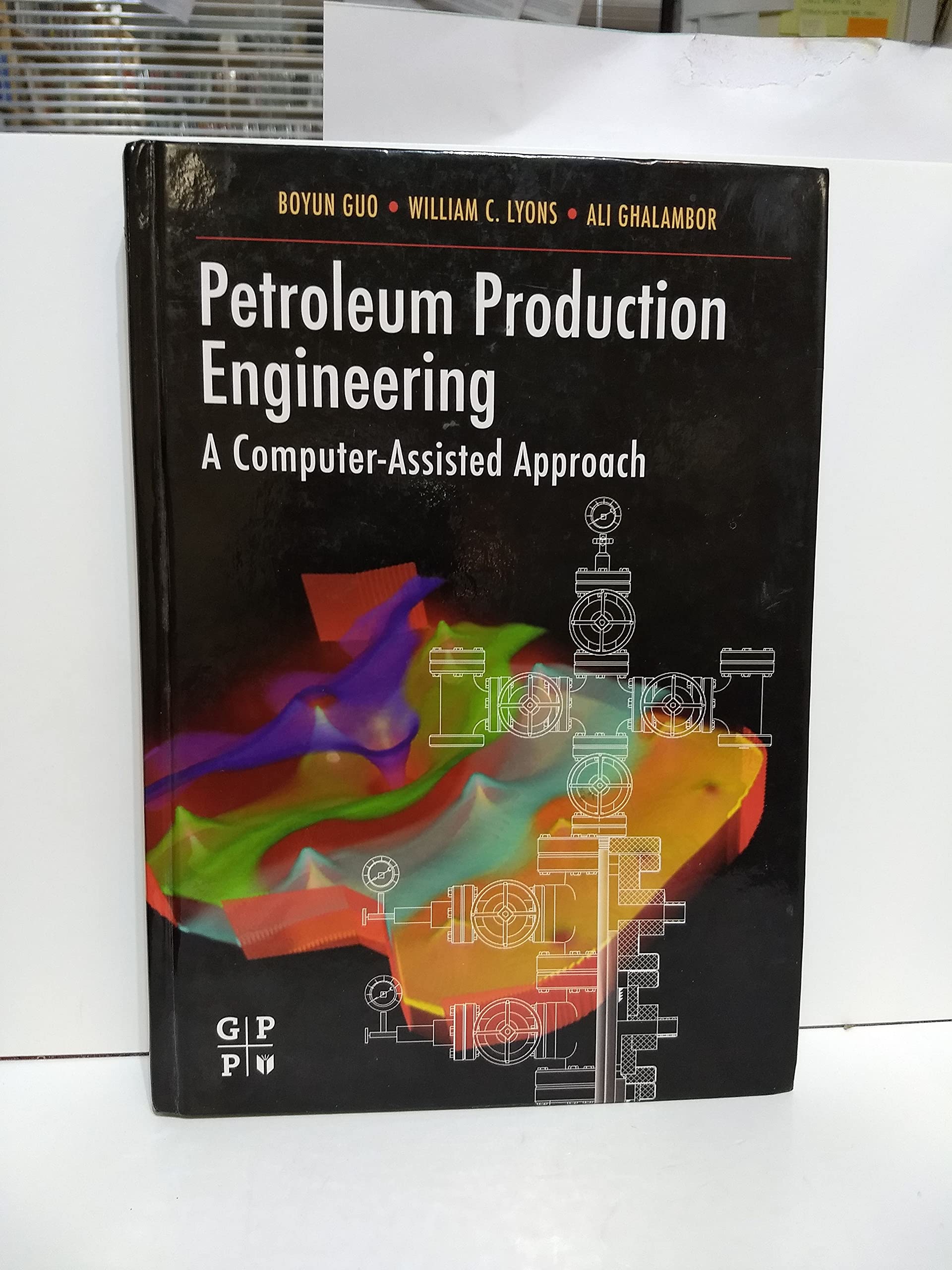
Petroleum Production Engineering, A ComputerAssisted Approach,Used
Sold by Ergodebooks, an authorized reseller.
Returns accepted within 30 days | support@ergodebooks.com
Shipping Information
- Free Standard Shipping — United States only
- Processing Time: 3–5 business days
- Estimated Delivery: 6–10 business days after dispatch
- Double-boxed, fully insured & discreetly packaged
- Tracking number sent via email once dispatched
Returns & Refund
Returns accepted within 30 days of delivery.
Damaged or Defective Item
Free return shipping + replacement or full refund
Wrong Item Received
Free return shipping + replacement or full refund
Change of Mind
Return shipping at customer's expense · 25% restocking fee applies
Payment Option

Petroleum Production Engineering, A ComputerAssisted Approach provides handy guidelines to designing, analyzing and optimizing petroleum production systems. Broken into four parts, this book covers the full scope of petroleum production engineering, featuring stepwise calculations and computerbased spreadsheet programs. Part one contains discussions of petroleum production engineering fundamentals, empirical models for production decline analysis, and the performance of oil and natural gas wells. Part two presents principles of designing and selecting the main components of petroleum production systems including: well tubing, separation and dehydration systems, liquid pumps, gas compressors, and pipelines for oil and gas transportation. Part three introduces artificial lift methods, including sucker rod pumping systems, gas lift technology, electrical submersible pumps and other artificial lift systems. Part four is comprised of production enhancement techniques including, identifying well problems, designing acidizing jobs, guidelines to hydraulic fracturing and job evaluation techniques, and production optimization techniques. Provides complete coverage of the latest techniques used for designing and analyzing petroleum production systems Increases efficiency and addresses common problems by utilizing the computerbased solutions discussed within the book Presents principles of designing and selecting the main components of petroleum production systems
⚠️ WARNING (California Proposition 65):
This product may contain chemicals known to the State of California to cause cancer, birth defects, or other reproductive harm.
For more information, please visit www.P65Warnings.ca.gov.
- Q: What is the main focus of 'Petroleum Production Engineering, A Computer-Assisted Approach'? A: The book primarily focuses on designing, analyzing, and optimizing petroleum production systems, providing guidelines and methodologies across various aspects of petroleum production engineering.
- Q: Who is the author of this book? A: The author of 'Petroleum Production Engineering, A Computer-Assisted Approach' is Boyun Guo.
- Q: What topics are covered in this book? A: The book covers topics such as petroleum production engineering fundamentals, production decline analysis, design principles for production systems, artificial lift methods, and production enhancement techniques.
- Q: How is the book structured? A: The book is divided into four parts: fundamentals of petroleum production, design principles of production systems, artificial lift methods, and production enhancement techniques.
- Q: What is the page count of the book? A: The book contains 312 pages.
- Q: What is the binding type of this book? A: This book is available in hardcover binding.
- Q: When was 'Petroleum Production Engineering, A Computer-Assisted Approach' published? A: The book was published on February 19, 2007.
- Q: Does the book include computer-based solutions for petroleum production? A: Yes, the book includes discussions on computer-based spreadsheet programs and solutions aimed at enhancing the efficiency of petroleum production systems.
- Q: What edition of the book is available? A: The book is in its first edition.
- Q: Is there any prerequisite knowledge required to understand this book? A: While the book is designed for professionals in the field, having a basic understanding of petroleum engineering concepts may enhance comprehension of its content.