
Title
Phantom Communities: The Simulacrum And The Limits Of Postmodernism,New
Sold by Ergodebooks, an authorized reseller.
Returns accepted within 30 days | support@ergodebooks.com
Shipping Information
- Free Standard Shipping — United States only
- Processing Time: 3–5 business days
- Estimated Delivery: 6–10 business days after dispatch
- Double-boxed, fully insured & discreetly packaged
- Tracking number sent via email once dispatched
Returns & Refund
Returns accepted within 30 days of delivery.
Damaged or Defective Item
Free return shipping + replacement or full refund
Wrong Item Received
Free return shipping + replacement or full refund
Change of Mind
Return shipping at customer's expense · 25% restocking fee applies
Payment Option

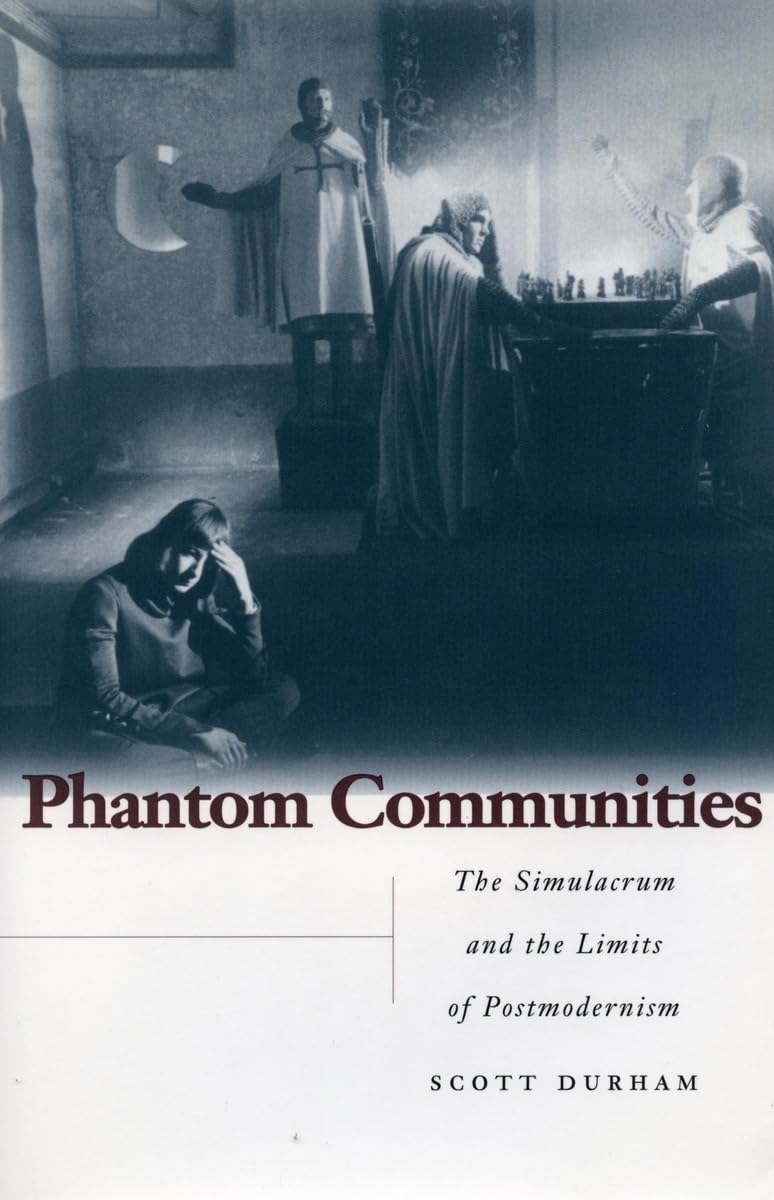
Phantom Communities reconsiders the status of the simulacrumsometimes defined as a copy of a copy, but more rigorously defined as a copy that subverts the legitimacy and authority of its modelin light of recent debates in literature, art, philosophy, and cultural studies. The author pursues two interwoven levels of analysis. On one level, he explores the poetics of the simulacrum, considered as a form that internalizes repetition, through close readings of a number of exemplary literary texts, paintings, and films from both the AngloAmerican and French traditions, including works by Jean Genet, Pierre Klossowski, Ren Magritte, Andy Warhol, J. G. Ballard, Balthus, and Ral Ruiz. Through his readings of these works, the author follows the transformations of the simulacrum, showing how its vicissitudes provide an optic for remapping the postmodern canon. On another level, the author offers an account of the role played by the simulacrum as a theoretical concept that assumes varying analytical and ideological valences in the writings of such theorists as Jean Baudrillard, Fredric Jameson, Michel Foucault, and Gilles Deleuze. In so doing, Phantom Communities intervenes in ongoing interdisciplinary debates concerning the historical and ideological limits of postmodernism, as well as the utopian possibilities of art, literature, and philosophy in a postmodern context. Moving between these debates and the interpretation of individual works, the author shows how they converge on the fundamental aesthetic and ideological problem raised by the postmodern culture of the simulacrum: imagining the virtual communities that, at the margins of postmodern culture, are at once figured and eclipsed by its proliferating images.
⚠️ WARNING (California Proposition 65):
This product may contain chemicals known to the State of California to cause cancer, birth defects, or other reproductive harm.
For more information, please visit www.P65Warnings.ca.gov.