If you have any questions, you are always welcome to contact us. We'll get back to you as soon as possible, withing 24 hours on weekdays.
Customer service
All questions about your order, return and delivery must be sent to our customer service team by e-mail at yourstore@yourdomain.com
Sale & Press
If you are interested in selling our products, need more information about our brand or wish to make a collaboration, please contact us at press@yourdomain.com
Help
If you have any questions, you are always welcome to contact us. We'll get back to you as soon as possible, withing 24 hours on weekdays.
Customer service
All questions about your order, return and delivery must be sent to our customer service team by e-mail at yourstore@yourdomain.com
Sale & Press
If you are interested in selling our products, need more information about our brand or wish to make a collaboration, please contact us at press@yourdomain.com
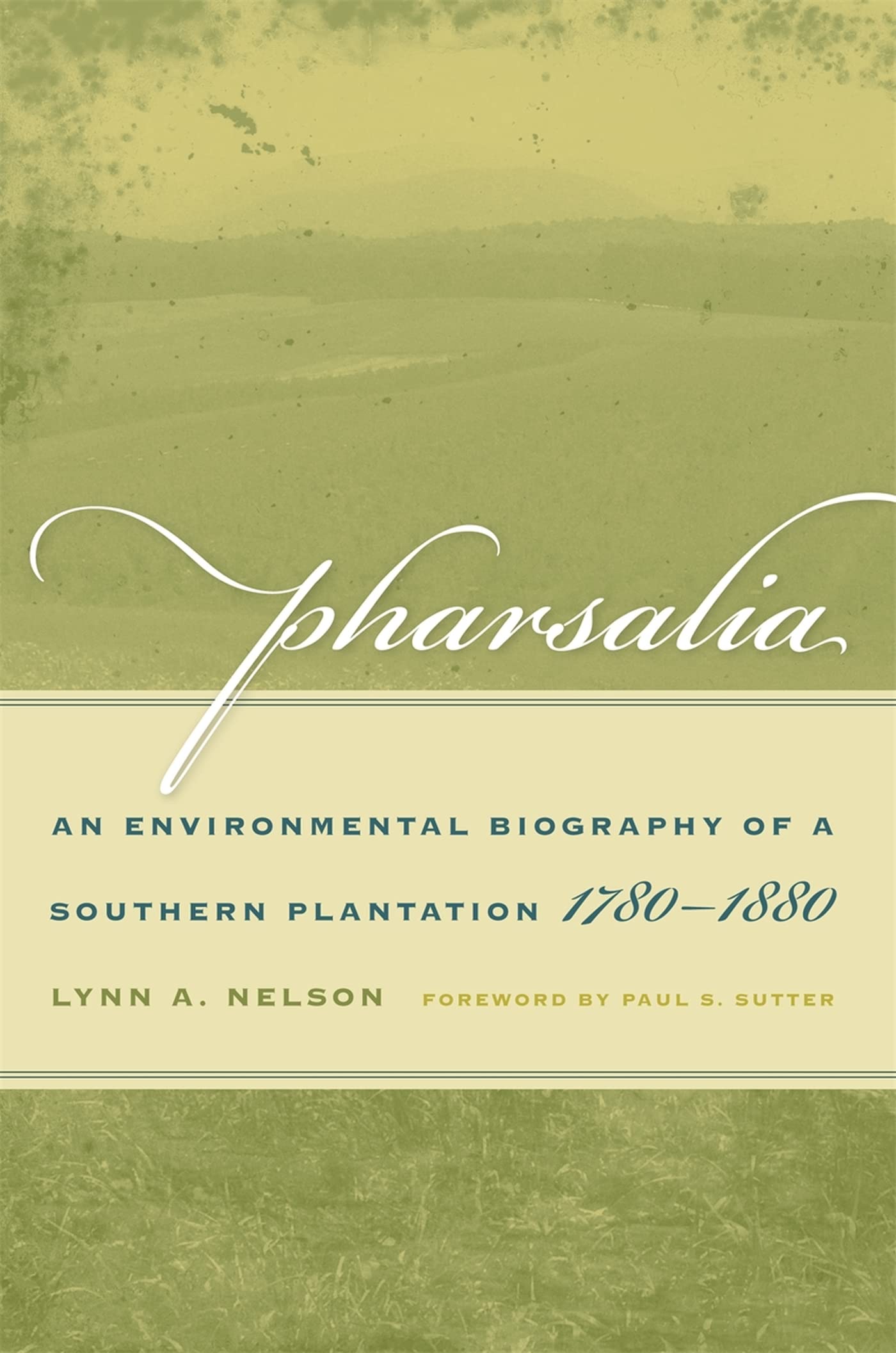
Pharsalia, a plantation located in piedmont Virginia at the foot of the Blue Ridge Mountains, is one of the bestdocumented sites of its kind. Drawing on the exceptionally rich trove of papers left behind by the Massie family, Pharsalia's owners, this case study demonstrates how white southern planters paradoxically relied on capitalistic methods even as they pursued an ideal of agrarian independence. Lynn A. Nelson also shows how the contradictions between these ends and means would later manifest themselves in the southern conservation movement.Nelson follows the fortunes of Pharsalia's owners, telling how Virginia's traditional extensive agriculture contributed to the soil's erosion and exhaustion. Subsequent attempts to balance independence and sustainability through a complex system of crop rotation and resource recycling ultimately gave way to an intensive, slavebased form of agricultural capitalism.Pharsalia could not support the Massies' aristocratic ambitions, and it was eventually parceled up and sold off by family members. The farm's story embodies several fundamentals of modern U.S. environmental thought. Southerners' nineteenthcentury quest for financial and ecological independence provided the background for conservationists' attempts to save family farming. At the same time, farmers' failure to achieve independence while maximizing profits and crop yields drove them to seek government aid and regulation. These became some of the hallmarks of conservation efforts in the New Deal and beyond.
⚠️ WARNING (California Proposition 65):
This product may contain chemicals known to the State of California to cause cancer,
birth defects, or other reproductive harm.
For MAP (Minimum Advertised Price) violations and Intellectual Property (IP) or Trademark concerns, please contact:
support@ergodebooks.com
⚠️ California Proposition 65 Warning: Some products sold on this website may expose you to chemicals known to the State of California to cause cancer, birth defects, or other reproductive harm. For more information, visit www.P65Warnings.ca.gov.